 Great Dane
10 Great Dane training topics
Every common Great Dane challenge, with first steps and guides to read.
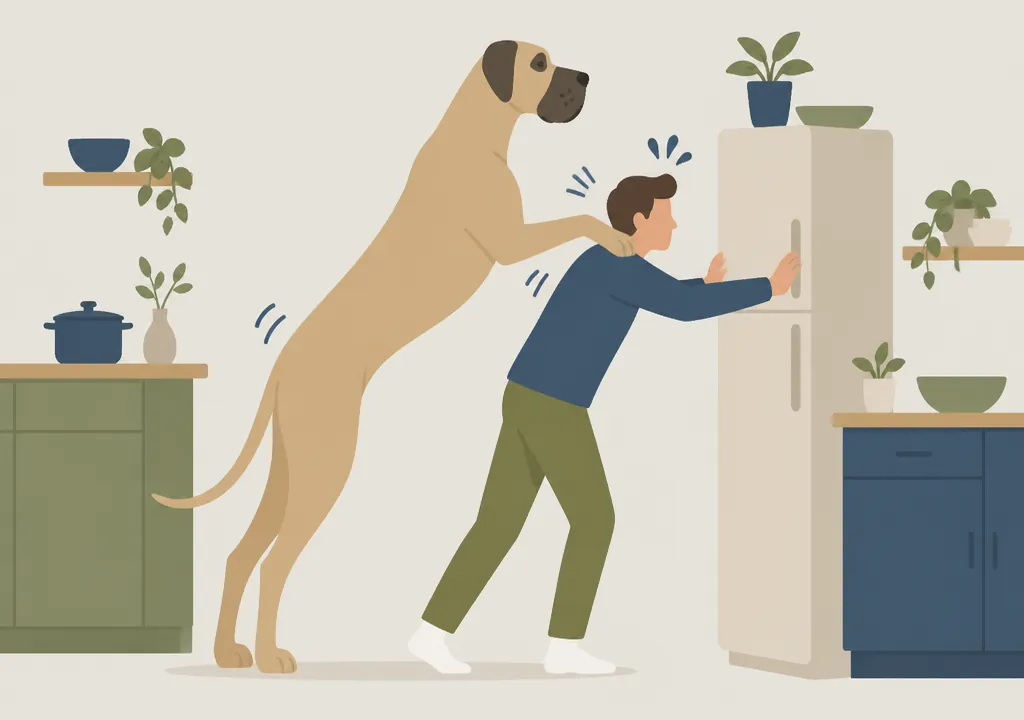
Jumping on people
Four paws down before your Dane weighs more than you.
A young Great Dane can reach a person's face before the household realizes that an ordinary puppy greeting has become a safety problem. Pushing the dog down creates more contact, and repeating “off” after every launch leaves the reward of attention in place. The clearer lesson is that access to people opens only while four paws remain on the floor.
In this guide, you will build that lesson as a set of greeting gates. Management stops unsafe rehearsal, a controlled approach opens for grounded behavior and social contact closes calmly when jumping begins. We will give family and visitors a short script, practice in three real settings and maintain the same rule as the dog's adult size arrives.
Read the full guide: Why Great Danes Jump Up and What to Reward Instead
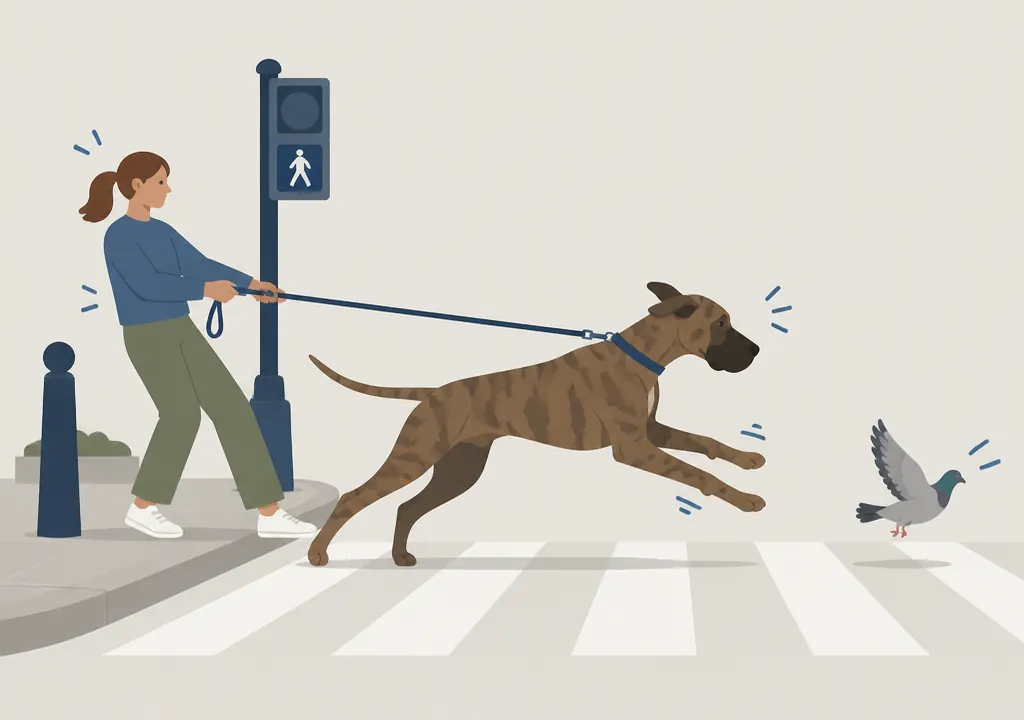
Pulling on the leash
Leash habits before the size arrives.
With a Great Dane, leash skill becomes a control problem before it becomes a polished walking picture. The American Kennel Club weight chart places the breed in a very large adult range. Waiting for that body to arrive before teaching the handler how to stop, turn and create space leaves both ends of the leash improvising under pressure.
In this guide, you will build a small control panel: stop, follow, turn and park. Each response is taught in a quiet area, then handed to every person who walks the dog. We will separate steady pulling from sudden lunging, choose practical equipment and connect the four responses on one short route without chasing a distance target.
Read the full guide: Loose-Leash Walking for a Great Dane Who Pulls
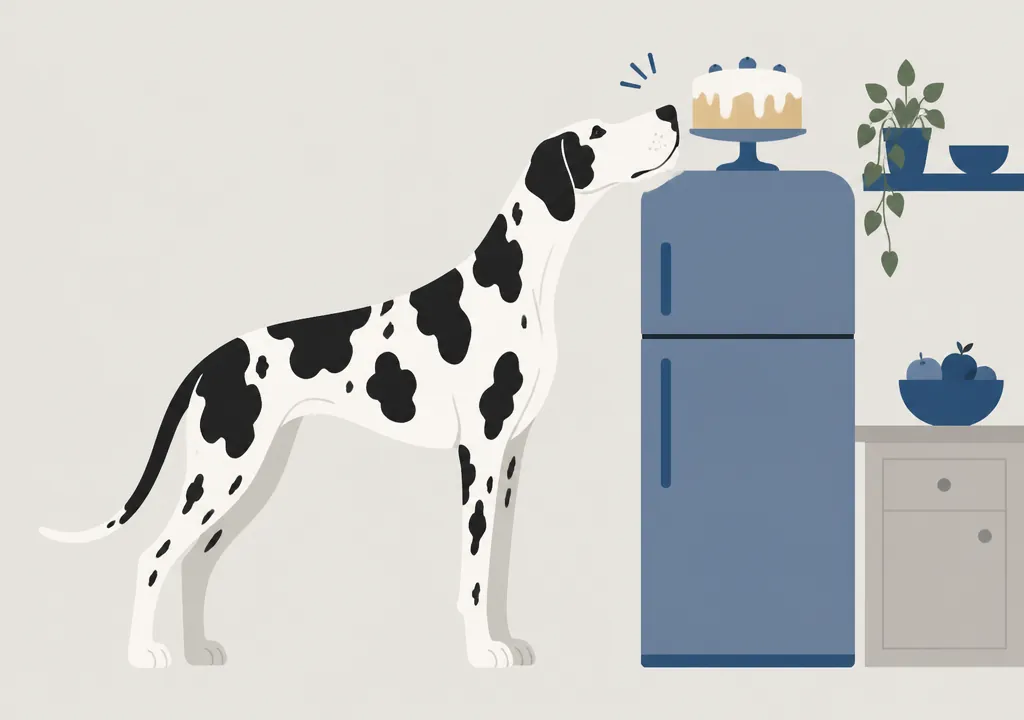
Counter surfing
Keep a very tall dog off the counters.
Standing normally, a Great Dane may put a nose over a counter, rest a chin on a table or push a shoulder through a half-open gate. Height turns ordinary household surfaces into reachable space. The training problem is therefore larger than food theft: the dog needs clear lines around counters, doorways and barriers, plus a floor-side place that pays better than crossing them.
A useful boundary plan has four jobs: reveal the risky lines, make the safe side easy to find, carry that answer from counters to openings and learn from every break. Below, we use the map to place barriers, build a Great Dane floor-side boundary station, transfer it to gates and review the household after every break.
Read the full guide: Teaching a Tall Great Dane Counter and Gate Boundaries
Exercise while growing
Protect fast-growing joints.
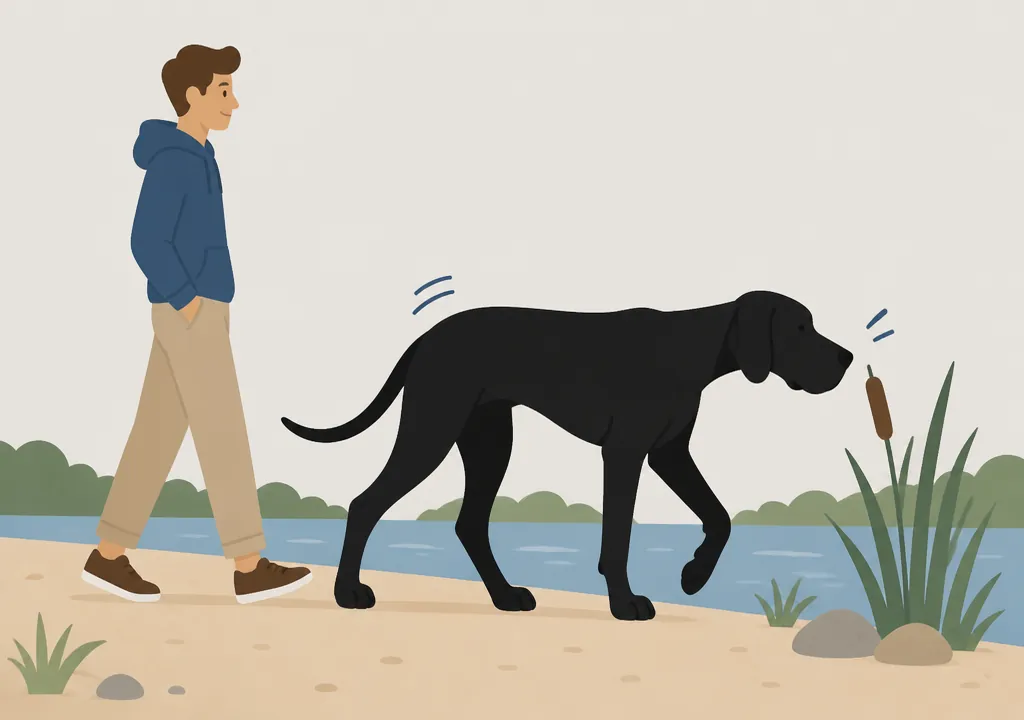
A tired Great Dane puppy is not automatically a well-exercised puppy. Fast growth makes recovery part of the activity plan, and a puppy who becomes wild, reluctant or sore after movement may need less intensity rather than another walk. A fixed mileage formula cannot account for age, condition, footing, health and the way one individual recovers.
Plan the day around decisions rather than a mileage target. Below, we set veterinary guardrails, compare low-impact Great Dane puppy exercise, read recovery before adding more and change social play as the puppy grows. We finish with a seven-day record that turns household observations into specific and genuinely useful questions for the veterinary team.
Read the full guide: Great Dane Puppy Exercise: Balancing Play, Walks and Rest
Fear periods
Help a sensitive giant through scary phases.
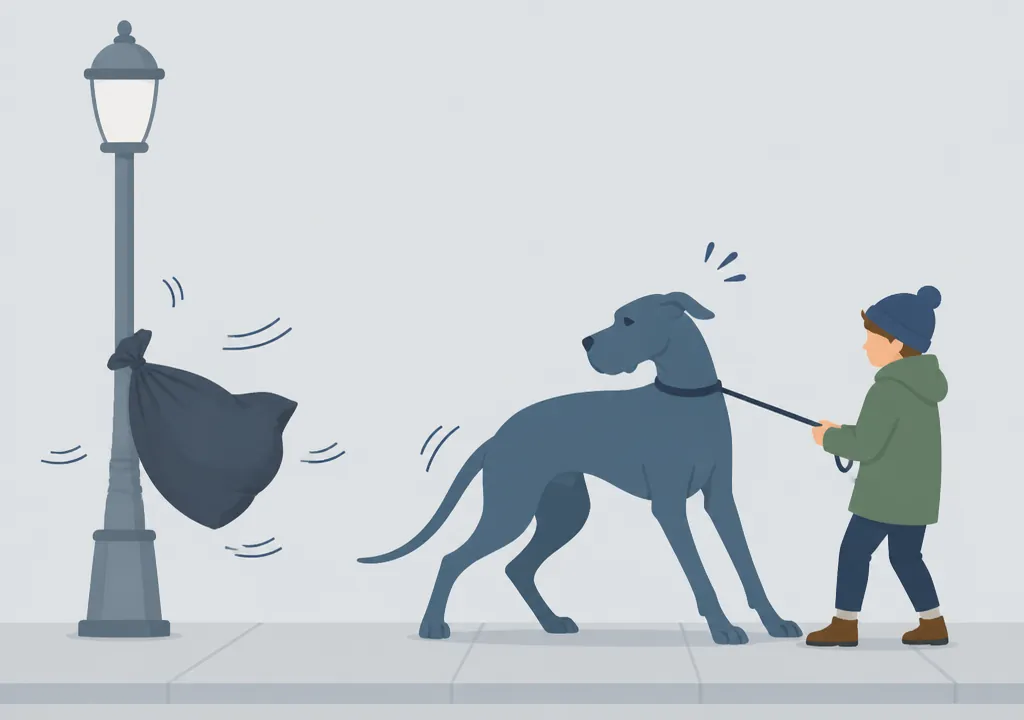
When a Great Dane is scared, size can hide the early request for distance. A person may notice only when the dog freezes, pulls away or lunges, even though smaller changes appeared first. Confidence work begins before approach. The first question is how far away the dog can notice a trigger, remain physically safe and still make choices.
Confidence work is a sequence of choices, not a march toward the scary thing. Below, we start with health and an available exit, locate a distance where the Great Dane can observe, choose a lane for the actual trigger and let recovery set the next step. The last section explains when the map belongs with a veterinarian or qualified behavior professional.
Read the full guide: Helping a Scared Great Dane Gain Confidence With Rewards
Time alone
Calm alone time for a velcro dog.
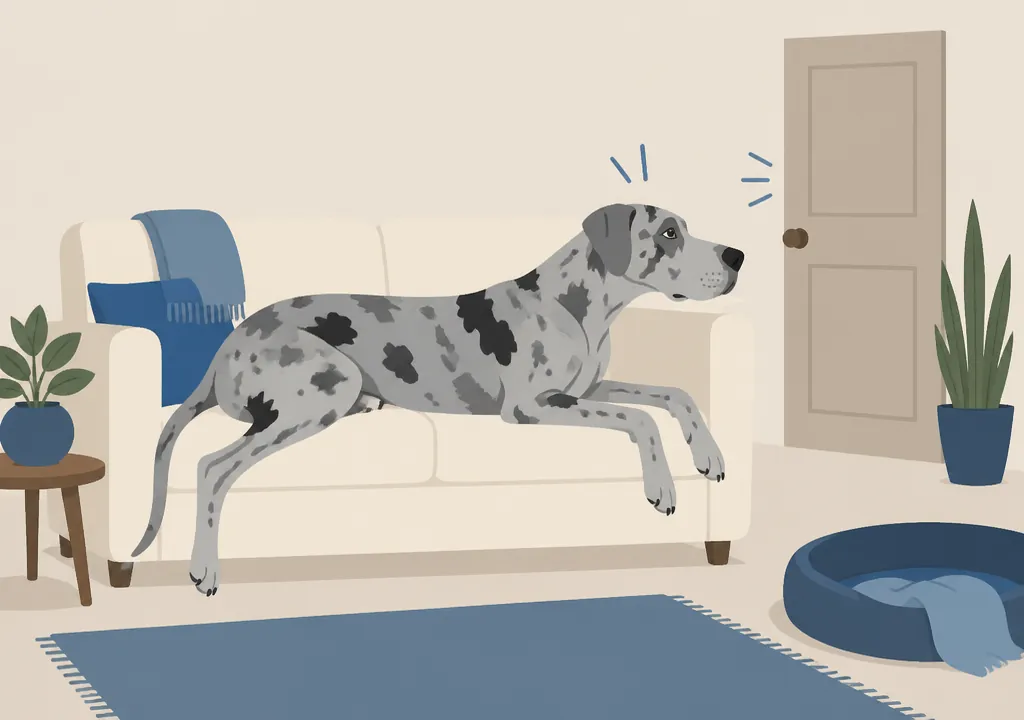
An XXL crate of about 48 to 54 inches suits most adult Great Danes, and rewarded games teach them to walk in by choice. A breed with top marks for affection has much to learn about being apart.
The full guide covers crate size, the choice-based introduction and preventing separation anxiety.
Greeting visitors
A calm hello from a big dog.
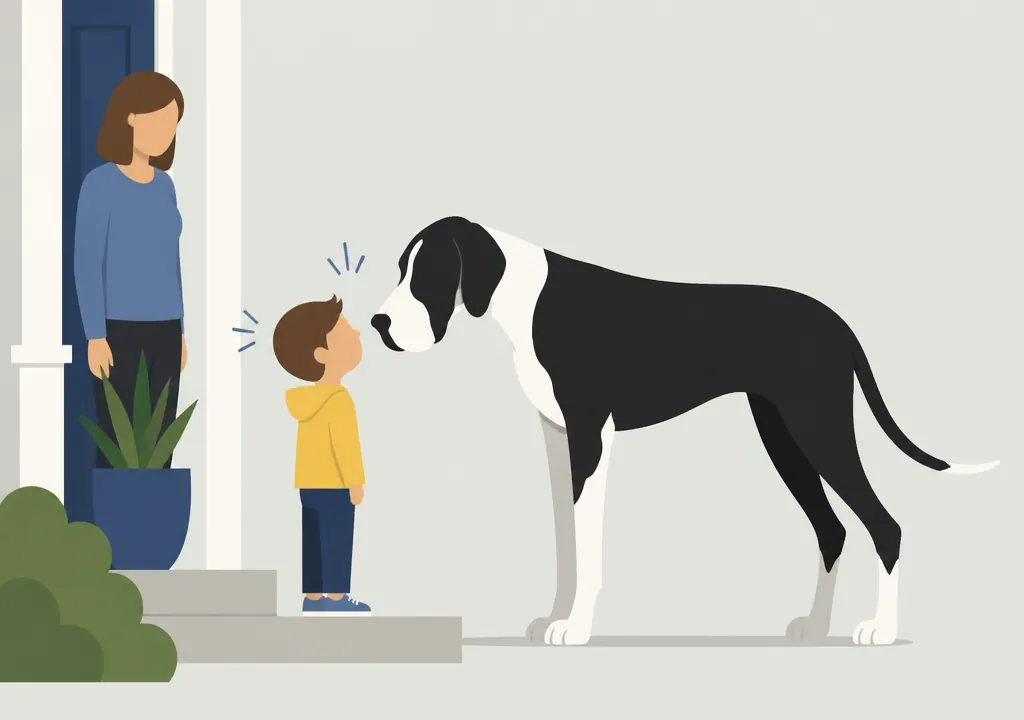
A Great Dane can fill the doorway before a visitor has both feet inside, even when the barking and movement come from excitement. The doorbell, opening door, unfamiliar person and social greeting are separate events. Treating them as one moment leaves the dog with no clear job and gives the handler no place to simplify.
In this guide, you will build a doorbell runbook that starts before the knock. The Great Dane moves to a mat, watches entry from behind a barrier and greets only when the room and dog are ready. We will rehearse with helpers, give visitors a short script and prepare a recovery plan for the arrivals nobody scheduled.
Read the full guide: Great Dane Barking at the Door: Teaching a Calm Welcome
Handling and vet visits
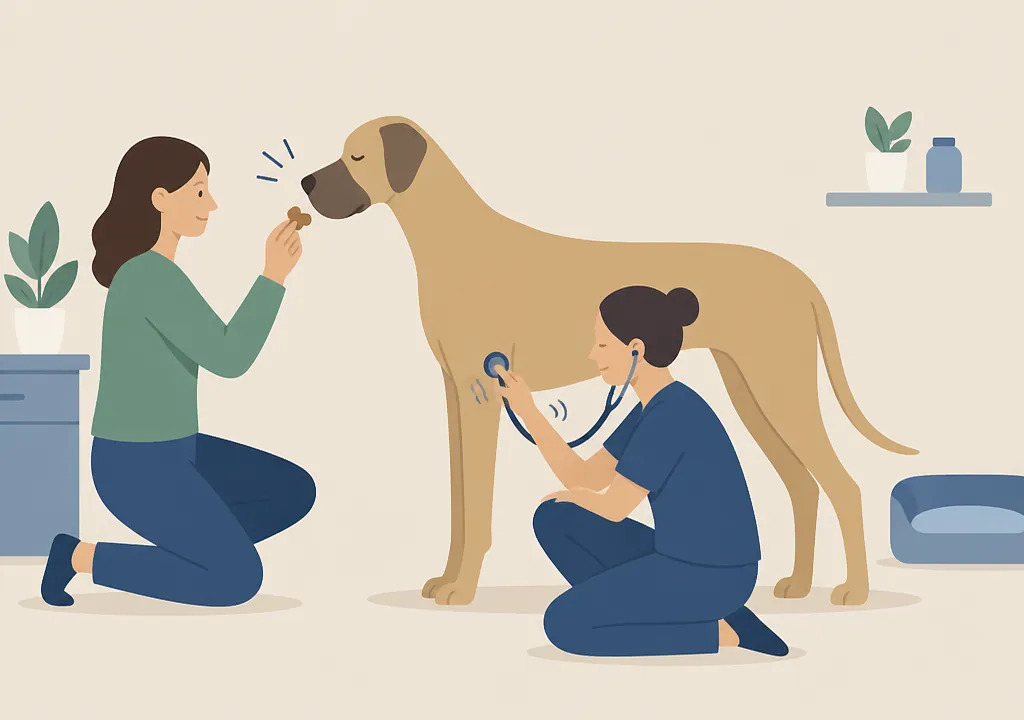
Easy checks for a giant.
Great Danes do not need to misbehave for training gaps to reshape a room. One step into a doorway stops traffic, so ordinary manners, including calm handling and vet visits, become household infrastructure.
The full guide is the reward-based system for this breed, from socialization to daily routines.
Puppy mouthing
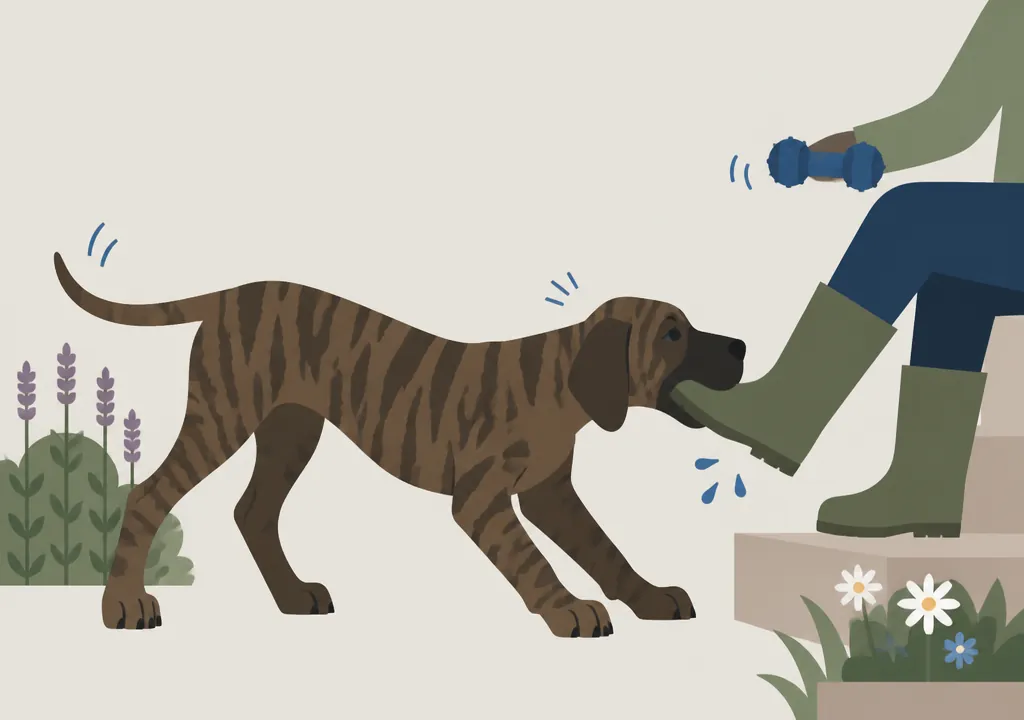
Big puppy teeth onto toys.
A Great Dane puppy's mouth grows faster than a family's tolerance for rough play. When every person squeals, pushes, runs or offers a different toy, the puppy receives an exciting sequence rather than one clear lesson. The response must be simple enough to repeat: toy-led play, a calm interruption when teeth touch people and rest before arousal takes over.
Treat each contact point as its own small lesson. Below, we prepare the room, begin with toy contact, separate skin from clothing grabs, teach food delivery outside play and coordinate the household response. We finish with two decisions: when intensity needs professional help and how recovery can prevent the next difficult mouthing episode.
Read the full guide: Teaching a Great Dane Puppy a Soft Mouth Before the Jaws Get Big
The teenage months
Patience while your Dane grows up.
At six months, a Great Dane may look physically capable of adult work while attention, coordination and judgment are still changing. A familiar cue can disappear outdoors, a calm puppy can become socially uncertain and a body growing by the week can tire in unfamiliar ways. The answer is a smaller, visible capacity budget rather than harder repetition.
In this guide, you will budget teenage training across attention, movement, social experience and recovery. We will reset expectations, measure usable focus, rebuild cues, manage freedom and review the plan each week. Veterinary guidance remains part of the budget because adolescent appearance does not make a growing Dane physically finished or behaviorally settled.
Read the full guide: Six Months Old and Still Growing: Training Your Teen Great Dane