 Great Dane
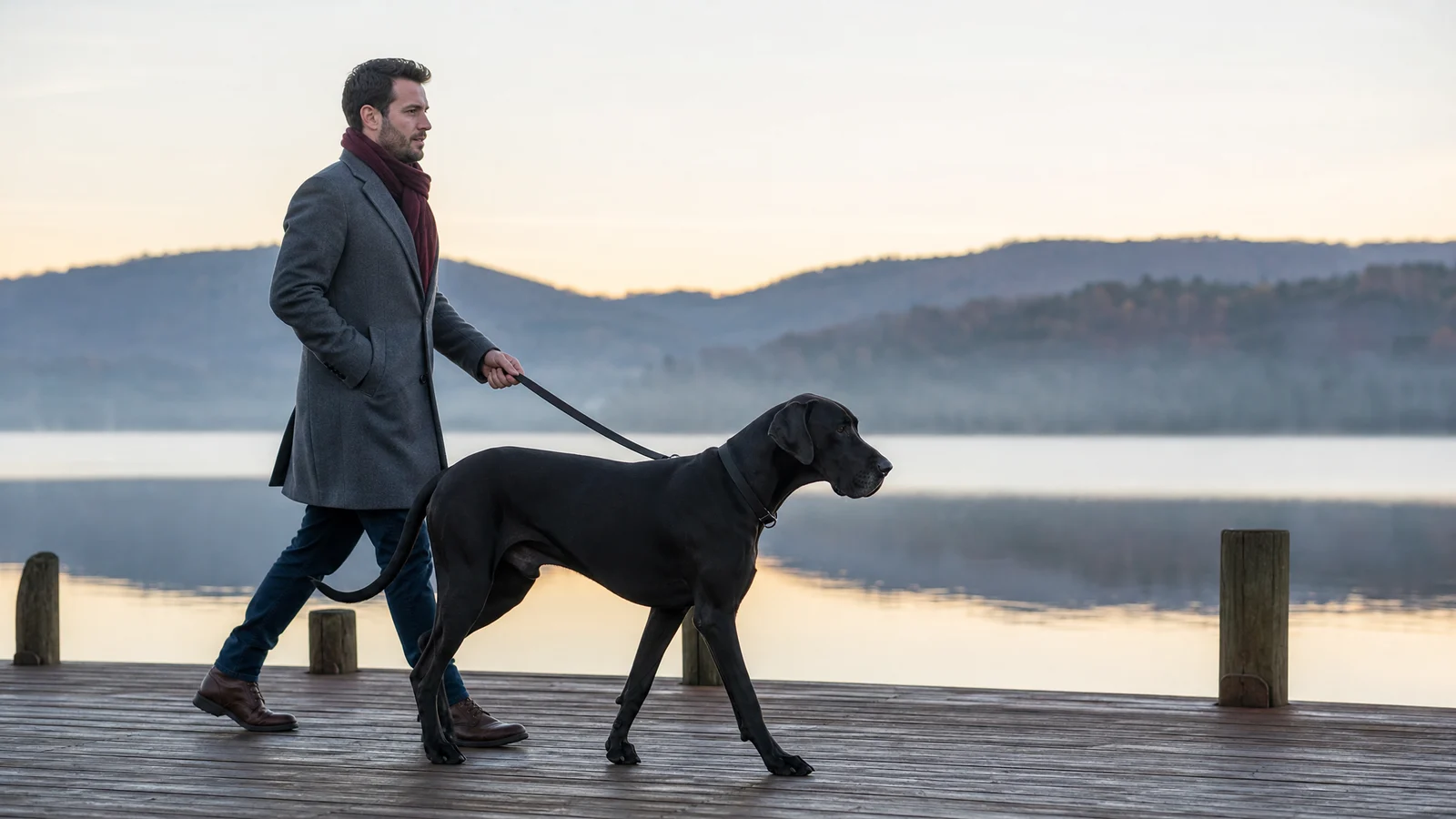
With a Great Dane, leash skill becomes a control problem before it becomes a polished walking picture. The American Kennel Club weight chart places the breed in a very large adult range. Waiting for that body to arrive before teaching the handler how to stop, turn and create space leaves both ends of the leash improvising under pressure.
In this guide, you will build a small control panel: stop, follow, turn and park. Each response is taught in a quiet area, then handed to every person who walks the dog. We will separate steady pulling from sudden lunging, choose practical equipment and connect the four responses on one short route without chasing a distance target.
Great Dane Leash-Training Equipment and Practice Site
Choose a well-fitted harness or collar with guidance suited to the individual dog, and use a sturdy fixed-length leash that the handler can hold comfortably. Check stitching, clips and fit before each walk. Equipment should contain normal movement safely, not hurt the dog or replace teaching.
Begin in a fenced yard, quiet driveway or open indoor area with nonslip footing. Avoid narrow sidewalks and busy paths while the responses are new. The handler needs room to step backward and turn without colliding with a wall, parked car or another person.
- Wear secure shoes and keep both hands available rather than carrying a phone or drink.
- Use small rewards the dog can swallow without stopping for a long time.
- Choose a practice window before the dog is overexcited, exhausted or urgently needs the bathroom.
- Plan an exit route to a gate, car or wider space before adding real distractions.
There is no universal piece of equipment that makes pulling safe for every dog and handler. Ask a veterinarian about pain, gait changes or skin trouble, and seek a qualified reward-based trainer when the handler cannot maintain physical control. Keep regular veterinary visits as the puppy grows and the fit changes.
Let the dog wear new equipment indoors for brief, rewarded periods before walking in it. Check the chest, armpits and neck after movement. A Dane's proportions change quickly during growth, so yesterday's adjustment may not remain comfortable.
The Stop Response in Great Dane Leash Training
The stop response means leash tension pauses forward movement. Begin with the dog beside or slightly ahead of you in the quiet practice area. Take one step. Before the leash tightens, stop, mark any orientation back toward you and deliver the reward beside your leg. Then move again.
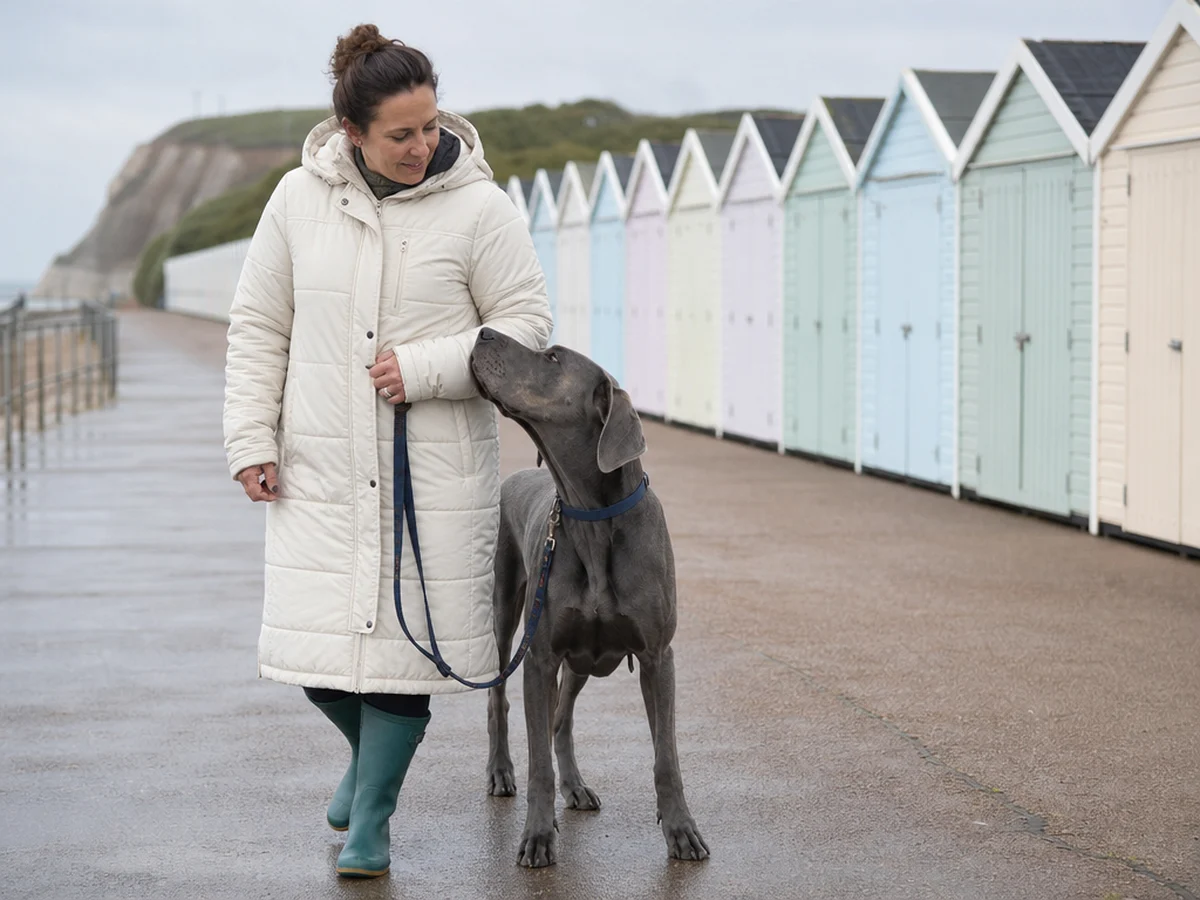
RSPCA loose-leash guidance recommends rewarding slack steps and stopping when the dog pulls. The pause should be calm and brief. Do not jerk backward or hold a prolonged contest. If the dog cannot turn, increase distance from the distraction or leave the area.
Practice at different walking speeds while the space remains easy. A Great Dane should learn that the same soft stop happens after a slow step and a brisk one. Reward the turn toward you, not a rigid location. Precision can come later. The control panel first needs a reliable way to interrupt forward pressure.
Count five successful stops and finish. Repetition after the dog tires can turn a clear response into leaning and frustration. The next session can begin with the same easy step before the distance between rewards changes.
Say a stop cue only after the physical pattern is familiar. Use it once, pause and reward the response. Repeating the word while continuing to walk teaches that it has no consequence and leaves the leash to carry the whole message.
A Follow Response for Great Dane Leash Training
Follow means moving with the handler for several steps after a change in direction. Face the dog, step backward and mark the first step toward you. Deliver the reward near your thigh, turn smoothly and walk forward for two or three steps. Release to sniff before attention fades.
Build short bursts rather than asking for a full walk beside your leg. Three connected steps, a sniff break and another three steps create a pattern the dog can repeat. Sniffing is not a failure of leash training. It can be the earned activity that makes following worthwhile.
Deliver rewards beside the path you want the dog to use. Food thrown ahead may restart pulling, while a hand reaching across the head can bend the body into the handler. Feed on the dog's side with the leash loose and both hands returning close to your center of balance.
Change pace for only a few steps. A slower rhythm can teach attention, while a brief brisk rhythm may help a young dog move without forging ahead. Return to an ordinary pace before coordination falls apart, and release to sniff after a connected segment.
The site's Great Dane apartment guide applies similar short walking practice in halls and elevators. Keep those narrow spaces as a later transfer. First make following easy where both bodies have room to move.
The Turn Control in Great Dane Leash Training
A practiced turn changes the route before tension becomes a contest. Say one turn cue, move your shoulders and feet in the new direction, then reward the dog for catching up. Begin with wide U-shaped turns. Sharp pivots can tangle a giant dog's legs or pull the handler off balance.
Teach the motion without distractions before using it near a dog, bicycle or crowded corner. The turn should not appear only when something alarming happens. Mix it into ordinary practice, sometimes returning to the original direction after a few steps so the dog learns to follow movement rather than fear a particular route.
Look first, cue second and move third. If the handler spots a trigger early, the turn can remain smooth. Waiting until the dog lunges makes the same cue physically harder and may bring the handler closer to the danger while trying to pivot.
Reward after several safe steps, not at the exact moment the dog whips around under pressure. The aim is a coordinated exit. We use the turn to preserve distance and thinking, then let reinforcement confirm that following the handler was useful.
A Park Position in Great Dane Leash Training
Park means standing or sitting close to the handler while the environment moves. It helps at a curb, doorway or wide passing place. Choose one side, lure the dog into a comfortable parallel position once, mark and feed. Fade the lure quickly and reward voluntary alignment.
Begin with one second, then release. Add duration before distractions. The leash stays slack, and the handler does not wrap it around a hand or body. A dog this large can create sudden force, so maintain a secure grip and enough line for a natural posture without a long running start.
Use park only where remaining still is safe. Beside a narrow road, moving away may be the better choice. On a warm sidewalk, choose shade and check the surface. The control panel supports decisions. It does not require one response regardless of surroundings.
Practice people passing at a generous distance. Reward the Dane for remaining aligned, then release before staring or leaning begins. If the passing person wants to greet, decline and move away. Park is a traffic-management position, not automatic permission for social contact.
Great Dane Leash Training for Pulling and Lunging
Pulling is sustained pressure toward a route, smell or destination. Lunging is a sudden surge often tied to excitement, frustration, fear or chasing. The same leash may become tight, but the prevention and risk are different. Record what happened before the movement and whether the dog could eat, turn or recover.
| Pattern | Useful First Response | Next Practice |
|---|---|---|
| Steady route pulling | Stop, reward orientation and restart | Short slack-leash segments |
| Excited surge toward a person | Turn early and increase distance | Following around mild social movement |
| Fearful lunge | Leave and protect space | Veterinary and qualified behavior support |
Battersea guidance on leash frustration explains that restricted access can contribute to lunging. Do not force greetings to prove control. Use distance, a practiced turn and quiet routes while the emotional cause is assessed.
AVSAB's humane training statement supports reinforcement and environmental management. If lunging creates a fall risk, stop public practice and work with a qualified professional who can see both dog and handler. Safety management comes before exposing the dog to more triggers.
Use a simple trigger log: location, distance, first body change, response and recovery time. It should guide route choices rather than become a reason to test closer distances. A shorter recovery at the same safe distance is meaningful progress.
The Great Dane Leash-Training Walker Handoff
Every walker should use the same four controls and know the exit route. Write a small handoff card with the exact cues, reward location and conditions that end the walk. Demonstrate each response in the easy practice area before another person takes the leash in public.
- Stop when steady tension begins, and reward the dog's turn back.
- Use follow for a few connected steps after a direction change.
- Turn early when the route ahead will exceed the dog's current skill.
- Use park only in a wide, safe place and release before the dog loses comfort.
- Return home if physical control, food interest or recovery is lost.
Do not hide a history of lunging or hand over the dog with a vague warning to take charge. Name known triggers, useful distances and recent changes. A dog walker may need to choose a quieter time or decline the job. That decision protects the dog, the walker and the public.
Have the new walker demonstrate the four responses while the primary handler observes. Agree on the reward supply, route boundary and emergency contact before leaving. A written card is useful only when the person can perform the movements safely with this dog.
A Short Great Dane Leash-Training Route
Connect the controls on a route that takes only a few minutes. Start with a park at the gate, follow for three steps, release to sniff, practice one stop and use a planned turn before returning. Distance does not measure success. The route is complete when each control remains available and both bodies stay safe.
Change one condition next time, such as a longer slack segment or a slightly busier time of day. Keep the Great Dane exercise plan separate from this skills route so training does not have to supply every physical need. A useful control panel gives every walker a shared response before adult size and real-world pressure arrive.
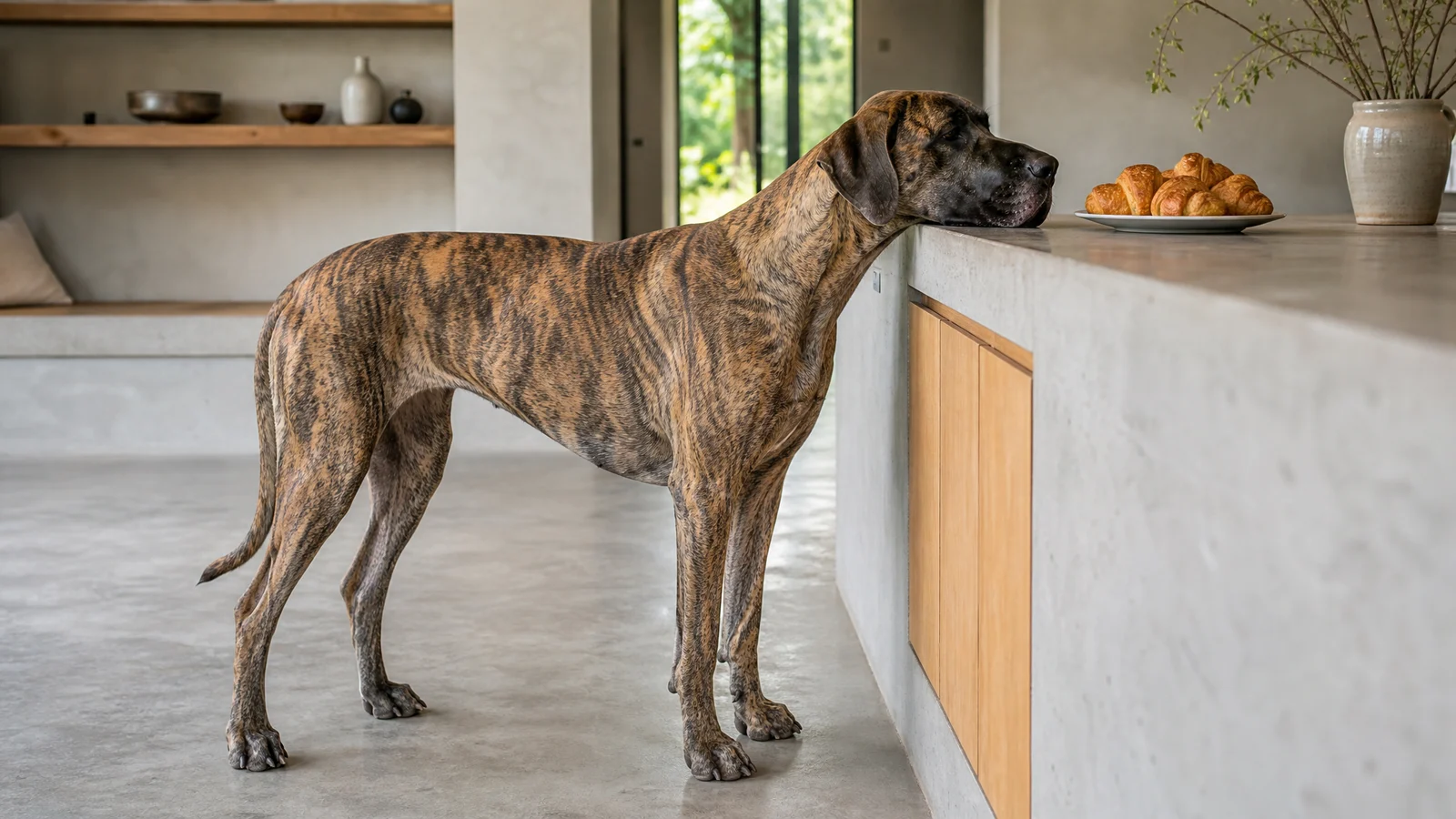 BehaviorTeaching a Tall Great Dane Counter and Gate Boundaries
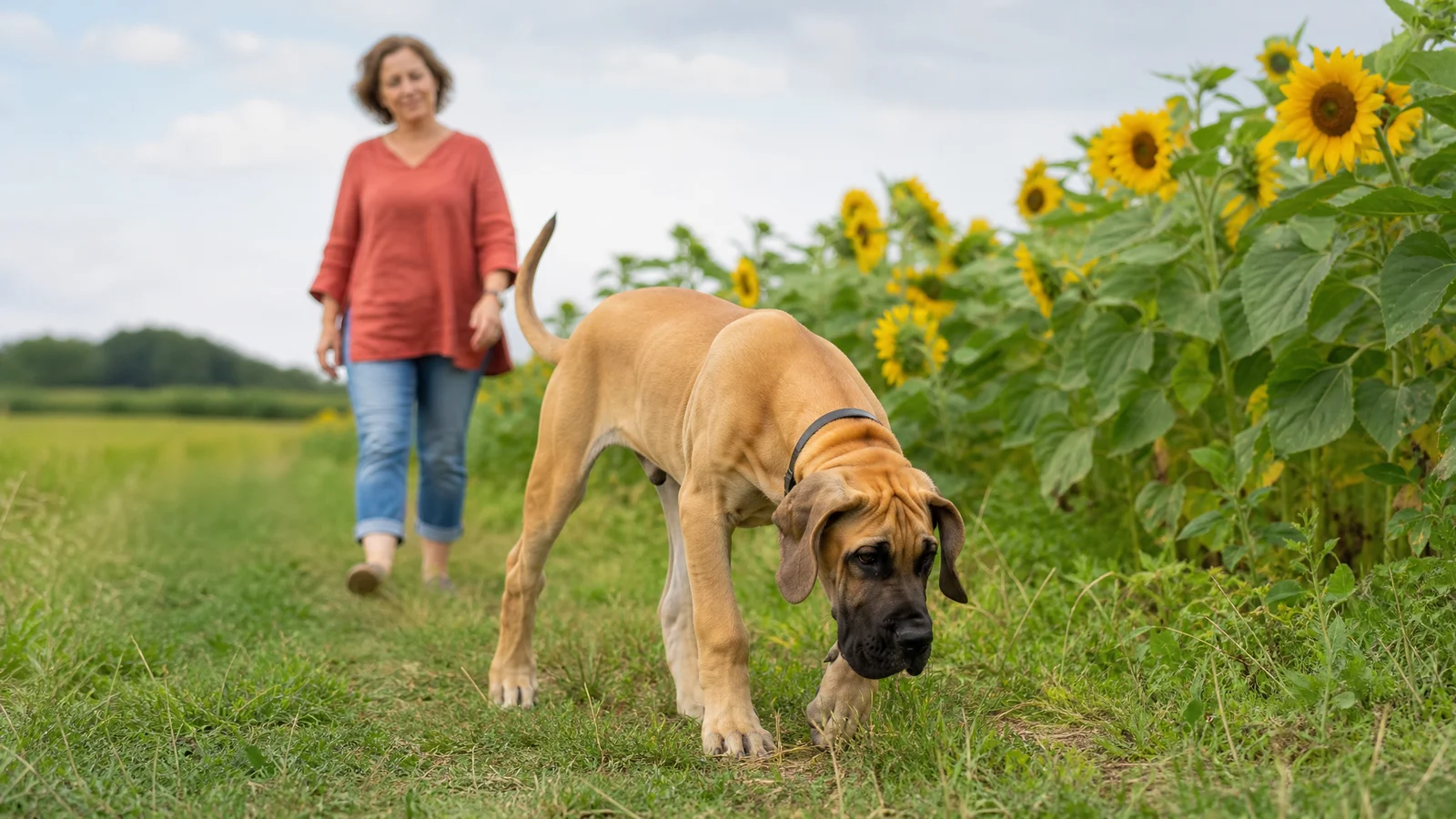 Exercise and jobsGreat Dane Puppy Exercise: Balancing Play, Walks and Rest
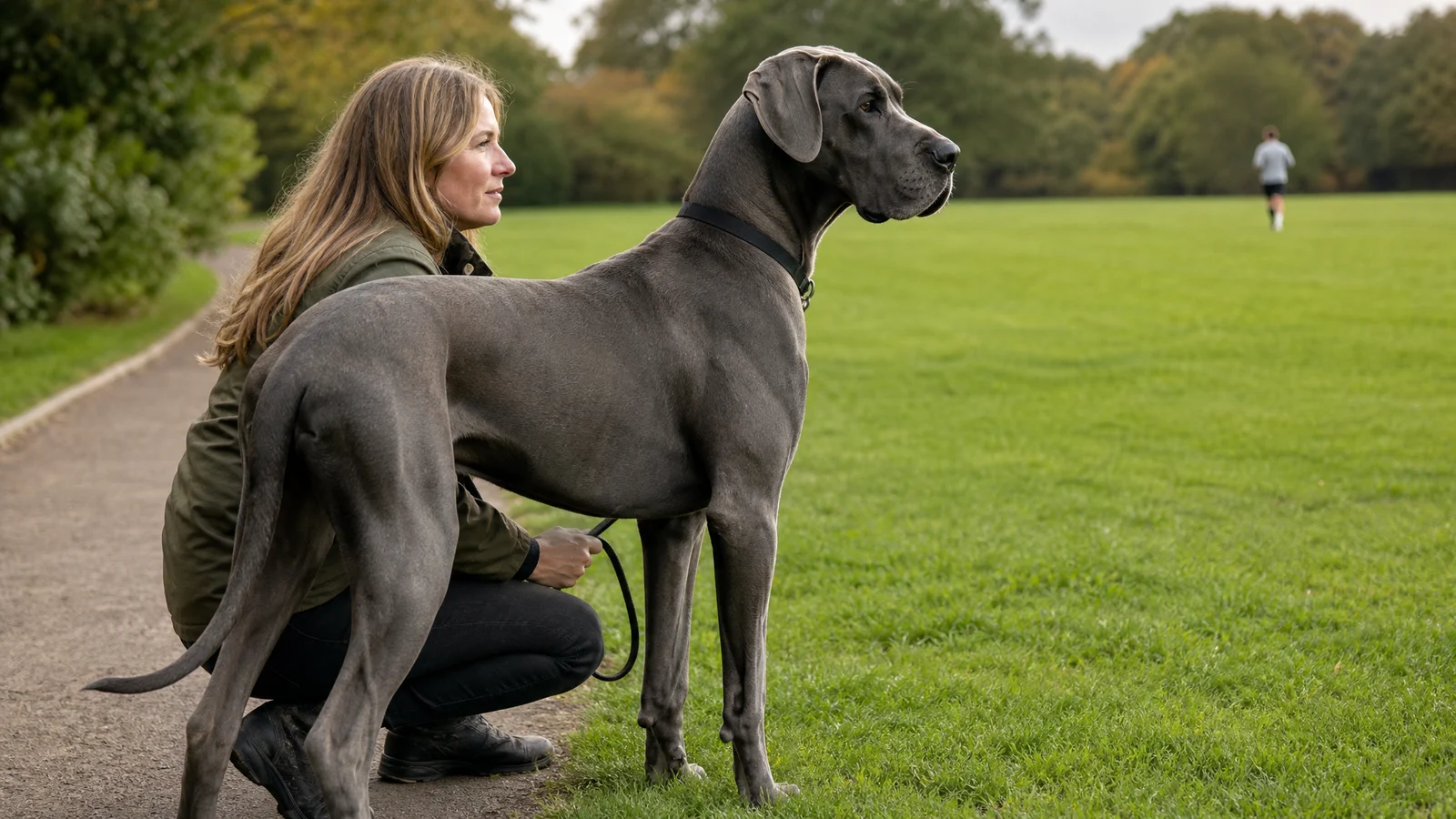 BehaviorHelping a Scared Great Dane Gain Confidence With Rewards