 Great Dane
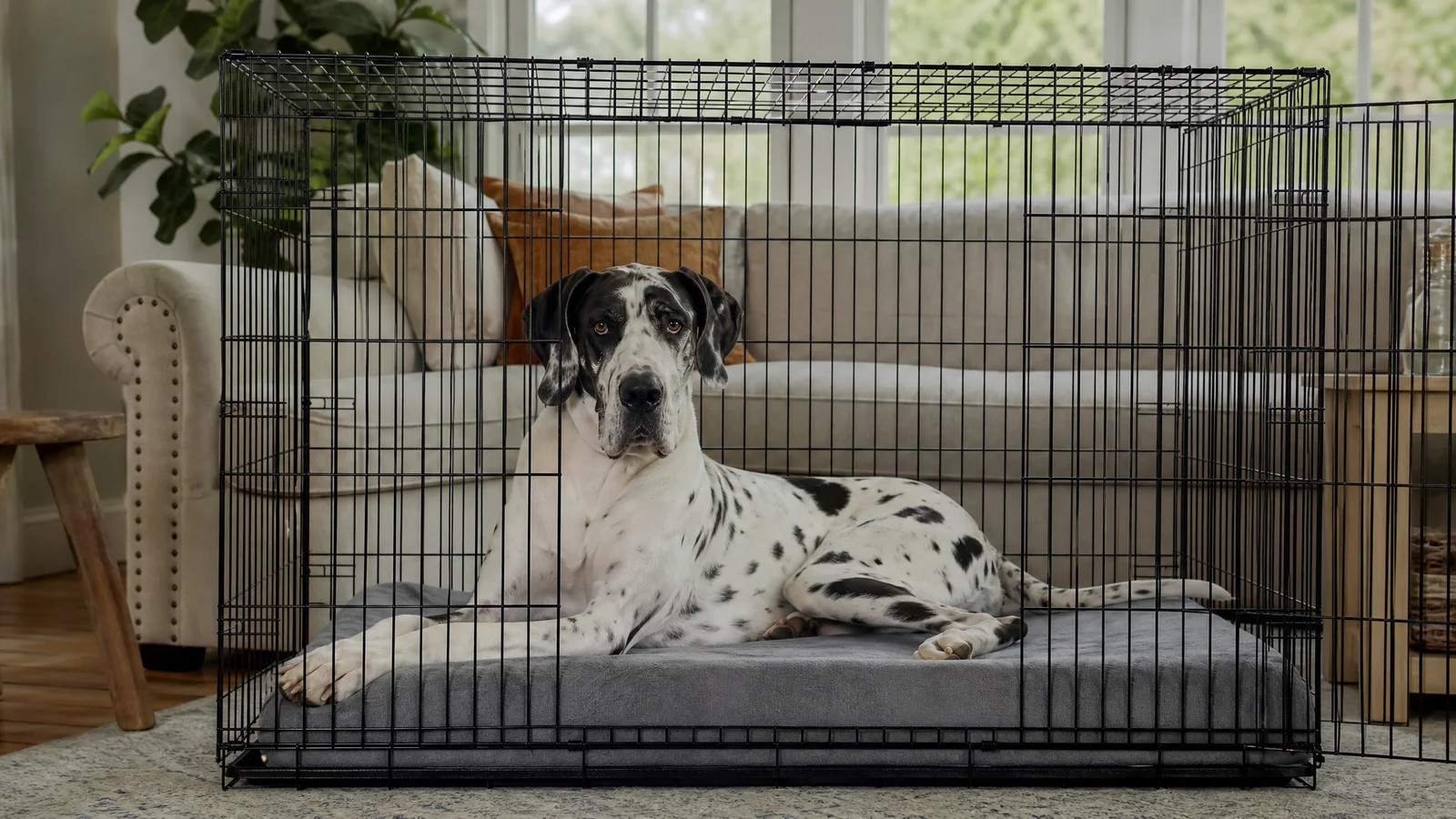
An XXL crate of about 48 to 54 inches suits most adult Great Danes, and the best way to teach them to love it is through reward-based games that let the dog choose to walk in. A door closed on a dog who has not yet decided the crate is a good place teaches the opposite lesson.
Size and attachment explain why this matters so much for the breed. A male can stand 30–32 inches at the shoulder and weigh 140–175 pounds, so a cramped crate is a physical problem. The breed also rates 5 of 5 for affectionate with family, so a Dane shut away from people has a lot to learn. Handled badly, that mix produces a dog who dreads the crate and panics when you leave. Handled well, it gives them a quiet den.
This guide covers crate training for a giant dog. It moves from the pull toward people and the growth curve to XXL sizing, treat games, car travel and a two-week schedule you can follow.
Why a Great Dane Shadows You
A crate only works when a dog accepts it as part of the household, and with this breed that depends on why they stay so close to people. Two things explain it, the role the breed has long played and the temperament that role left behind. Together they decide where the crate goes, how you introduce it and how quickly you can ask for time alone.
The Original Job
For generations the Great Dane has lived as a family companion and a watchful presence at home. The AKC standard calls for a spirited, always friendly, dependable temperament, and the breed profile gives Danes a top score of 5 of 5 for protective nature while also noting how eager they are to please.
A dog shaped to live beside a family and keep watch over it learns to keep their attention on people. We cannot read a dog's mind, but this is a likely reason a crate in a distant room feels like exile.
A Velcro Temperament
Owners describe the same pull in daily detail. Danes follow people from room to room, stay within a couple of feet during TV or meals, and lean their full weight on whoever is sitting. Because company is the strongest reward these dogs know, the crate has to be linked to company before it is linked to quiet. Begin it in the room where the family lives, with the door open and people nearby. Put the crate where the people already are.
Growth Spurts and Crate Training
A giant puppy changes size so quickly that a crate chosen in the first week can be wrong a few months later. Growing bones and joints carry a lot of weight, while a puppy's bladder and attention span stay small for longer than their body suggests. That gap is why crate choices and timing should follow development, not simply the size of the dog in front of you.
Puppy Months
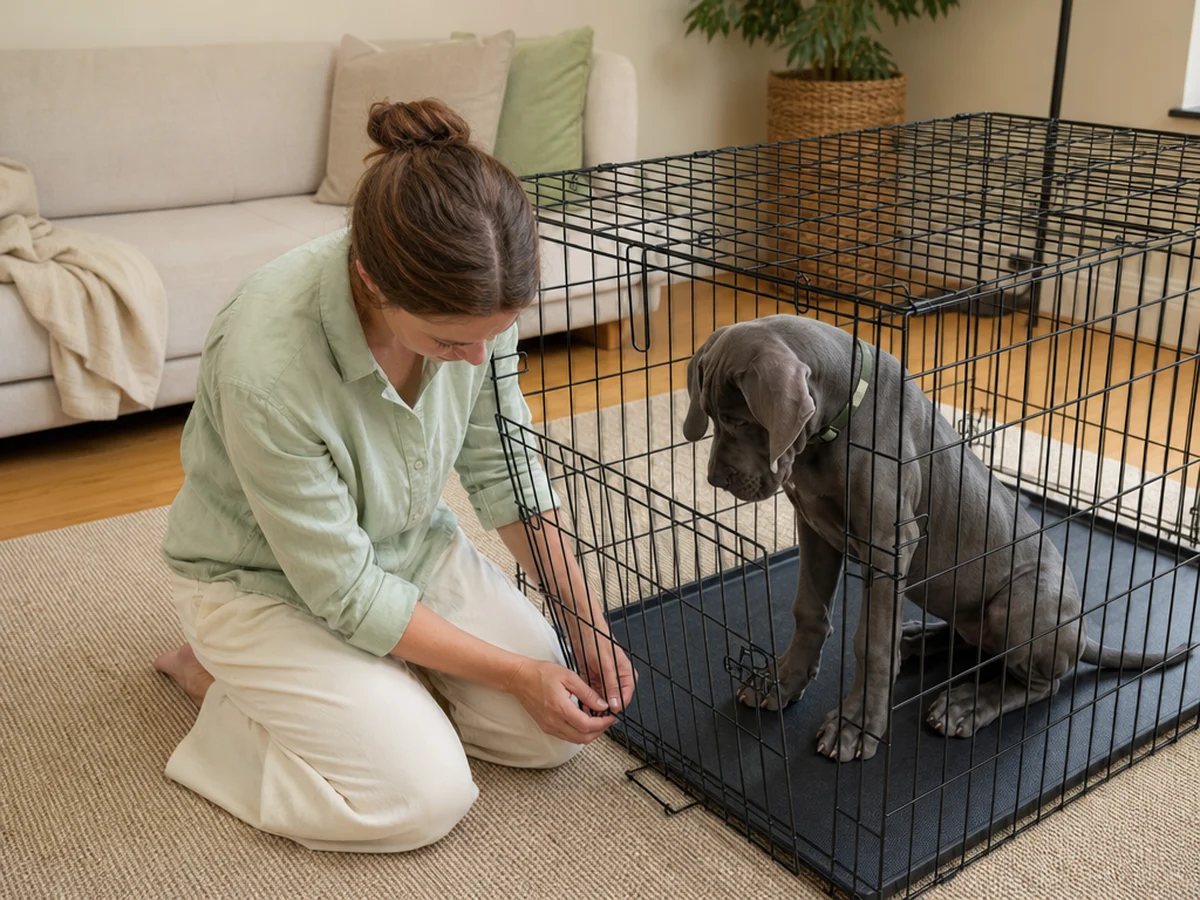
Great Dane puppies outgrow beds, crates and even cars faster than most owners plan for. Many owners find that a growing puppy outgrows an XL crate within months and needs a larger one. Buying one size up, or expecting to upgrade within months, saves money and spares a puppy a cramped stretch in the middle of training.
A bigger crate does not mean longer stays. Young puppies cannot hold their bladder for long, so match crate time to the Great Dane puppy potty schedule, and ask your veterinarian what suits your puppy's age and joints at regular checkups.
The Adult Frame
Adult males weigh 140–175 pounds and females 110–140 pounds, and owners tie vehicle and crate fit to dogs anywhere from about 100 to 200 pounds. A heavy frame is hard on joints as it ages, and owners of older Danes report trouble jumping into vehicles. Plan the setup for the adult and the puppy will grow into it.
Sizing an XXL Great Dane Crate
Size comes first because discomfort sticks to wherever a dog happens to be when they feel it. A crate that pinches the shoulders or forces a curled pose becomes a bad memory no matter how good your games are. Having trained Danes for many years, we find that owners most often buy for the puppy on the floor instead of the adult that puppy will be.
Measuring Your Dane
The breed standard sets a male minimum of 30 inches at the shoulder, with 32 inches or more preferred, and a female minimum of 28 inches, with 30 or more preferred.
In practice a male usually needs the 48 to 54 inch range, while a female may be comfortable at 48 inches. Measure your own dog from nose to base of tail and from floor to top of head, then compare with the maker's interior dimensions, because brands differ. A well-sized crate lets the dog do all of these.
A crate that fits well lets your Dane stand fully upright without ducking their head. They should also be able to turn a complete circle without brushing the walls, and lie flat on one side with their legs fully extended.
Heavy-Duty Materials
A dog who leans with well over 100 pounds tests welds, floor pans and latches every day. Choose heavy-duty construction with a solid floor and a latch that a nose cannot nudge open, and check the maker's strength rating against your dog's weight.
For bedding, owners favor orthopedic beds made for big crates, or inexpensive crib and child mattresses because they fit and launder easily. Drool and accidents are routine, so washable or waterproof covers help, though they do not always stop every leak.
Some dogs shred every ordinary bed within weeks. Owners of these dogs report that a raised or armored bed, a cut-to-fit rubber exercise mat, or foam and fabric fixed to plywood lasted, and some dogs return to a regular bed once the urge fades.
Divider Use and Placement
A crate bought for the adult can feel oversized to a small puppy, so choose a model with a divider panel and move it back as they grow. One crate then covers every stage. Place it in a living area away from heat and drafts. Owners do fit these crates into a medium apartment, and our guide to calm apartment manners covers the rest of small-space living.
Crate Training Games That Build Love
Games work because they change what the crate predicts. A dog who has only seen the door close just before you leave learns that the crate means loss, while a dog paid generously inside learns it means food and company. Danes are eager to please, so most pick this up quickly. Reward-based methods are also what veterinary behaviorists recommend for all dog training.
The First Games
Pin the door open so it cannot swing, toss one treat just inside and let your dog take it and walk away without comment. Then toss treats toward the back. Add a marker, a short word like "yes" that tells your dog a reward is coming, the moment their paws cross the threshold. Let them choose to come and go. If they back away, return to the easier step rather than lifting or pushing them in.
Building Duration
Once your dog enters eagerly, ask for a settle, swing the door shut for a moment, pass a treat between the bars and open it before any worry shows. Vary the length so some repeats are trivial and others a little longer, which keeps progress from becoming a ladder that only climbs. Sit beside the crate at first, because a Dane who likes to stay close settles faster with you in view. A stuffed chew or food puzzle gives them a calm job.
Fading the Treats
When the crate is a favorite, shift from a treat every time to treats now and then, and lean on life rewards for more of the work, such as a release to greet you, a walk or a meal served at the back. Keep an occasional generous reward so the habit never goes stale. Our guide to Great Dane trainability explains why short, consistent sessions suit this breed. End on a calm note before restlessness appears.
Travel Crates for Great Danes
A crate that suits your living room still has to fit your vehicle, and the answer depends on the dog's adult size, the length of the trips and how many dogs ride together. The habit built at home carries over, because a dog who already trusts the crate is only learning a new location.
Many owners report Danes riding comfortably in small cars and hatchbacks, some lying across the back seat or resting their heads on the console. Others report tight fits, such as a sports car that only suited short trips. For long trips, several dogs or a very large adult, owners move to SUVs, vans or a cargo area with the seats folded down, often adding a bed, a hammock, or plywood and a rug to protect the carpet.
Whatever you choose, secure the crate so it cannot slide, keep air moving around the dog and never leave them in a hot vehicle. Older Danes often struggle to jump in, so owners use ramps, running boards or low-floor vans to protect joints. For hotel stays, set up the home bed first, bring treats and stay until your dog has shown they can settle in a strange room.
A dog who feels sick or afraid in the car will not relax in any crate, and the best long-term fix is helping them relearn car travel. Work in small steps:
- Play the crate games at home until your dog walks in willingly.
- Move the setup into the parked car with the engine off and scatter treats so getting in is a pleasant surprise.
- Start the engine, reward calm, then switch it off and let your dog out before worry appears.
- Drive a very short loop, finish somewhere enjoyable and lengthen trips gradually.
If your Dane gets car sick, anti-sickness medication can help in the short term, but whether it suits a particular dog is a medical question. This is general information, so check with your veterinarian about what is right for your dog.
Crate Training Without Separation Anxiety
Crate comfort and being left alone are separate skills. A dog may love the crate while you are in the room and still struggle when you leave, because the thing they value most has gone, not the space. For a breed this attached to people, independence has to be built in layers. The crate is a useful tool and not a requirement, so treat it as one option for teaching calm alone time.
Normal Fuss or Real Panic
Brief protest that settles is a normal part of learning a routine. These signs suggest something more serious:
- Barking, howling or whining that never settles.
- Frantic scratching or chewing at the crate door or walls.
- Heavy drooling, panting or pacing well beyond the usual.
- Toileting in the crate in a dog who is otherwise house-trained.
- Refusing food or treats when alone.
Short Absences and Calm Departures
Start by leaving the room for a few seconds with your dog settled and a chew in place, then return calmly. Next step outside and come straight back. Mix short and long absences, keep goodbyes brief and skip big greetings. A phone camera shows whether your dog is really settling, so you can shorten the next absence before it fails.
If you see panic, stop increasing the time. The separation anxiety guidance advises that during treatment a dog be alone only for training sessions, with someone, not necessarily you, keeping them company. Arrange that company, then bring in a qualified reward-based trainer and your veterinarian, since pain or illness can make a dog avoid a crate they once enjoyed.
Two Weeks of Great Dane Crate Training
A properly sized crate plus patient rewards gives a giant, people-loving dog a calm den, and the plan below is the start of that. Treat it as flexible. If your dog struggles, repeat the previous step, and expect to keep building after the second week.
- Early in the week, measure your dog, choose the crate and place it in the living area with a bed inside.
- Next, pin the door open, toss treats in and let your dog wander out each time.
- Midweek, add the marker word and serve meals at the back of the crate with the door open.
- By the end of the week, reward every visit your dog makes by choice.
- Close the door for a few seconds, pass a treat through and release before any worry.
- Lengthen the closed-door settles with a stuffed chew while you sit nearby.
- Step out of sight briefly, then outside and straight back, with no big greeting.
- At the end, rehearse the crate in the parked car and take a short drive that finishes somewhere fun.
Keep sessions short and rewards generous, and let your Dane set the pace. For a breed this devoted to their people, calm in the crate is built on trust.
 Exercise and jobsGreat Dane Brunch and Patio Manners
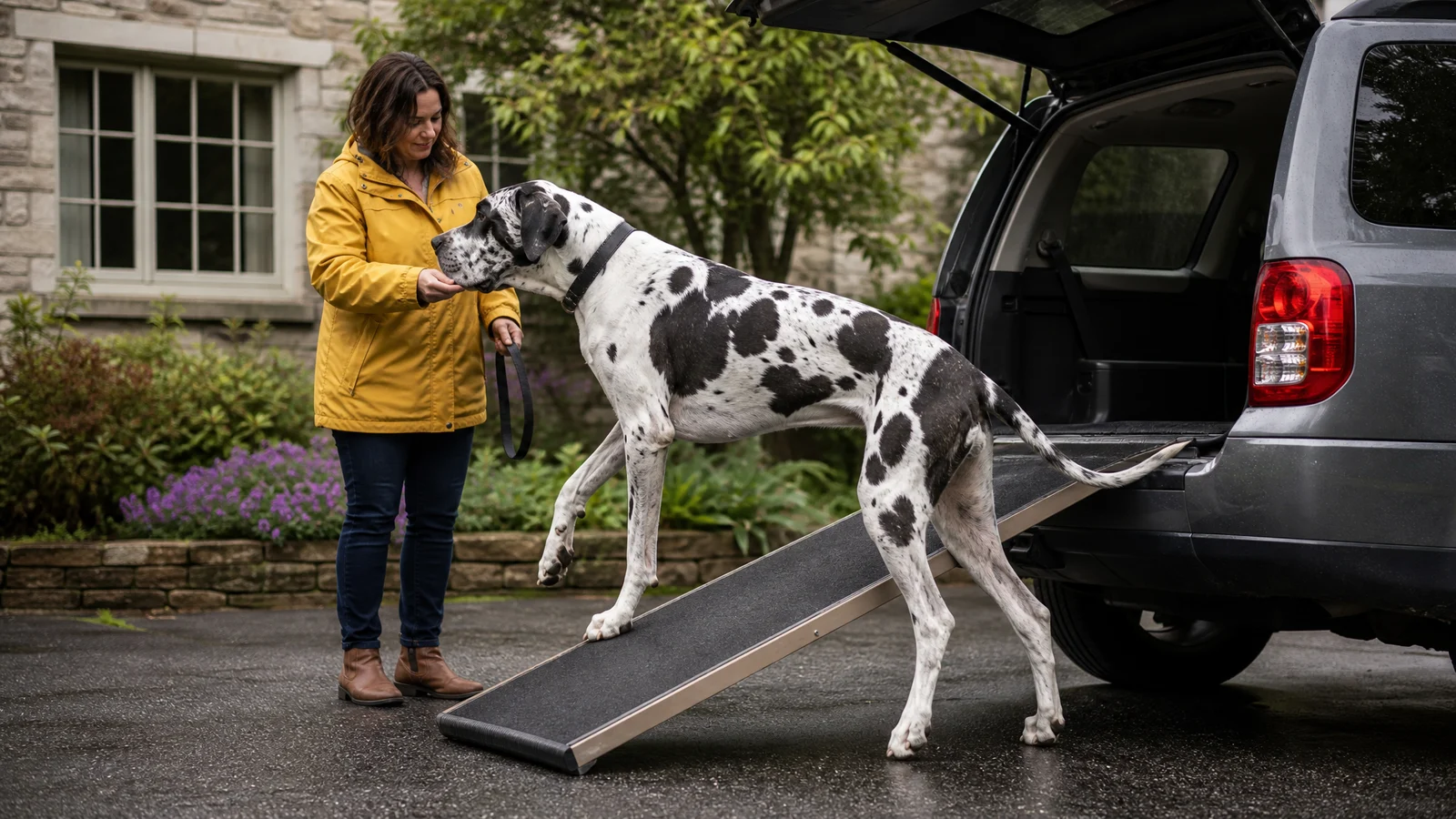 Training basicsTeach a Great Dane to Load and Ride Calmly
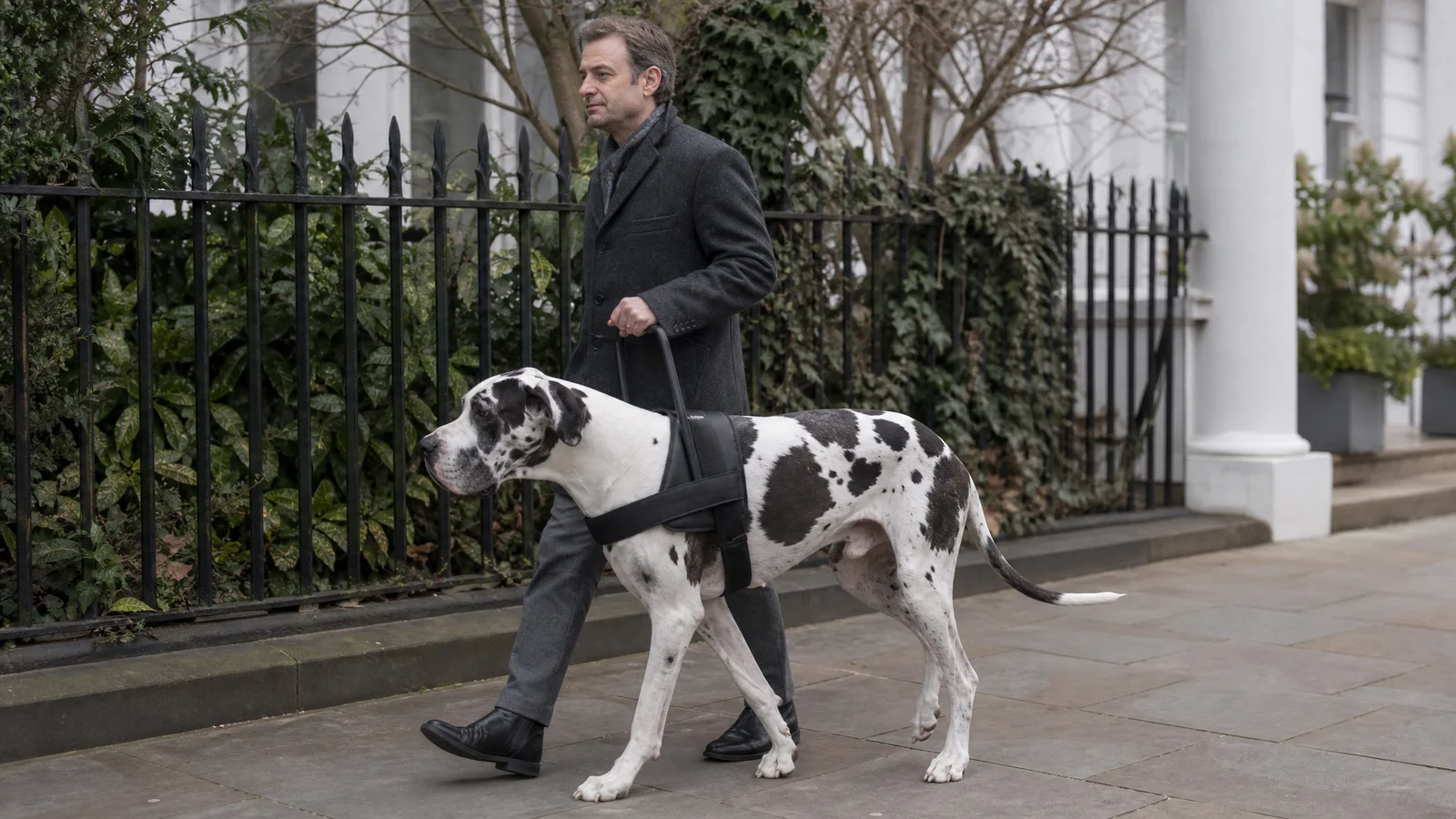 Training basicsHow Do You Train a Great Dane for Mobility Service Dog Work?