 Great Dane
Holding a Great Dane still is a poor handling plan. Once the dog is fully grown, strength cannot safely replace cooperation during nail care, brushing or an examination. The useful preparation is a shared language: one cue to begin, a stable position, small touch steps and a pause the dog has learned will be honored.
Organize practice as four appointments rather than one long handling ladder. Below, we build Great Dane handling language at home, transfer the same start and pause cues to another person, rehearse the clinic without a procedure and make a separate plan for necessary care. Each appointment has a clear stopping point, so cooperation never depends on overpowering a giant dog.
Home Language for Great Dane Handling
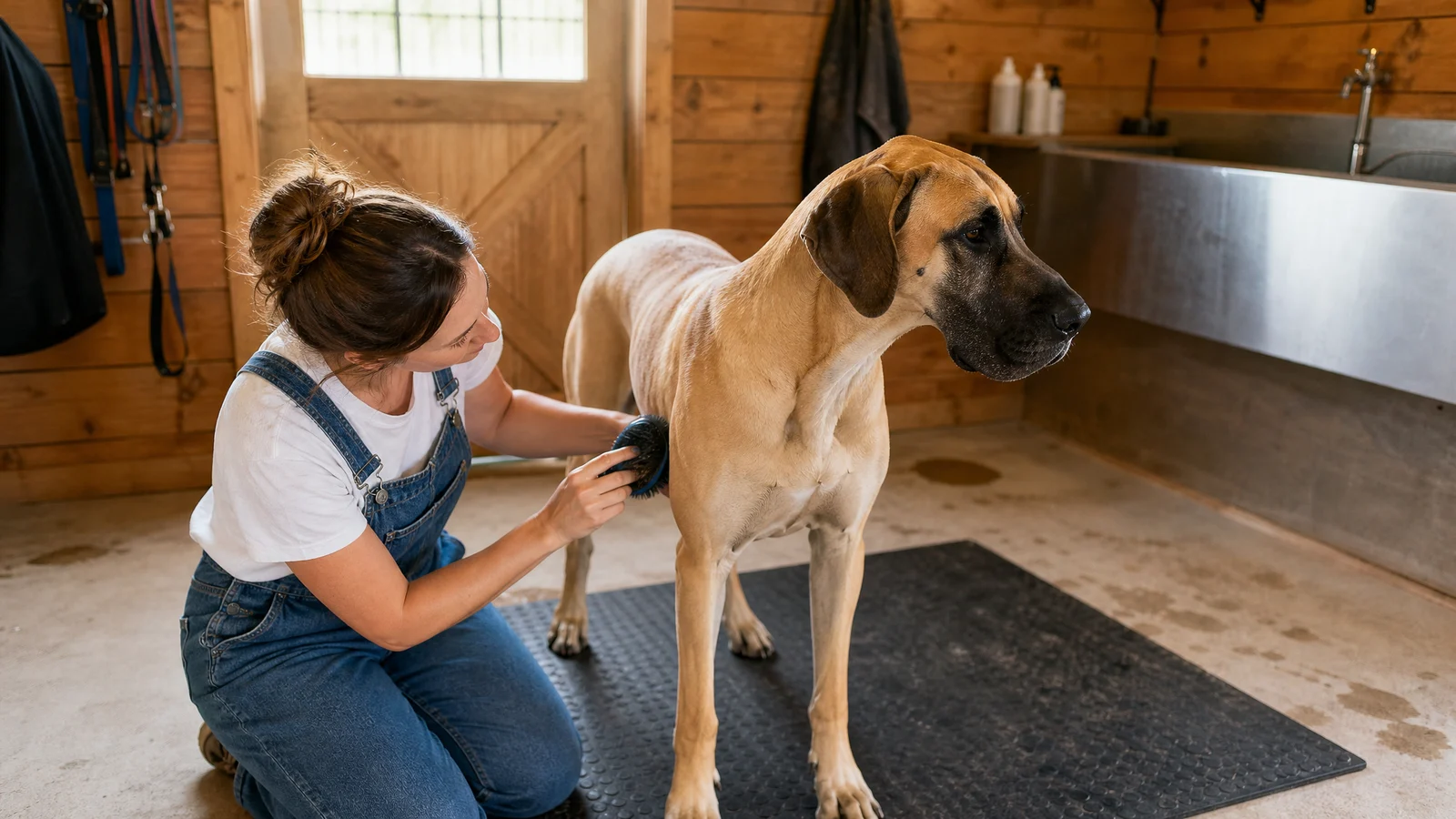
Choose a start position the dog can offer voluntarily, such as standing on a broad nonslip mat or placing the chin on a folded towel. Mark and reward the position without touching. Release after a few seconds so beginning and ending remain distinct.
Choose a pause signal you can see, such as lifting the chin or turning the head away. Present an empty hand, wait for the signal, remove the hand and reward. Practice until the dog understands that the signal changes what the person does.
Dogs Trust handling guidance recommends gradual practice and professional help for established fear or aggression. A pause does not make necessary care optional. It helps the team notice when a smaller step or clinical plan is needed.
| Shared Cue | Meaning | Human Response |
|---|---|---|
| Mat or chin position | Ready to begin | Start one planned touch |
| Head turn or chin lift | Pause | Hands and tools move away |
| Release word | Step is finished | Dog may leave the station |
Use the language outside formal care. Ask for the start position, touch one shoulder and release before a walk. These easy repetitions prevent every signal from predicting nails, ears or a clinic visit.
Keep sessions under the dog's current capacity. A pause followed by voluntary return can continue. Repeatedly leaving the station, refusing food or showing tension means the lesson should end and the next setup should be easier.
Choose a Position the Dog Can Maintain
Teach standing before asking for body handling. Reward four feet placed naturally on the mat and the head in a comfortable position. Avoid stretching the neck upward or pulling legs outward. A giant dog who loses balance may resist for a physical reason.
Build duration in uneven intervals and release often. Walk one step around the dog, return and reward. Later, let another person pass nearby. The position should survive ordinary human movement before it is paired with detailed touch.
Practice lying on one side only if the dog offers it comfortably and the veterinarian or groomer finds it useful. Do not roll or pin the dog. Standing may be the safest exam position for many tasks, while the clinic decides what a procedure requires.
The site's Great Dane training guide explains markers and gradual difficulty. Keep that teaching language consistent so the new element is handling, not a new reward system.
Teach a short forward step and turn on the mat so staff can view another side without pushing the body. Reward each movement separately. Precise positioning is useful only while the dog remains comfortable and stable.
Use the Great Dane leash plan for controlled movement through waiting rooms and parking areas. Exam position begins after safe travel, not while the dog is still pulling toward an exit.
Work Through Body Zones Without Trapping
Divide the body into zones and change one detail at a time. A shoulder touch is not permission to hold a foot, lift an ear or open the mouth. Begin with the easiest zone, touch for one second, remove the hand and reward while the dog remains in the start position.
Paws and Legs
Move the hand down the leg in stages. Later, lift the foot just clear of the mat and replace it gently. Keep the limb under the body and support balance. Separate toe handling from nail-tool practice.
Ears and Mouth
Touch the outside of the ear before lifting the flap. For the mouth, begin at the cheek and lip, then briefly view teeth without prying the jaws open. Ask the veterinary team what home practice is appropriate.
Body and Tail
Use flat, predictable touch along the chest, sides and back. Tail and rear handling can be sensitive, so approach from where the dog can see and keep the first contact brief. Stop for pain, guarding or abrupt sensitivity.
Keep regular veterinary visits and report lumps, swelling, discharge, odor, pain or sudden handling changes. Training cannot diagnose or treat a physical problem.
Make a zone card with the dog's current step. One line might say “right front leg: hand to ankle, no lift.” Another might say “ears: one-second flap lift.” Specific limits prevent a new helper from skipping ahead.
Practice the same zone from both sides. Human posture and the dog's balance change when the handler switches position. Return to a lighter touch instead of assuming the learned side transfers automatically.
Separate Tool Sight, Sound and Contact
Introduce sight, sound, movement and contact separately. Place a brush on the floor, reward looking and put it away. Touch the body with the back of the brush before making one normal stroke. A nail tool can click at a distance before it approaches a foot.
Best Friends handling guidance recommends working below strong distress. If food stops, the body stiffens or the dog leaves the position repeatedly, reduce the step. Do not use restraint to finish a training repetition.
- Use nonslip footing and enough room for the whole Dane to stand.
- Inspect tools and keep sharp equipment secured between repetitions.
- Practice one tool and one body zone rather than a full grooming session.
- Ask a qualified groomer or veterinary professional to demonstrate unfamiliar care.
RSPCA grooming guidance supports gradual introductions to tools and professional settings. Necessary grooming may require a professional plan while home skills are still small.
Separate tool duration from pressure. One light brush stroke can become two before the stroke becomes firmer. With nails, touching the tool to one nail comes before vibration, pressure or clipping. Ask a professional to identify the safest order.
Store tools between sessions so the dog cannot chew them or rehearse avoidance when nobody is teaching. Bring them out with the mat, complete the planned step and put them away after release.
Handoff Language for Great Dane Handling
Transfer begins with the familiar handler present and the second person delivering rewards. The dog offers the start position, the new person stands sideways and no touch occurs. On later turns, the new person touches one easy zone while the familiar handler observes.
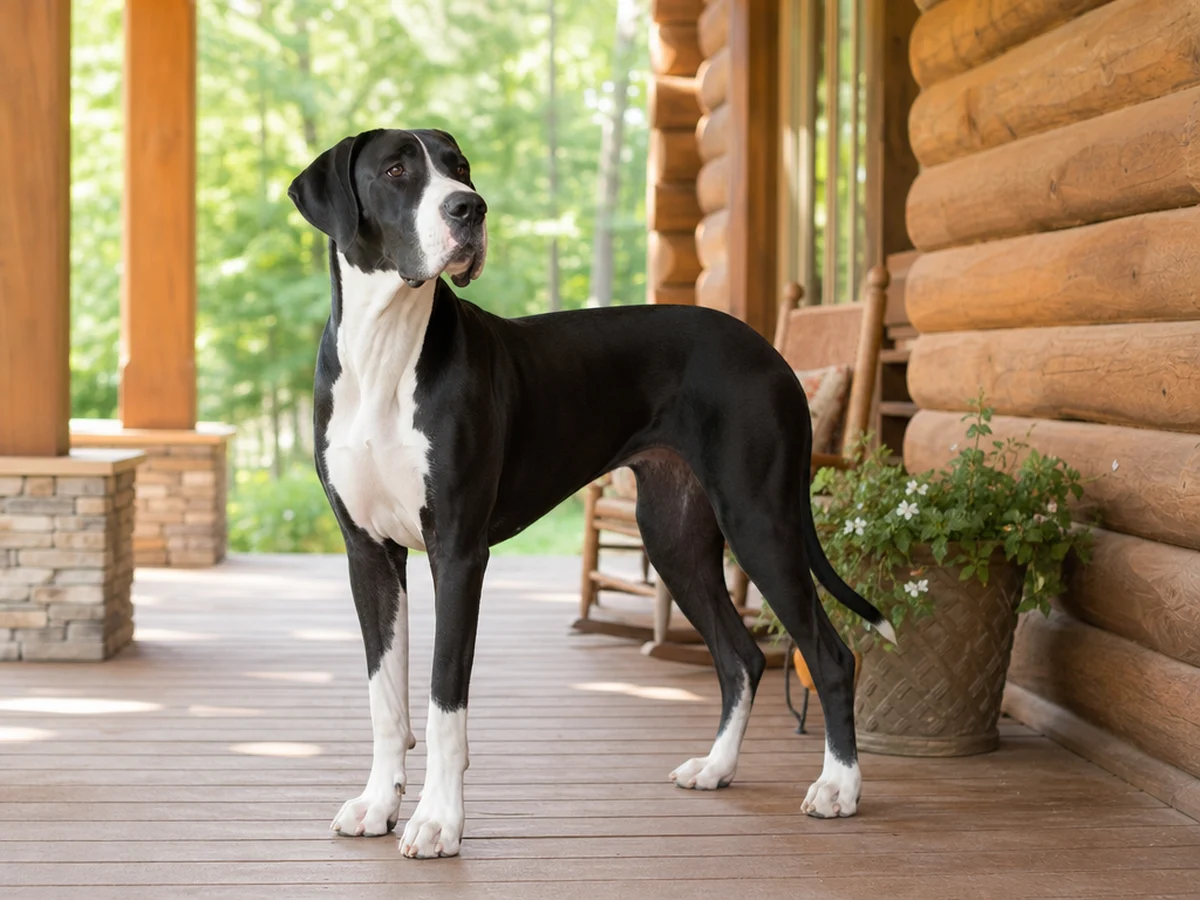
Share the exact signals and the dog's current limit. “Good with handling” is not useful. Say that the dog can stand for shoulder and ear touches, pauses after two paw repetitions and has not yet practiced nail pressure.
Change person before changing tool, body zone or duration. If the new person also brings a clipper and a longer session, failure gives no clear information. Keep the first transfer easier than the dog's best home performance.
Children should not run handling rehearsals. People with limited strength or balance can participate by rewarding from outside the working area, but an adult capable of managing the environment remains responsible.
Transfer to different clothing and posture. A person in a coat, seated on a stool or wearing clinic-style clothing may look unfamiliar. Change only that appearance while the touch remains easy.
Video a session only from a fixed safe position. Review the first tension signal, reward timing and whether the pause was honored. Do not keep handling longer to create a better recording.
Great Dane Vet Visit Rehearsal
Ask the clinic whether it offers brief happy visits without a procedure. The first visit may consist of entering, eating near the scale and leaving. A later visit can add the lobby, exam room or one staff member. Avoid busy times when possible.
Practice car loading and the route separately. Bring the familiar mat and high-value rewards if the clinic approves. Tell staff about the start and pause signals, difficult zones, previous fear and any bite risk before the appointment begins.
Fear Free's directory can help owners search for professionals using lower-stress practices. Credentials do not replace a conversation about this individual dog, the necessary procedure and the clinic's safety plan.
A muzzle may be part of professional safety planning, but it requires separate positive conditioning and proper fit. Ask the veterinary team for guidance rather than introducing it during an urgent procedure.
Rehearse the scale as its own station. Reward approaching, one paw, four paws and stepping off. Large dogs may need room to turn, so ask staff where to position the handler and keep the path clear.
Practice waiting in the car only when temperature and safety allow and the clinic directs it. Some Danes settle better outside a crowded lobby. Confirm the arrival process before the appointment rather than improvising at the door.
Necessary Care Before Great Dane Handling Is Ready
Training cannot always catch up before care is due. Call the clinic or groomer in advance, describe current skills accurately and ask how they want to prepare. The professional may adjust timing, staffing, location or the medical plan.
Do not delay necessary veterinary care while practicing at home. Keep regular visits, follow the clinic's instructions and seek prompt help for pain, injury, illness or a handling change that could have a physical cause.
- Tell the professional which start and pause signals the dog knows.
- Name body zones and tools that remain difficult.
- Follow the clinic's safety and recovery instructions.
After care, record what the dog could do, where stress rose and what helped recovery. A useful Great Dane exam language lets home, grooming and clinic teams start from the same facts. Cooperation grows because people make each touch predictable, honor pauses when possible and bring professional support in before strength becomes the plan.
Return to one easy home step after recovery, with veterinary approval. The goal is to restore the familiar language, not recreate the procedure. Future planning should incorporate what the professional team observed.
Update the zone card and share it before the next appointment. A current record prevents a successful easy step from being mistaken for readiness to complete every part of care.
The record should also name recovery. Note how quickly the dog ate normally, rested and accepted ordinary touch after the visit. That information helps the team plan spacing, waiting location and the amount of home practice that remains comfortable before the next necessary procedure.
Keep the shared language identical across home and professional settings whenever the procedure allows. The mat, start position, marker, pause and release should mean what the dog already learned. A clinic may need different safety steps, but explaining those changes before touch begins gives both people and dog a more predictable sequence and a clearer recovery plan afterward.
 Puppy trainingTeaching a Great Dane Puppy a Soft Mouth Before the Jaws Get Big
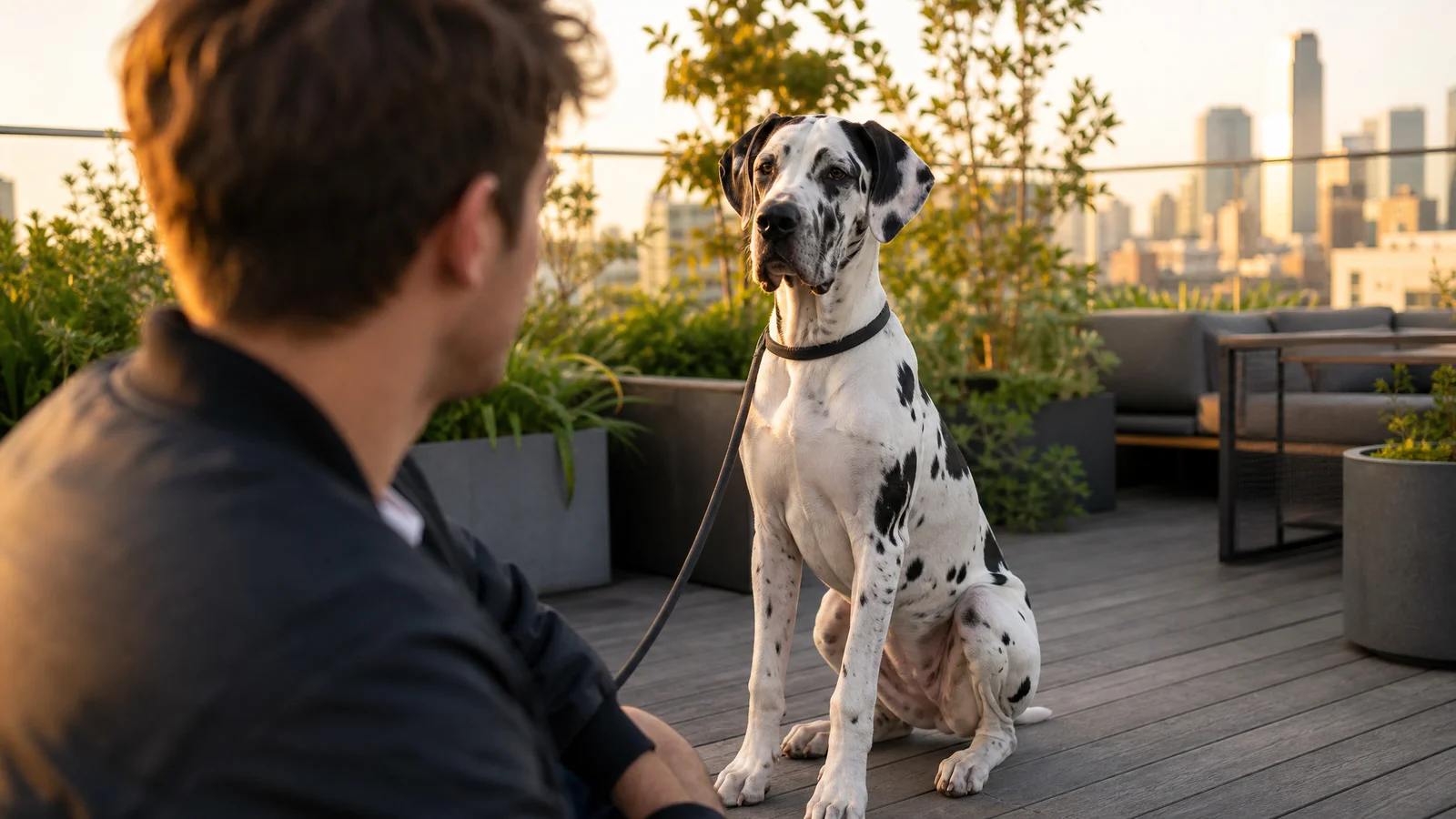 Puppy trainingSix Months Old and Still Growing: Training Your Teen Great Dane
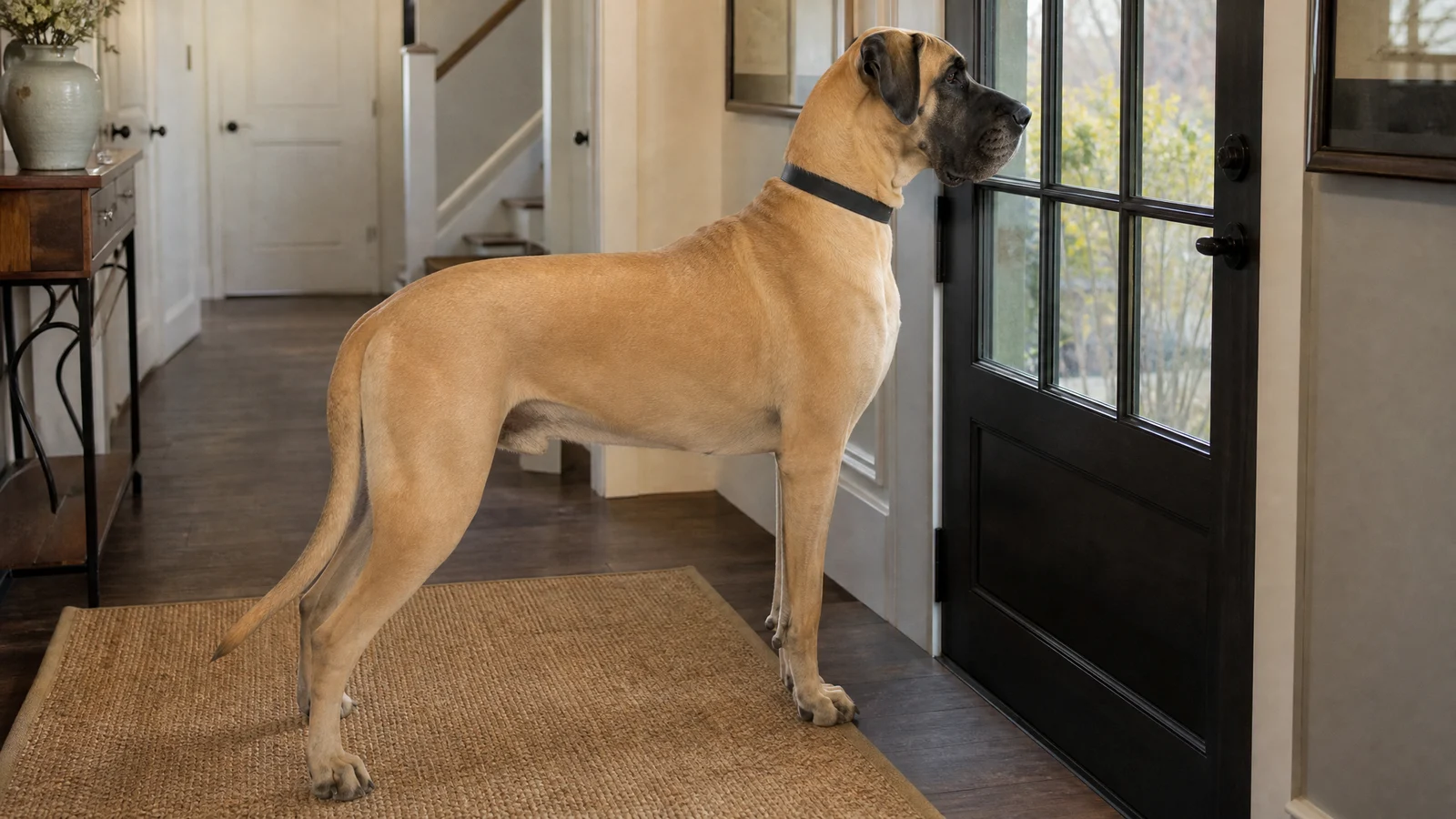 BehaviorWhy Your Great Dane Acts Like a Watchdog and How to Fix It