 Great Dane
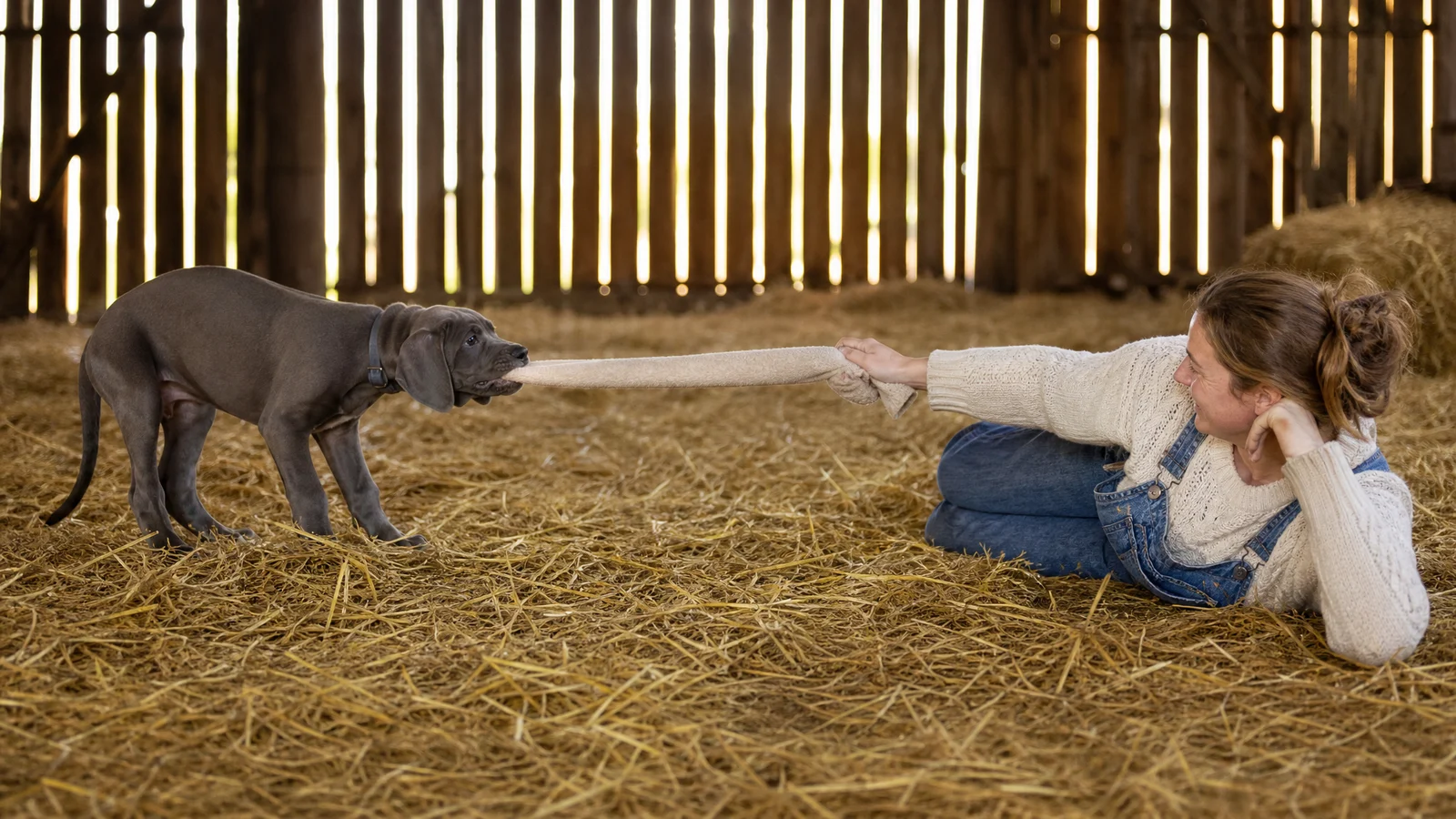
A Great Dane puppy's mouth grows faster than a family's tolerance for rough play. When every person squeals, pushes, runs or offers a different toy, the puppy receives an exciting sequence rather than one clear lesson. The response must be simple enough to repeat: toy-led play, a calm interruption when teeth touch people and rest before arousal takes over.
Treat each contact point as its own small lesson. Below, we prepare the room, begin with toy contact, separate skin from clothing grabs, teach food delivery outside play and coordinate the household response. We finish with two decisions: when intensity needs professional help and how recovery can prevent the next difficult mouthing episode.
Identify the Great Dane Puppy Mouthing Setup
Record the thirty seconds before teeth land. Mouthing may follow fast hand movement, floor play, a child running, unwanted touch, hunger, toileting needs or fatigue. The same mouth contact can have different causes, and the useful response begins by changing the setup.
ASPCA puppy mouthing guidance explains that puppies explore and play with their mouths. That normal origin does not mean skin contact should continue. It means the household needs safe outlets and consistent teaching.
| Before Mouthing | Immediate Change | Later Lesson |
|---|---|---|
| Hands start wrestling | Freeze and offer space | Toy-led play loop |
| Puppy grabs moving clothes | Stop movement behind a barrier | Calm walking past fabric |
| Touch triggers teeth | End handling | Gradual consent-based touch |
Keep a few notes across several days. Do not provoke bites to complete the record. Patterns around time, activity and sleep can show where prevention will teach more than reacting after contact.
Include intensity and recovery, not just frequency. A soft touch followed by immediate toy choice differs from repeated hard grabbing after the person stops. That distinction helps a professional understand change.
Check the environment at the common time. Evening mouthing may coincide with a busy room, missed nap and dangling clothing. Remove one trigger and provide a rest route before the usual sequence starts.
Toy-Led Great Dane Puppy Play
Choose a toy long enough to keep hands away from the puppy's mouth without encouraging violent swinging. Begin by moving it low and away from the puppy. Mark toy contact and keep the game brief. Stop the toy while the puppy can still release and settle.
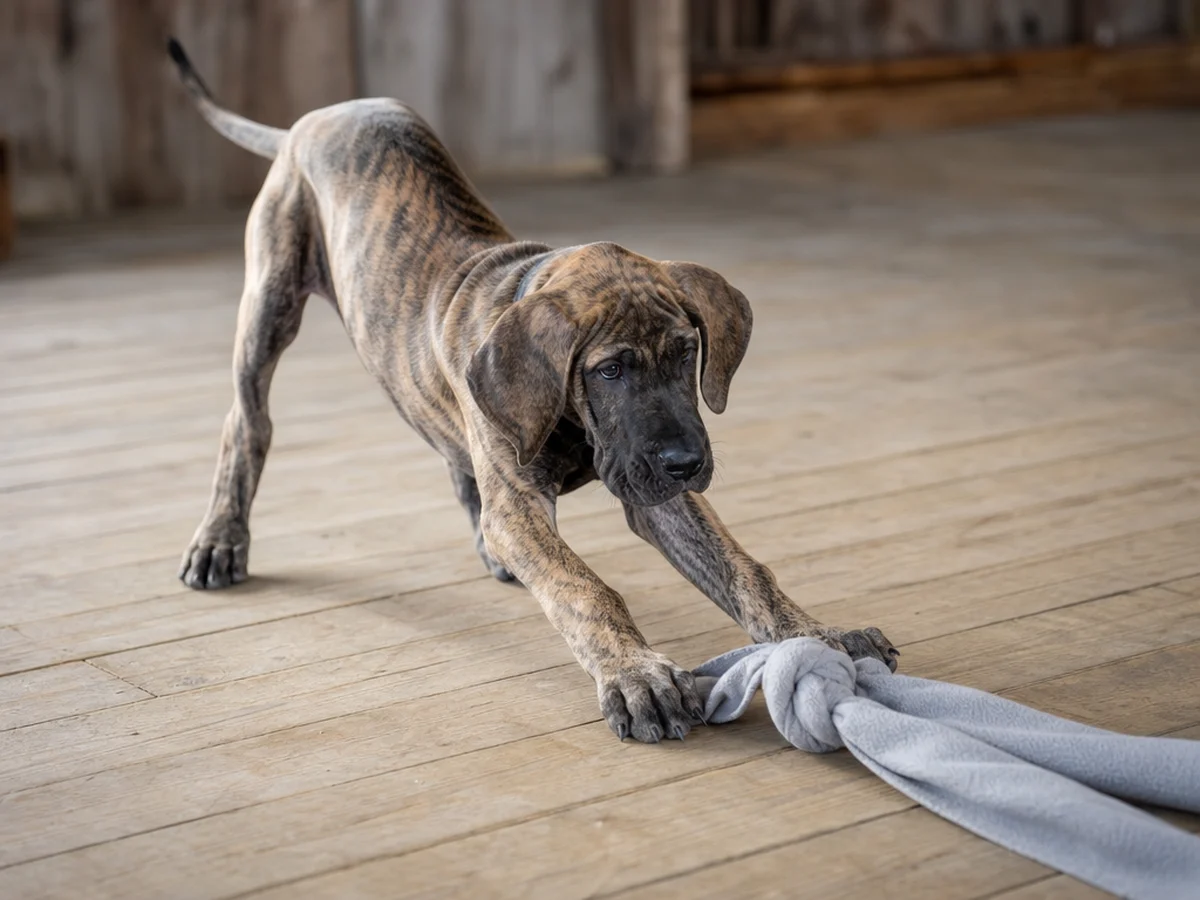
Build a loop: invite, play for several seconds, pause, trade for food and reset. A second toy can make release easier. The puppy learns that giving up one object does not end all fun, and the handler avoids pulling an item from the mouth.
Best Friends mouthing guidance emphasizes consistent responses and appropriate toy play. Store toys near common trouble spots so the adult can begin the right game before teeth find clothing.
- Keep toys off children's bodies and away from faces.
- Stop before jumping, frantic grabbing or repeated misses begin.
- Use a gate if the puppy cannot disengage from the person.
- Offer water, a toilet trip and quiet rest after the loop.
Rotate toys by function. Keep one for tug, one for carrying and one safe chew approved for the puppy. A toy too small for the growing Dane or one that breaks apart should be removed and replaced.
Teach the end cue outside intense play. Say it, let the toy become still, trade and move to a quiet activity. Predictable endings reduce grabbing at hands that are trying to put toys away.
Two Great Dane Mouthing Contact Lanes
Skin and clothing contact need different mechanics even though both end social access. We separate the lanes so the adult can freeze the right movement, protect the person and return only when the puppy can choose an appropriate toy.
When Teeth Touch Skin
At skin contact, stop hand movement and close the social game. Avoid pulling away quickly, which can invite chase. Move out through the nearest gate or use a barrier for a short pause. Return only when the puppy is grounded and able to choose a toy.
Do not shout, tap the muzzle or hold the mouth closed. AVSAB's humane training statement supports reward-based teaching rather than pain or intimidation. The interruption should remove play, not add conflict.
If contact resumes immediately, the puppy may need a toilet break, food at the normal time, less stimulation or sleep. Use the barrier and meet the need. Repeating ten brief returns can become another exciting loop.
Reward appropriate contact throughout the day. Calmly feeding for four paws down, toy choices and quiet handling gives the puppy many ways to succeed before a bite occurs.
Keep the pause long enough for movement to stop but short enough that the relationship is clear. If the adult returns and contact restarts, end the loop and guide the puppy to rest instead of repeating exits.
Wear protective clothing during a known difficult phase, but treat it as temporary management. Thick sleeves prevent injury while the household changes timing and arousal. They are not toys for the puppy to grab.
When Teeth Catch Clothing
Moving sleeves, pant legs and robes can act like toys. Freeze the fabric instead of pulling against the puppy. Protect skin, move behind a barrier when possible and scatter food away only after the puppy releases. Then secure the clothing or change the setup.
Practice with one low-value fabric item worn by an adult, at a distance where the puppy can stay grounded. Mark looking without grabbing and reward on the floor. Take one step, reward again and end. This is controlled movement practice, not permission to bite a training sleeve.
Children should not rehearse this lesson. Use gates and direct adult supervision, give children dog-free running space and teach them to stop moving and seek an adult rather than struggle with the puppy.
The site's Great Dane household guide can help arrange gates, rest areas and calm movement through shared rooms. Use those routes before active family periods begin.
Practice adults walking past with ordinary fabric after the puppy has toileted and rested. Start several feet away, reward a grounded glance and stop after one pass. Add speed only while the dog can remain disengaged.
Secure laundry and robes at the actual drop points. Training cannot compete with a daily trail of moving fabric. Prevention keeps the clothing lesson from being undone between sessions.
Transfer Great Dane Mouthing Skills Beyond Play
A puppy who grabs treats is not necessarily using the same behavior as play mouthing. Teach food delivery separately with the hand closed around a reward. Present it below nose level. When the mouth softens or the puppy backs away, open the hand and deliver with a flat palm or place it on the floor.
Gentle Treat Delivery Outside Play
Use larger pieces that are easy to hold safely and avoid placing fingertips between teeth. If the puppy becomes frantic, stop and use a bowl or floor delivery. Hunger, high-value food and an exciting setting can change the response.
Practice when the puppy is calm, not as a test during wild play. Add one handler at a time. Gentle food taking supports training mechanics, while toy-led play teaches where active mouth contact belongs.
Keep regular veterinary visits and ask about oral pain, broken teeth, digestive upset or sudden changes in eating and mouthing. Physical discomfort can alter contact, and an individual puppy's diet or safe chew plan belongs with the veterinary team.
Have each adult practice the same delivery position. Hands stay low and still, and the reward appears after a soft approach. If one person repeatedly holds food high, jumping and grabbing may enter the lesson.
Use floor delivery when excitement rises. Tossing food across a slippery room can create another chase, so place it a short distance away on secure footing and pause before the next cue.
Household Rules for Great Dane Puppy Mouthing
Write three rules everyone can follow: play starts with a toy, teeth on people end access and an overstimulated puppy gets space and rest. Decide where toys and barriers are kept. Consistency comes from preparation, not from expecting every person to improvise the same response.
Adults should model quiet hands and short loops. Visitors do not need to play. Children interact through adult-led food searches or simple cues with a barrier when appropriate, never through chase or floor wrestling.
- Notice the setup and interrupt before teeth land when possible.
- Freeze, protect skin and calmly remove social access after contact.
- Meet ordinary needs and offer rest when arousal stays high.
- Record patterns that persist or intensify.
Track fewer contacts and faster recovery rather than expecting instant elimination. Puppy learning and physical growth both take time, but safety rules begin on the first day.
Pair the rules with the Great Dane puppy recovery plan. Activity, toileting, food, sleep and quiet handling all affect the capacity available for gentle play.
Review the notes weekly. If contact is shifting toward toys, interruptions are shorter and the puppy settles more easily, the loop is working. If intensity rises, change management and ask for help.
When Great Dane Mouthing Needs Help
Seek veterinary and qualified behavior help when bites are intense, puncture skin, occur around guarding, follow touch consistently or arrive with stiffness, freezing, growling or fear. Separate the puppy safely and stop informal experiments while help is arranged.
Battersea puppy mouthing guidance notes that tiredness, overstimulation and handling can contribute. Bring a factual log of context, body language and recovery. A useful Great Dane play loop keeps teeth on toys, makes interruptions boring and gives the puppy a clear path into rest before the jaws and body become harder to manage.
- Use barriers before people enter the puppy's space.
- Keep children and visitors outside informal testing.
Prevent access to people while advice is arranged. Use barriers, adult supervision and separate rest spaces. Do not ask visitors or children to test whether the mouthing has improved.
Bring video only when it was captured safely during ordinary life. A professional needs the setup, body language and recovery, not a reenactment that risks another bite.
Review safe chew size as the Dane grows. An item that once fit appropriately may become small enough to swallow or break. Supervise use and follow veterinary guidance for the individual puppy.
Recovery After Difficult Great Dane Mouthing
Plan the hour after difficult play. Lower household movement, provide water and use the familiar rest area. Recovery is part of the bite-inhibition lesson because an exhausted puppy cannot practice careful choices.
Keep a duplicate toy by the yard and main living area. Quick access lets the adult start a planned loop before the puppy grabs a sleeve, and it avoids running through the room with an exciting object.
Retire damaged toys promptly. Loose fabric, exposed stuffing and broken pieces change a training tool into a swallowing risk. Replace the item with an intact option suited to the puppy's current size.
 Puppy trainingSix Months Old and Still Growing: Training Your Teen Great Dane
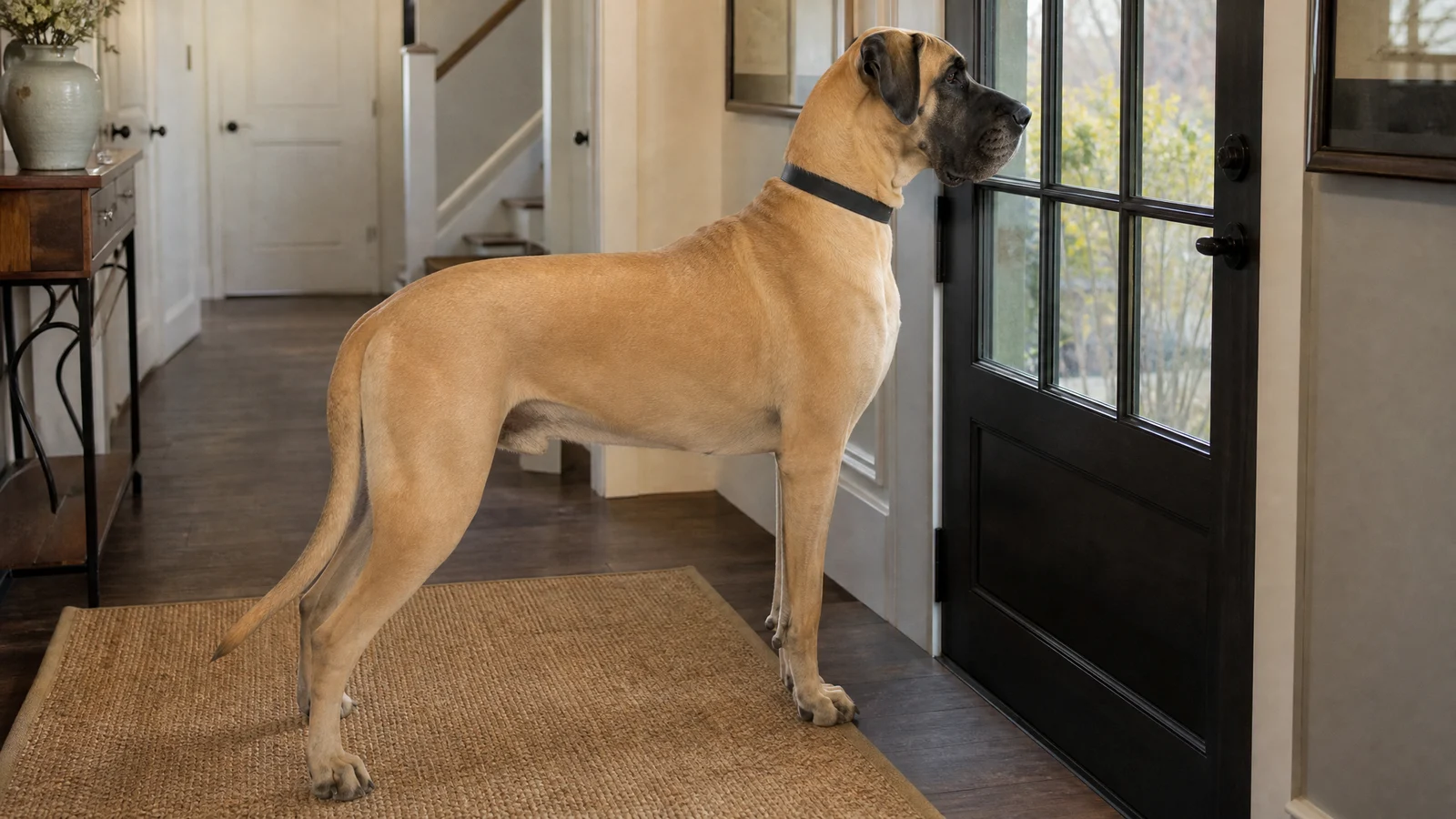 BehaviorWhy Your Great Dane Acts Like a Watchdog and How to Fix It
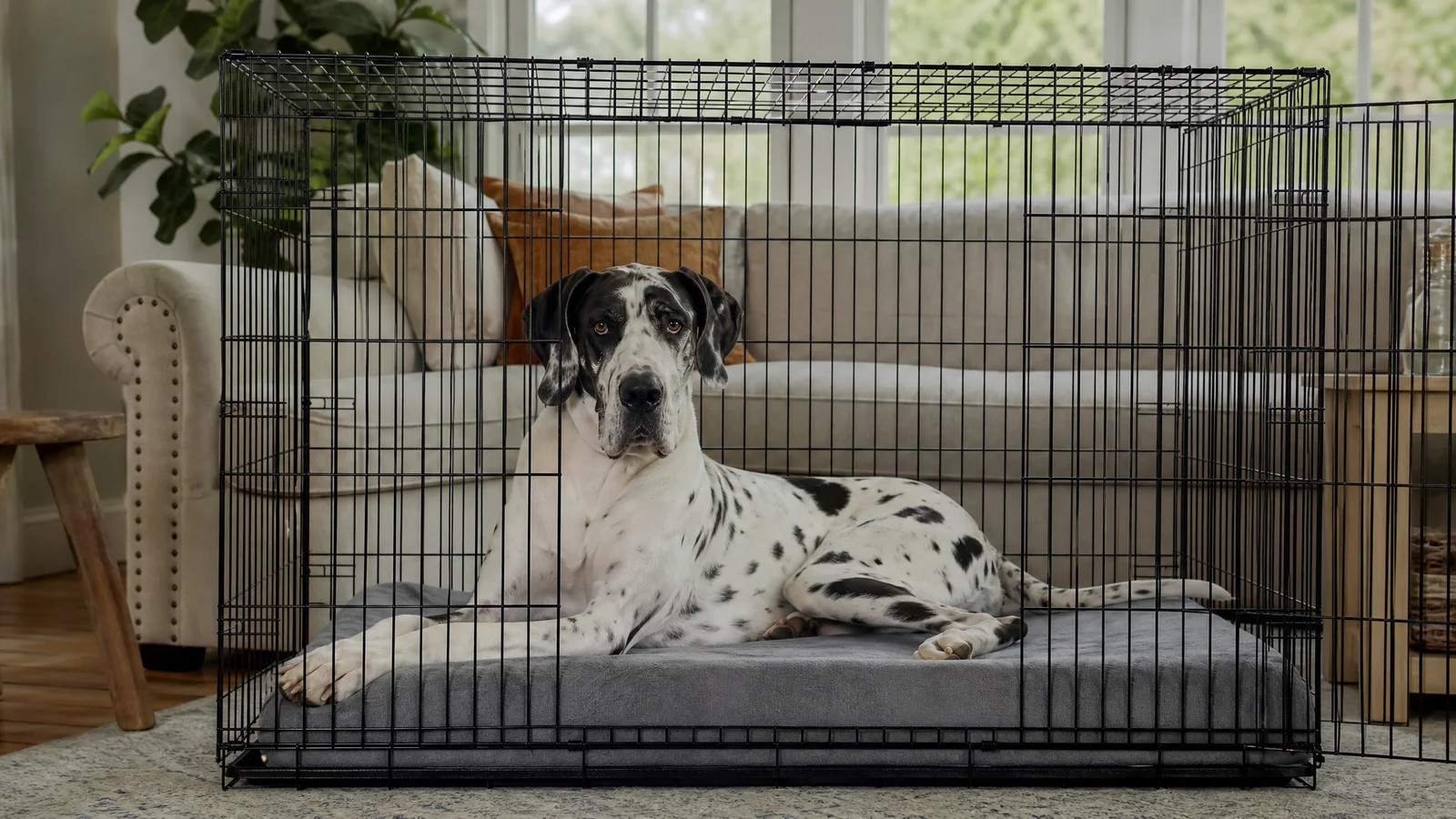 Training basicsWhich XXL Crate Fits a Great Dane, and How to Teach Them