 Great Dane
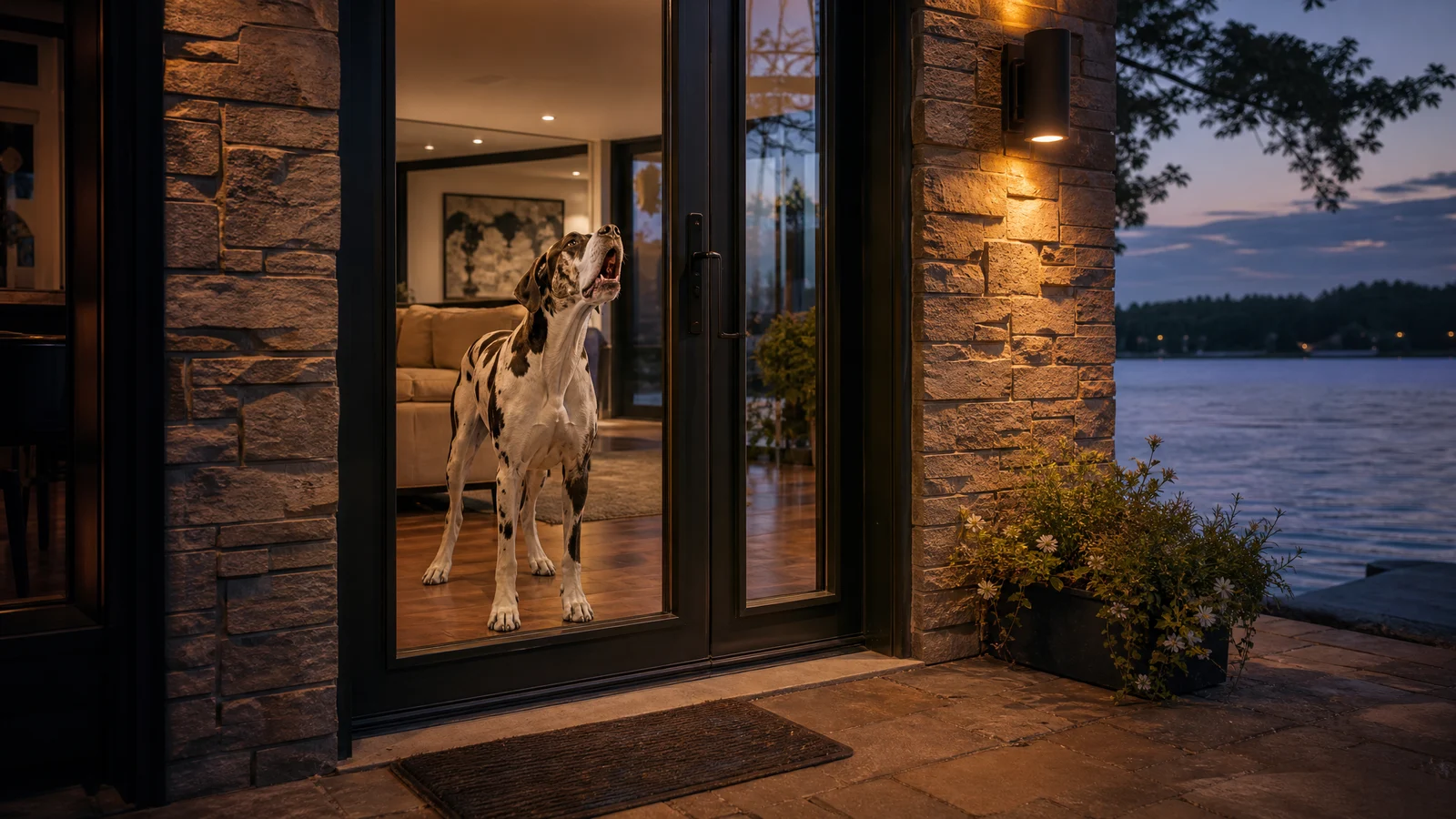
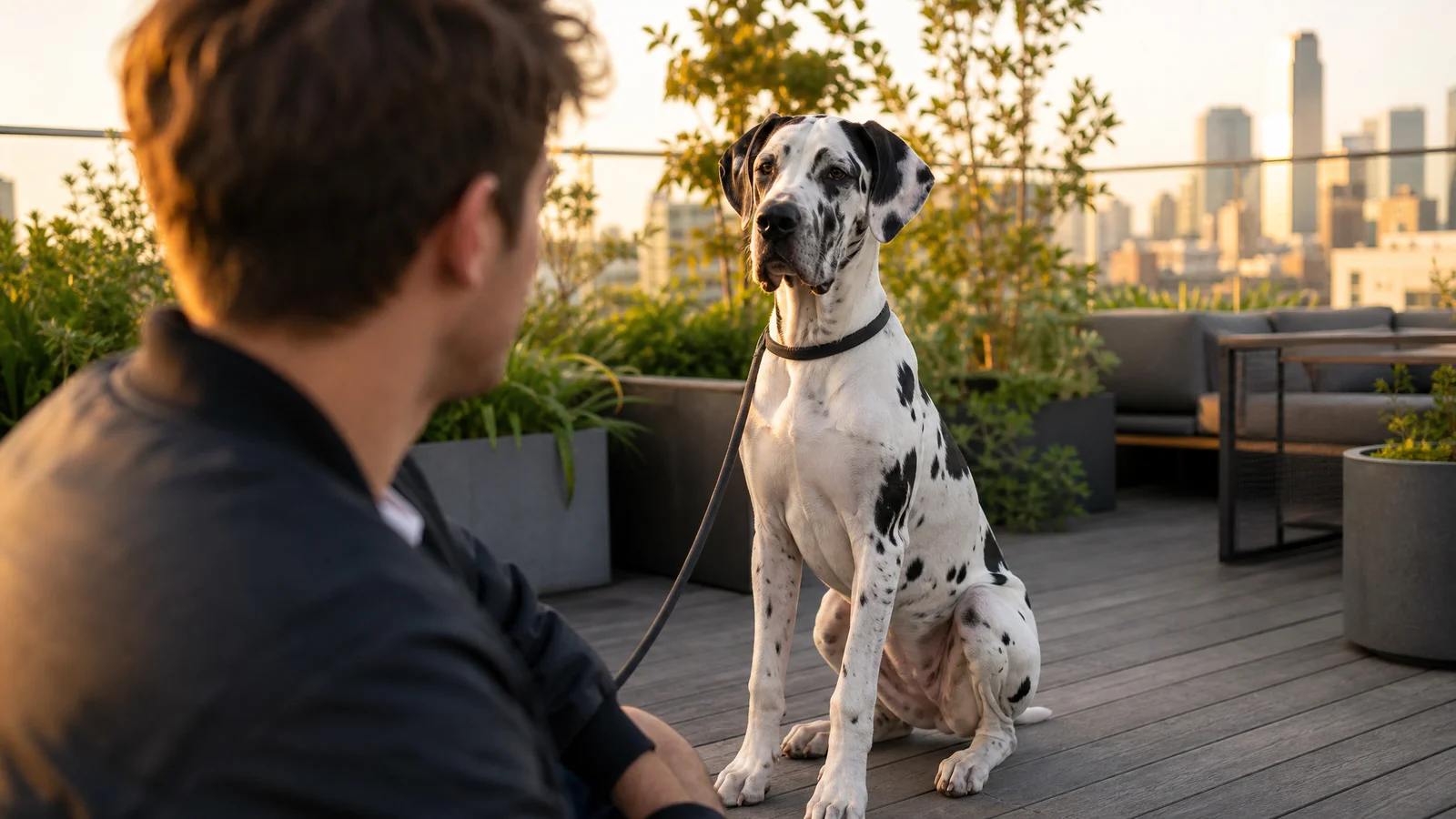
A Great Dane can fill the doorway before a visitor has both feet inside, even when the barking and movement come from excitement. The doorbell, opening door, unfamiliar person and social greeting are separate events. Treating them as one moment leaves the dog with no clear job and gives the handler no place to simplify.
In this guide, you will build a doorbell runbook that starts before the knock. The Great Dane moves to a mat, watches entry from behind a barrier and greets only when the room and dog are ready. We will rehearse with helpers, give visitors a short script and prepare a recovery plan for the arrivals nobody scheduled.
Prepare the Great Dane for Greeting Visitors
Choose a mat several feet from the door and behind a secure gate or second barrier. The position should let the dog see some activity without blocking the visitor's route. Clear bags and furniture, put rewards by the mat and decide which adult handles the dog before anyone rings.
Tell expected visitors to text before arriving and wait outside until invited. They should enter, put belongings down and sit or stand sideways without approaching the barrier. Children and people with limited balance remain outside training. The Great Dane does not need to greet every person.
- Exercise and toilet the dog as usual without using exhausting activity to force calm.
- Close windows or use distance if arriving cars already trigger intense barking.
- Keep a leash ready, but attach it before the door opens and hold it slack.
- Provide a comfortable dog-free room when the runbook cannot be practiced safely.
The site's Great Dane jumping plan handles social access after entry. This runbook begins earlier and may end without a greeting. Its first success is a safe doorway, not contact.
Practice the route from the dog's resting place to the mat when nobody is arriving. Remove turns around furniture and reward the dog for traveling there at an ordinary pace. A clear path matters when the bell raises arousal.
Prepare a separate-room version too. Some visits are too busy for training, and service workers may need direct access. The dog should already know the room as a comfortable place rather than being sent there only after barking begins.
Doorbell to Mat for Greeting Visitors
Begin mat work away from the entry. Reward the dog for stepping onto it, place food between the paws and release after a few seconds. Build a comfortable down and brief settling before moving the mat near the entry. The location should already have value when the sound is added.
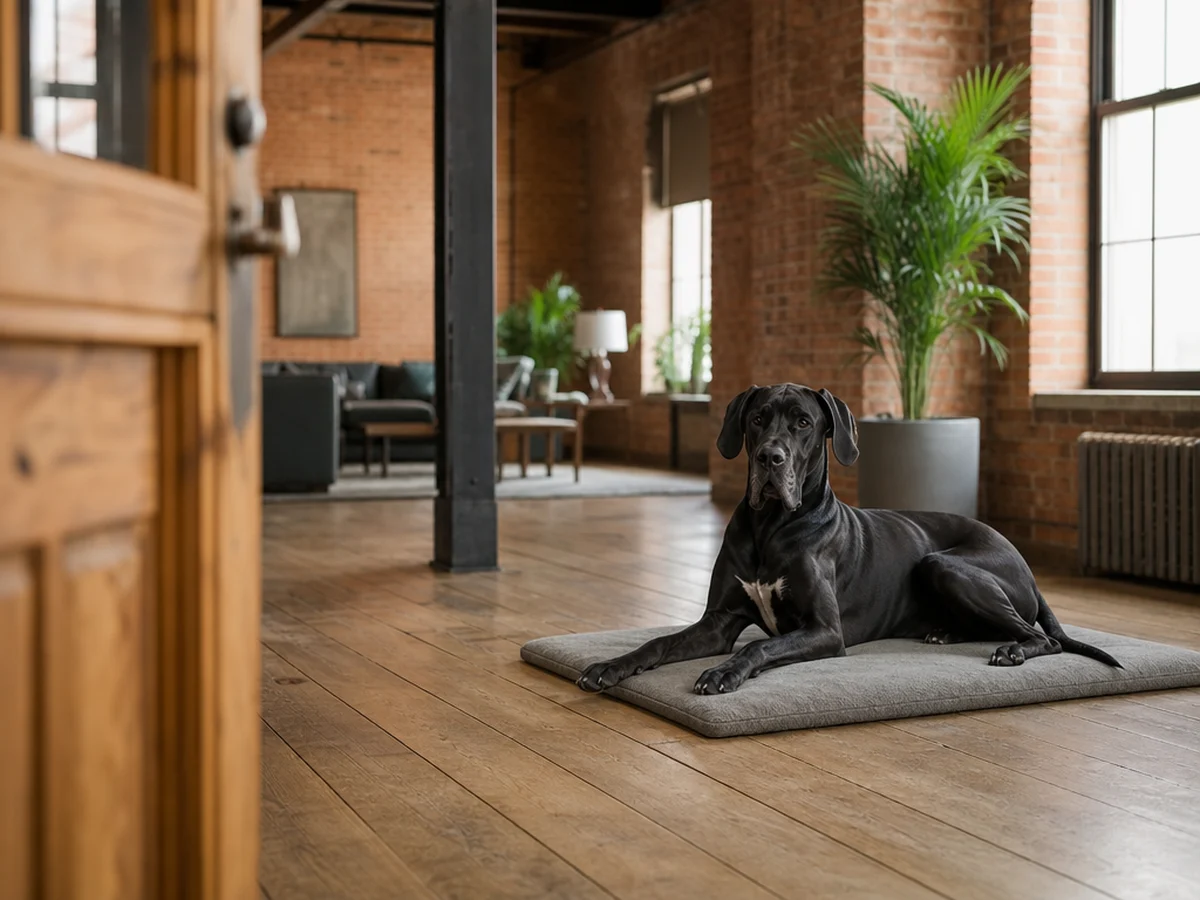
Play a quiet doorbell recording once, immediately guide or toss a reward toward the mat and stop. Repeat only while the Dane can eat, move and settle. Increase volume across sessions, then have a helper make the real sound without entering.
Dogs Trust settle guidance develops calm behavior gradually around distractions. Reward softer posture and quiet observation. Do not repeat the mat cue over continuous barking. Increase distance, lower the sound or end the rehearsal.
Use one cue after the sound, then help the dog succeed. The goal is a predictable path from bell to mat, not proof that the dog can ignore an abrupt noise without preparation.
Add knocks, voices and the sound of a door handle separately. Use recordings only at a low level and stop before the dog scans or leaves the mat repeatedly. Realistic volume comes after the route remains available.
Vary the time between sound and reward so the dog listens for the cue rather than predicting food at a fixed second. Sometimes reward the mat before any sound. This keeps the station valuable in ordinary life.
Open the Door for Greeting Visitors
Break entry into parts: hand on the latch, door opening an inch, person visible, person crossing and door closing. Reward the dog at the mat after each part. A second adult can operate the door while the handler remains with the Dane.
The barrier stays closed. A leash is backup, not a substitute for the barrier at an exterior door. If the dog leaves the mat but remains safe, close the door, reset and make the next step smaller. Do not rush to finish an entry after the training picture has fallen apart.
Practice delivery-shaped movement too. A helper can place a box down and leave without speaking. Real delivery workers should not participate. Use management and collect items after the dog is secured.
AVSAB's humane training statement supports reinforcement and environmental management. Secure barriers and distance teach more safely than physical confrontation at the threshold.
Change the helper's appearance only after entry mechanics are easy. A hat, umbrella or large coat can alter the picture. Introduce one item at a distance while the person remains still, then return to the familiar version.
Reward after the door closes as well as while it opens. Many dogs surge when the person is fully inside and everyone relaxes. The runbook continues until the visitor reaches the agreed location.
Quiet Observation During Great Dane Greetings
Barking has different functions, so look at the body and context. Alert barking may stop once the person sits. Excited barking may accompany bouncing and pulling. Fearful barking can include weight back, stiffness or attempts to escape. A single “quiet” rule cannot resolve all three.
ASPCA barking guidance recommends identifying the cause and teaching an alternative. Reward the first pause, a head turn toward the handler or a return to the mat. Place food low and away from the visitor.
| Observation | Runbook Choice | Next Practice |
|---|---|---|
| Loose body, brief alert | Reward quiet mat observation | One entry step |
| Frantic movement | Increase barrier distance | Quieter sound rehearsal |
| Stiffness, retreat or growl | No greeting and secure space | Veterinary and behavior support |
Keep regular veterinary visits and discuss sudden changes in barking, fear or social behavior. Pain and illness can affect tolerance even when no obvious injury is visible.
Use the site's Great Dane confidence map when visitor behavior shows fear rather than ordinary alerting. The emotional plan starts at a workable distance and does not require greeting.
Count the number of barks only as context. Faster recovery, voluntary return to the mat and normal food taking reveal more than a silent dog held tensely behind a gate.
Offer or Skip Great Dane Greeting Visitors
Greeting is optional and begins only after the visitor is settled and the dog can eat, turn and remain loose. Bring the Dane out on leash with a clear retreat route. The visitor stays sideways and ignores the dog. Approach closes when paws lift, the body stiffens or the dog moves away.
If the dog approaches comfortably, allow one second of contact on the shoulder or chest, then pause. Another loose approach can reopen contact. The visitor never reaches over the head, hugs the neck or follows a retreating dog.
Dogs Trust barking guidance emphasizes addressing causes and needs. A dog barking from fear should return to safe distance, not be brought closer for social practice.
End after one or two calm contacts. Return to the mat or separate room before conversation and household movement increase. A short optional hello is a complete outcome.
Do not use the visitor's food as a lure to pull the dog closer. Rewards come from the handler or land behind the dog, preserving an exit. If the Dane chooses not to approach, let the visit continue with separation.
Plan movement after the greeting. A visitor standing, crossing a room or carrying a plate can restart barking. Put the dog behind the barrier before those changes and practice them as later helper steps.
Helper Rehearsals for Greeting Visitors
Use one familiar helper and rehearse only one part per session. One day may cover the bell-to-mat route. Another may cover the door opening. A later session can add a seated person. Combining everything too soon hides which step needs repair.
- Text before arrival and wait for the handler's reply.
- Enter without looking at or speaking to the dog.
- Move to the agreed seat and keep hands close.
- Follow the handler's instruction to greet or ignore.
- Tell the handler before standing to leave.
Departure can be harder than arrival because people stand, gather coats and speak excitedly. Put the dog behind the barrier before that movement starts. Practice the exit as a separate runbook step.
Record the first step that failed and recovery time. Do not label the whole visit good or bad. A useful note might say that the bell was easy, but standing from the chair triggered barking.
Space rehearsals far enough apart for ordinary recovery. Several helpers arriving in sequence can look like progress while actually building fatigue. Repeat the same person until the runbook is fluent, then change one feature.
Pay the helper with clear information too. Tell them when the session ends and thank them for following the script. A person who feels unsure may improvise by reaching, talking or moving closer.
Recover From a Surprise Great Dane Visitor
When someone arrives unexpectedly, use management rather than attempting the whole lesson. Tell the visitor to wait, move the dog to the prepared room and close two barriers before opening the exterior door. Provide water and a familiar settling activity.
Afterward, inspect the runbook. Restock rewards, clear the path and decide whether the surprise revealed a practical gap. A dependable Great Dane visitor routine protects the doorway first, gives barking a quiet alternative and treats greeting as a choice. The runbook succeeds when an ordinary arrival no longer requires everyone to improvise.
Post emergency steps beside the normal script: secure dog, confirm two barriers, then open the door. Simple written order helps the household act consistently when the arrival itself cannot be controlled.
Review the surprise with facts rather than blame. Note which signal first alerted the dog, whether the safe room was ready and how long recovery took. Practice that missing step on a quiet day.
Keep the runbook available to pet sitters and family. A visitor plan works only when the person answering the door can find the barrier, mat, rewards and emergency room without searching.
Test the written order during one quiet helper visit. Revise any step that requires explanation in the moment, because the useful runbook should guide action while attention is divided.
 BehaviorEasy Nail, Brush and Exam Practice for a Great Dane
 Puppy trainingTeaching a Great Dane Puppy a Soft Mouth Before the Jaws Get Big
 Puppy trainingSix Months Old and Still Growing: Training Your Teen Great Dane