 Great Dane
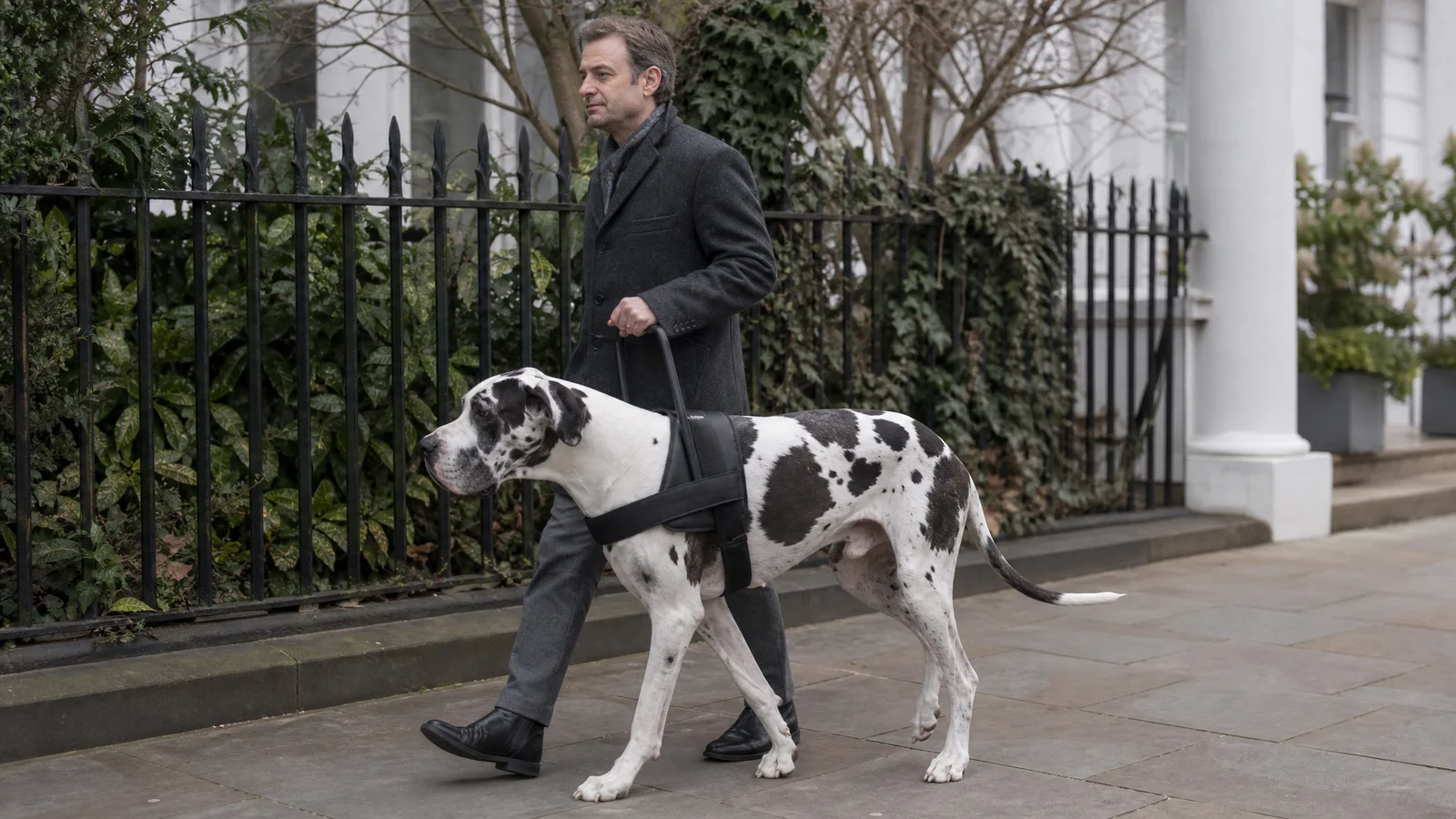
Owners often describe the same moment at a curb. A Great Dane leans their full weight into the handler's hand while the light changes, and the handler wonders whether that lean could be turned into a trained task.
It could not, at least not safely, and the reason is worth understanding before any training starts. Size, strength and an eagerness to help can look like mobility ability without being it, because a lean is an affectionate habit and a leaning dog cannot tell steadying from shoving. Done well, this breed gives back a calm, gentle partner. Done badly, a very heavy dog gets hurt, and so does the person holding the leash.
In this article, we'll go through which tasks suit a dog this large, how temperament, public manners and settling are built, and how joint risk and a 7–10 year lifespan set the timeline.
Great Dane Size and Strength Decide Mobility Tasks
Males stand 30–32 inches at the shoulder and weigh 140–175 pounds, while females run 28–30 inches and 110–140 pounds, and the breed's size category is extra large for good reason. That much dog is a gift for reaching dropped keys, and a hazard the moment anyone asks the body to take weight, since every pound of that frame is also a pound the shoulders and spine must carry.
The table below gives our verdict on the tasks owners most often ask about.
| Task | Verdict | Reason |
|---|---|---|
| Retrieving dropped items | Rule in | The reach is natural and the load is a set of keys. |
| Opening and closing light doors | Rule in, with care | Works with a rope or strap, as long as the dog never hauls a heavy door. |
| Brief steadying as you rise | Only with a vet's approval | Keep it light and rare, with most weight on you and the chair. |
| Bracing or counterbalancing your weight | Rule out | Puts a giant dog's shoulders and spine under repeated load. |
| Pulling a wheelchair or heavy cart | Rule out | Brings the same strain, plus steering a large dog through crowds. |
Size also decides how the pair gets around. Many Danes ride comfortably in hatchbacks and small cars, yet long trips, several dogs or a very large adult push owners toward SUVs, vans or a folded-seat cargo area with a bed and floor protection. Plan the travel setup for the adult dog and rehearse it with treats well before you depend on it.
Build the job around reaching and fetching, and keep anything that needs the dog's body weight off the list.
Great Dane Temperament Suits Public Work and Dog Sports
Danes are sociable, friendly and eager to please, and they respond well to consistent training, which is exactly the temperament public work asks for.
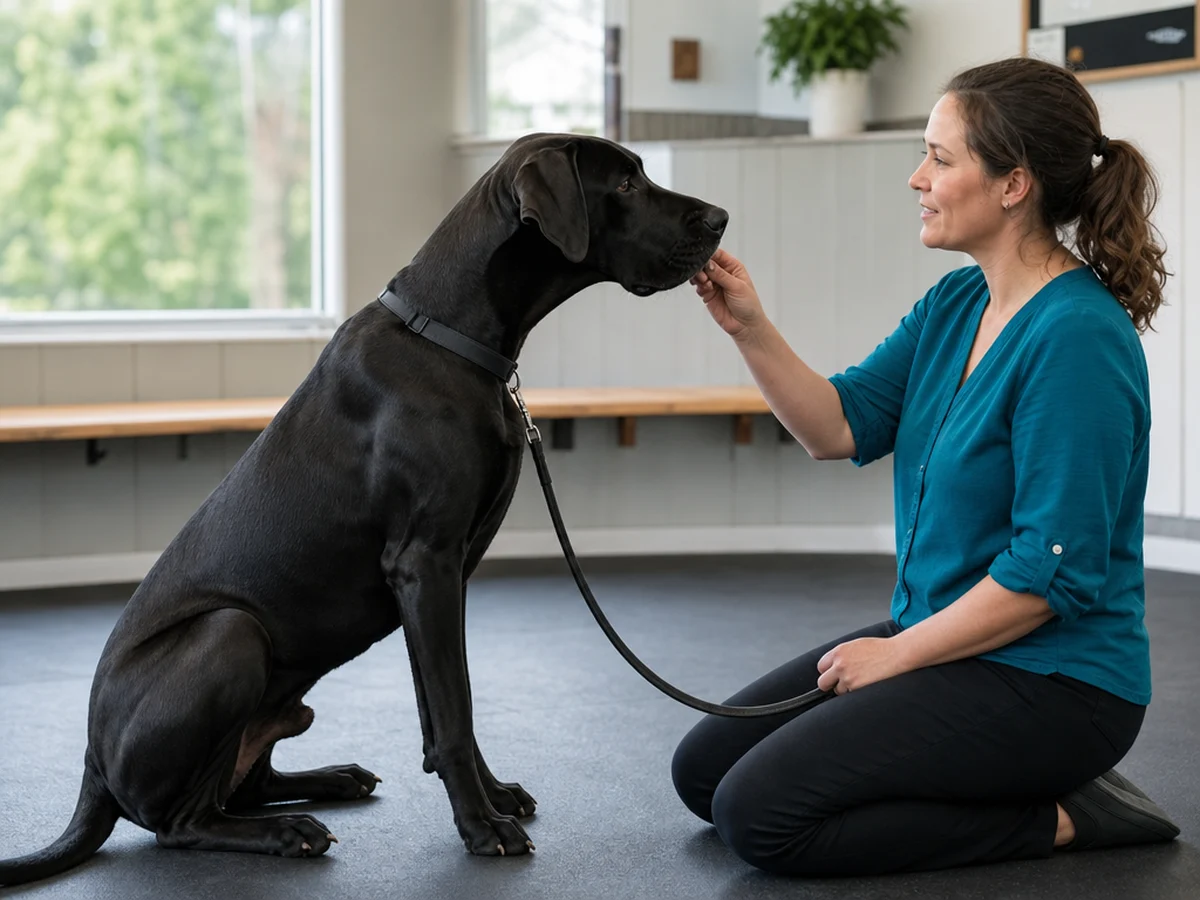
Breed profiles rate trainability at 3 on a 5-point scale and label it Agreeable, so expect a cooperative student rather than a driven one, a dog who learns steadily and forgives your timing. Many Danes enjoy agility, obedience, tracking and flyball, and short sport-style games are a pleasant way to build focus before any task begins.
What turns that friendliness into an asset is calm. The harder part of producing a quiet, attentive service dog is acceptance of many environments, and the breed's easygoing, couch-loving nature gives you a head start.
The catch is that the same warmth sends a Dane drifting toward every smiling stranger, tail sweeping the lower shelves. They are also naturally alert at the door, an instinct we unpack in keeping a watchdog streak polite. Teach greeting on cue from the start, so a hello is something your Dane earns with a treat and a release word and never something they do by default. Temperament is an asset here, provided you manage it.
Reward-Based Manners Come Before Dog Sports Skills
Manners are the foundation, and task training waits until they hold in busy places. The evidence supports only reward-based methods, and unclear cues slow learning, so pay generously and stay consistent from one session to the next.
Handling and Greetings
Touch feet, ears, tail and mouth with treats and calm praise while the dog is young. Dogs not handled early may resist paw touching or fear water, which complicates nail trims and vet visits, and a working dog has to accept both.
Here we push back on the common advice to let a friendly Dane say hello to everyone. Reward standing or sitting beside you while people pass, and ask strangers to ignore the dog. Attention never stops with this breed, from frequent stops and remarks about the short lifespan to children asking to ride and people crossing the street. Teach the dog to stay settled while people talk, and keep a few kind answers ready, such as why the dog cannot be ridden.
Leash, Doors and Other Dogs
Leash trouble around other dogs often improves with focused, consistent practice, and gaps in socialization are the usual reason a Dane is impolite. For early meetings, stand between the puppy and the new dog, which helps build the puppy's trust in you. Some Danes are keen to reach small dogs and head straight for the fence, so reward walking past.
Puppy kindergarten at three to six months, followed by basic obedience, covers much of this groundwork, and our complete reward-based playbook walks through it. Our verdict on order.
Begin with handling and calm acceptance of touch. Next comes loose-leash walking at curbs, then doors and hallways, where our small-space manners guide helps. After that, teach the dog to ignore strangers until released, and finish with passing other dogs, small ones included.
Teaching a Great Dane to Settle Under Tables
A Dane will never vanish under a café table the way a small dog can, so the realistic goal is a compact fold beside your chair, out of the walkway. Plenty of Danes curl into a surprisingly small circle on a medium bed, which tells you the posture is within reach. Build it on a portable mat so the dog learns that the mat means rest, wherever it lands.
- At home, reward lying on the mat, then chin and hips resting down.
- Stretch the gap between treats until you can read a page without paying.
- Add chair legs and a low table so the dog learns to arrange their long body around obstacles.
- Add talking, dropped cutlery and a doorbell, rewarding calm rather than stillness alone.
- Move the mat to a patio or waiting room at a quiet hour.
Quiet time in confined spaces such as footwells, waiting rooms and vehicles calls for the same patience. A dog who rests happily in a crate usually copes better, and for sizes and setup you can turn to our guide to crate training a Great Dane. Car sickness is common in dogs not introduced to travel slowly, so keep early rides short and happy, and remeasure beds and crates often because growing Danes outgrow them fast.
Expect calm to arrive in stages: reliable at home first, then in familiar shops, and in truly cramped or noisy places much later. Do not trust a settle you have not tested somewhere new.
Great Dane Joint Risks in Bracing and Dog Sports
This factor earns our firmest verdict. Older Danes often lose the ability to jump into vehicles, sometimes with shoulder pain, and a giant frame already carries a great deal before anyone adds a job. Skip these.
Never use the dog as a brace to stand up or to catch a stumble, and leave out counterbalance work on stairs, curbs or slopes. Pulling a wheelchair or cart is off the list too, as are weight-pull events for sport. The same goes for repeated high jumps, whether in agility or in and out of vehicles.
Tracking, obedience and short games keep the mind busy at far lower cost to the joints. Teach a ramp or step early with treats, before the dog needs one, because owners who wait often end up shopping for low-floor vans, ramps and running boards. Regular vet visits belong in this plan, and joint checks should start before task work does.
Short Lifespan Shapes Service and Dog Sports Careers
With life expectancy listed at 7–10 years, the working career is brief and the calendar is tight. Start socialization the day the puppy comes home, move into puppy classes and basic obedience, and hold formal task work until the body has matured and your veterinarian is happy with the joints.
Retire the dog at the first signs of stiffness rather than on a birthday, and let them keep easy sport-style games as a pet. Because training takes so long, start thinking about a successor well before retirement, so the transition feels planned rather than sudden.
Check access and travel rules before relying on them. Emotional support animals, for instance, fall outside air-travel rules for service animals, so airlines may treat them as pets. Requirements change, so confirm current ones in writing. Start early, delay heavy work and retire generously.
Realistic Goals Make a Great Dane Mobility Partner
Put the verdicts together and the realistic scope is clear: a polite, settled dog who fetches dropped items, opens light doors, rests in cramped places and enjoys gentle sport-style play. It is not a brace, a tug or a guard. Within that scope a Dane can be a wonderful partner.
A Dane's reach makes retrieval natural, but teach only the items you choose. Keep human food out of reach and never reward a counter raid, so the counter stops paying off.
- Mark and reward any nose touch to the item.
- Mark when the dog opens their mouth to take it.
- Build a brief hold, then a few steps toward you.
- Reward delivery into your hand, not onto the floor.
- Drop the item yourself, vary your position, and give each object its own name.
- You are relaxed, and the dog settles on the mat within moments of arriving somewhere new.
- They stay beside you while strangers talk and wait for your cue before greeting anyone.
- They pass other dogs on a loose leash with a glance back at you.
- They deliver items to your hand, then rest again, and still seem to enjoy the work.
- They load into the car or climb the ramp without fuss.
Call your veterinarian first for any physical or sudden change, then a professional trainer for the rest.
- Stiffness, ramp hesitation or shoulder trouble that appears during task work.
- A sudden change in temperament, such as unexpected aggression toward people.
- Fear of new places that is growing rather than fading.
- Persistent barking or lunging at other dogs after weeks of consistent reward-based practice.
- Progress that stalls, or excited jumping hard enough to leave bruises or scratches.
The Dane's gift for this work is a gentle, sociable steadiness, so keep the scope there and let the short working years be easy ones.
 BehaviorGreat Dane on the Couch: Teaching Off, Settle and Space
 Exercise and jobsGreat Dane Sports and Jobs Chosen by Motivation
 Exercise and jobsGreat Dane Exercise and Brain Games for Calm Days