 Great Dane
The common mistake in choosing a Great Dane sport is starting with the most impressive activity and trying to fit the dog into it. A better starting point is much smaller. Watch what your Dane voluntarily repeats: searching with their nose, matching your movement, solving a food problem or working carefully for a marker and reward.
This guide uses those preferences as a compass. It offers low-pressure trials in scenting, precision, movement and everyday enrichment, then shows how to follow the direction your individual dog enjoys. The purpose of a job is not to prove what the breed can do. It is to give this dog a structured activity they can perform comfortably and willingly.
Find the Great Dane Dog Sports Motivation
Begin away from a class or competition. Put several simple opportunities into an ordinary week and observe the dog's choices. Keep each trial easy, reward engagement and stop while interest remains. You are collecting information, not testing talent.
Offer Four Small Trials
Each direction should begin with a version the Dane can solve without special equipment or a busy venue. Separate the trials so you can see which type of work draws the dog back:
| Direction | Starter trial | Useful observation |
|---|---|---|
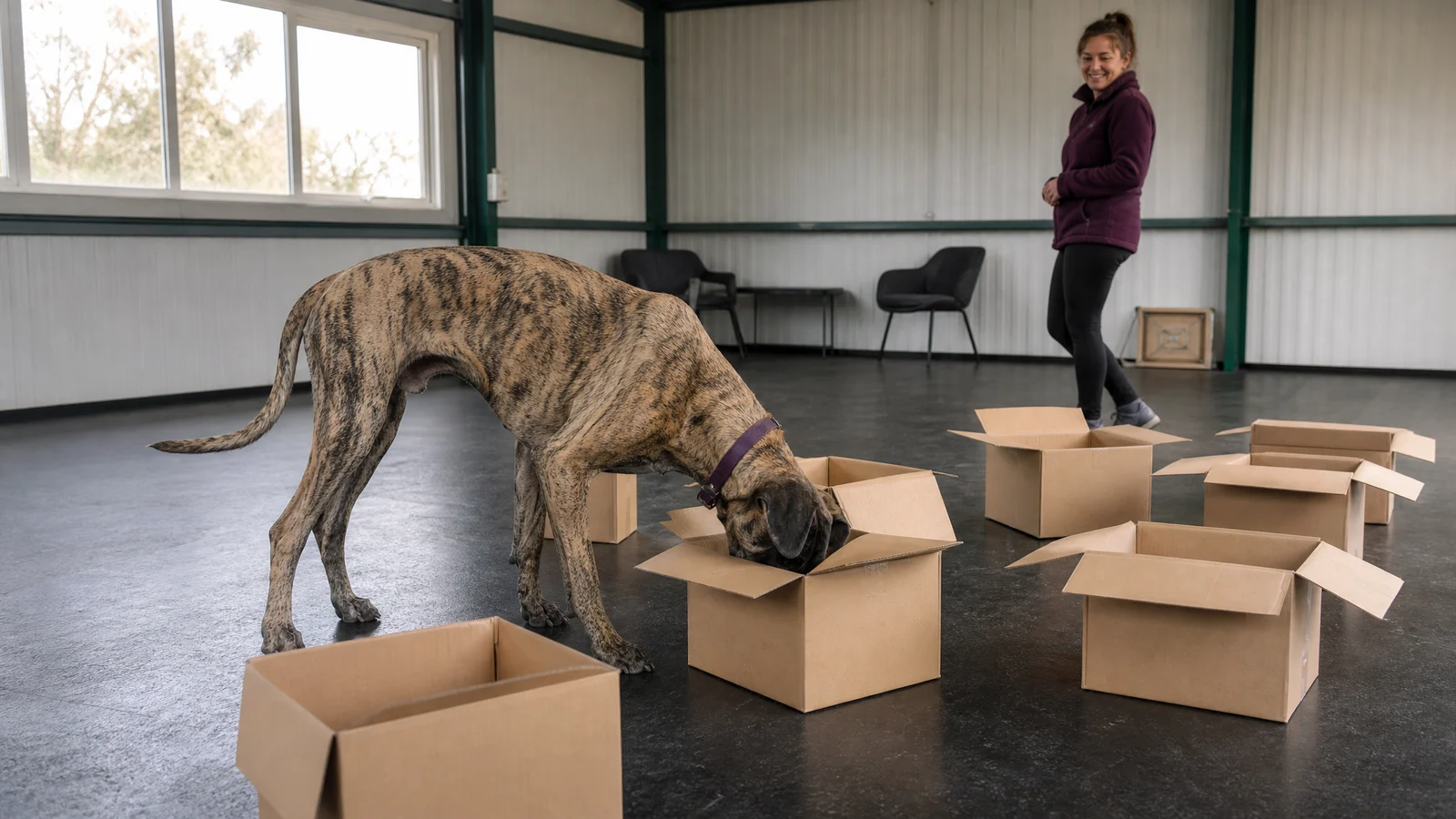
| Scenting | Food hidden in open boxes | Returns to search after finding the easy pieces |
| Precision | Hand target and a few steps together | Tracks the marker and re-engages after payment |
| Movement | A roomy path around a stable object | Follows the line without rushing or avoiding it |
| Enrichment | An easy food puzzle | Works steadily and pauses without frustration |
Run the trials on separate days so excitement from one does not spill into another. Note which activity the dog re-enters after a short break, where frustration appears and how readily they settle afterward. Voluntary return is more informative than a flashy first response.
Read Interest Without Forcing It
A dog may take food and still dislike the setting. Look for a loose body, willingness to approach and the ability to pause. If the Dane avoids equipment, scans the room or repeatedly leaves, lower the difficulty or choose another direction. Rewarding choice means the dog can say “not this way” without losing the value of choice.
The same rule applies to a nervous dog. AVSAB guidance explains that desensitization and counterconditioning proceed at the dog's pace and are not instant fixes. Management protects the process. A sport venue should not become exposure therapy conducted without a plan.
Scent Work as a Great Dane Dog Sport
If your Dane returns eagerly to hidden food and keeps searching after the obvious pieces are gone, follow the nose. Scent work can begin at home with no specialized course. The first job is simply locating a reward in a clear, solvable setup.
Start With Visible Boxes
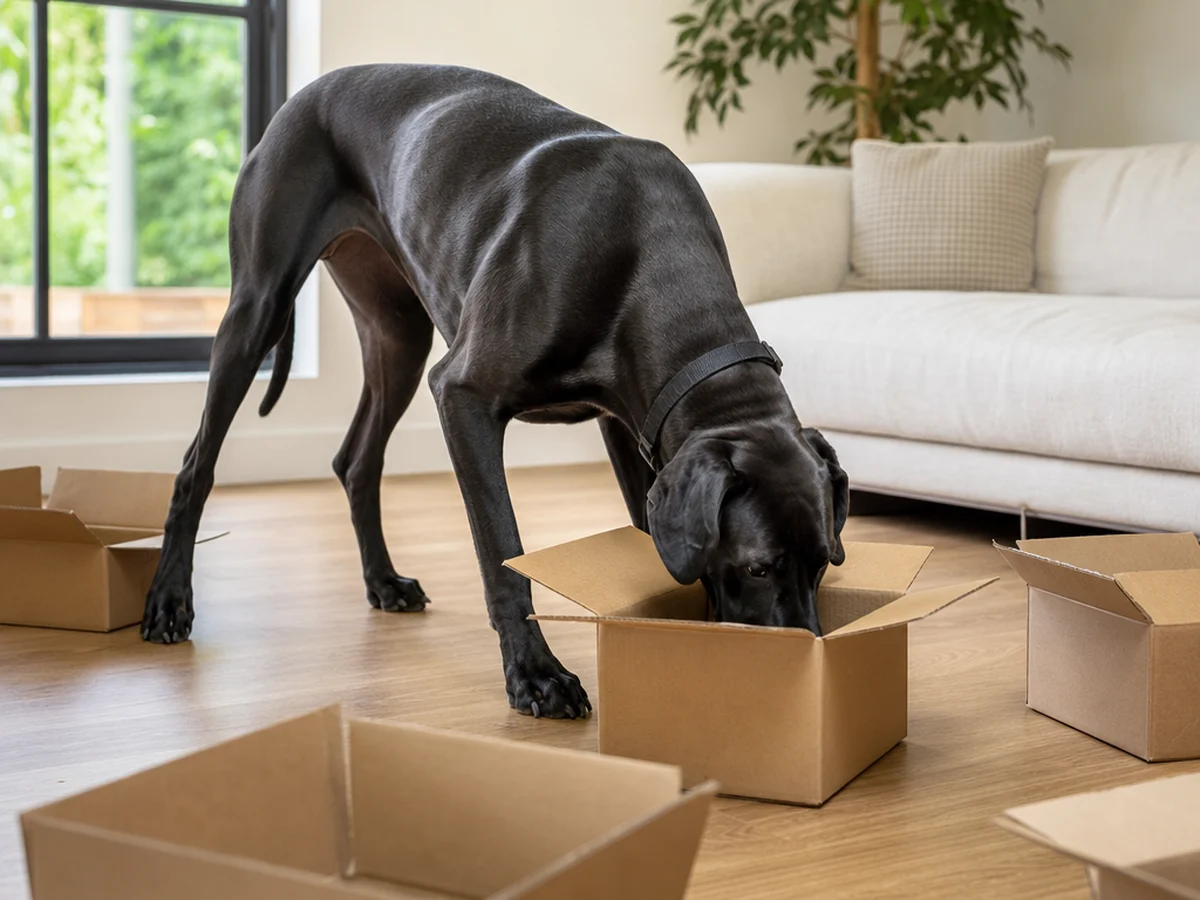
Place a few open boxes on the floor and drop food into one while the dog watches. Release the Dane to find it, then reset with the reward in a different box. Keep the leash out of the search area or work in a safe enclosed room so the dog can move without tangling.
When the pattern is familiar, hide the food while the dog waits elsewhere. Leave the boxes open and widely spaced. Do not guide the nose with your hand. Quiet observation lets the dog own the solution and shows whether searching itself holds their interest.
Move From Food to a Search Routine
Add a start cue only after the dog understands the game. Walk to the search edge, pause, give the cue and let the Dane work. Mark the find and reward at the source. A clear beginning and end turn casual scavenging into a predictable job.
Best Friends guidance says almost any dog can participate in nose work, including older or physically limited dogs. It also notes potential benefits for focus and confidence. That broad accessibility makes scenting a useful direction to investigate, not a promise that every individual will love it.
Try Precision-Based Great Dane Sports
Some Danes enjoy the conversation of marker training more than independent searching. They watch the handler, offer known behaviors and seem pleased by a clean sequence. That motivation can lead toward reward-based obedience skills, rally-style patterns or carefully taught tricks.
Choose three familiar behaviors that do not require speed. A hand target, a few steps beside you and a mat settle make a useful sequence. Reward each piece separately at first, then connect two, pay, and eventually connect all three.
Keep the pattern spacious enough for the dog's body. Tight pivots around furniture are not a necessary test. The sport should adapt to the team in front of you, and clean communication matters more than packing many moves into a small area.
Use the Marker as Information
Mark the exact choice you want, then deliver the reward where the next repetition should begin. For a hand target, pay near your leg. For a mat, place the reward between the dog's paws. Thoughtful delivery makes the exercise easier without physically positioning the dog.
If cues become slower, separate the sequence again. Confusion is a signal to clarify, not a reason to repeat the cue more loudly. A precision sport stays enjoyable when the Dane can predict how to earn reinforcement and take breaks before concentration fades.
Movement-Based Great Dane Dog Sports
A movement-loving Dane may light up when traveling around an object, following a line or changing direction with you. That interest can point toward agility foundations. The foundation is communication around equipment, not height, speed or a full obstacle course.
Set a low, stable marker such as a cone in an open area. Reward looking at it, then walking with you toward it and curving around it. The dog can learn direction and handler focus while all four feet stay on the ground.
Add a ground-level lane between widely spaced markers. Walk through together at an easy pace, reward at the end and leave. This gives you information about the dog's comfort with a new layout without asking them to jump, climb or rush.
Choose Instruction by Method and Fit
The PDSA agility guide recommends an instructor who uses positive methods, understands the dog's individual needs and moves at a suitable pace. Ask how beginners are introduced to equipment, how space is managed and whether dogs can work at a distance from others.
Weight pull, flyball and other fast or load-bearing activities may appear on lists of Great Dane sports, but a list is not an instruction plan. Before choosing a class, observe one without your dog and ask how beginners are separated from advanced teams. Find out whether the instructor permits distance, breaks and ground-level alternatives.
This brief does not provide the health or conditioning evidence needed to map out those activities. Discuss suitability with your veterinarian and a qualified reward-based instructor before asking your dog to perform demanding work.
Enrichment as a Daily Great Dane Job
A job does not need a title or facility. A predictable household task can give the Dane a start cue, a problem to solve and a clear finish. This direction suits dogs who enjoy working for food or interacting with objects but do not enjoy busy class settings.
Turn a Meal Into a Problem
The ASPCA enrichment guide notes that every meal can become an enrichment opportunity and that food puzzles provide mental stimulation. Begin with a puzzle the dog can solve easily, supervise its use and count the food as part of the meal.
Difficulty should rise by one small step. Close one box flap loosely, spread the search over a slightly larger area or add one safe container. If the dog paws frantically, bites the equipment or leaves, simplify the task. Frustration is not proof that the job is effective.
Teach the dog to carry a safe toy from one mat to another, touch a cabinet target with their nose or go to a station while you prepare food. Build each behavior through rewards and choice. Do not turn household help into forced carrying, pulling or physical support.
Keep assistance work distinct from enrichment. Reliable public access or disability-related tasks require far more than a clever household routine, and not every dog is suited to that work. Stay with the simple enrichment job unless qualified instruction and individual assessment support a broader goal.
A Two-Week Great Dane Sport Compass
We use the first week to sample directions rather than repeat one activity daily. That comparison prevents an early favorite from crowding out a quieter motivation that takes more time to appear. Offer scent boxes, a precision sequence, ground-level movement and a food problem on different days. Keep the setting quiet and each session brief enough that the dog finishes interested.
After every trial, answer three questions. Use the answers as observations rather than scores, since the comparison matters more than a perfect session.
- Did the Dane approach and re-engage voluntarily?
- Could the dog solve the easy version without mounting frustration?
- Did they recover and settle comfortably after the session?
In the second week, repeat the two directions with the clearest yes answers. Make one small change within each, such as moving the scent box, connecting another familiar behavior or changing the marker route. Leave the other activities alone so the comparison stays useful.
For scenting, vary the location of one open box while keeping the room and start cue familiar. For precision, change the order of two known behaviors without adding speed. For movement, widen a path before making it longer. For enrichment, alter one container while preserving an easy route to the reward.
Keep a simple note after each trial: whether the Dane entered freely, which part they repeated and how they rested afterward. Compare the pattern after several sessions instead of treating one distracted day as a verdict.
Watch for sustained curiosity rather than a single burst of excitement. A dog who pauses and returns may be thinking, while a dog who repeatedly leaves may be finished. Give both dogs the same useful ending: a clear release, access to water and quiet time away from the equipment.
Choosing a Sustainable Great Dane Dog Sport
Keep routine veterinary visits throughout the activity search, and discuss any change in comfort or movement before raising the physical demand. At the end, choose one direction to develop with suitable instruction.
Before enrolling, confirm the class setup. The answers should preserve the same choice and workable distance that made the home audition useful.
- The instructor uses rewards and allows the dog to work at a comfortable distance.
- The beginner version matches the audition your Dane already enjoyed.
- Breaks and an easy exit are available when concentration fades.
Keep Great Dane exercise in balance with the new challenge, and use Great Dane exercise and patio practice when calm public behavior is the immediate goal. The best Great Dane job is the one the dog keeps choosing, understands clearly and can leave feeling ready to rest.
 Exercise and jobsGreat Dane Exercise and Brain Games for Calm Days
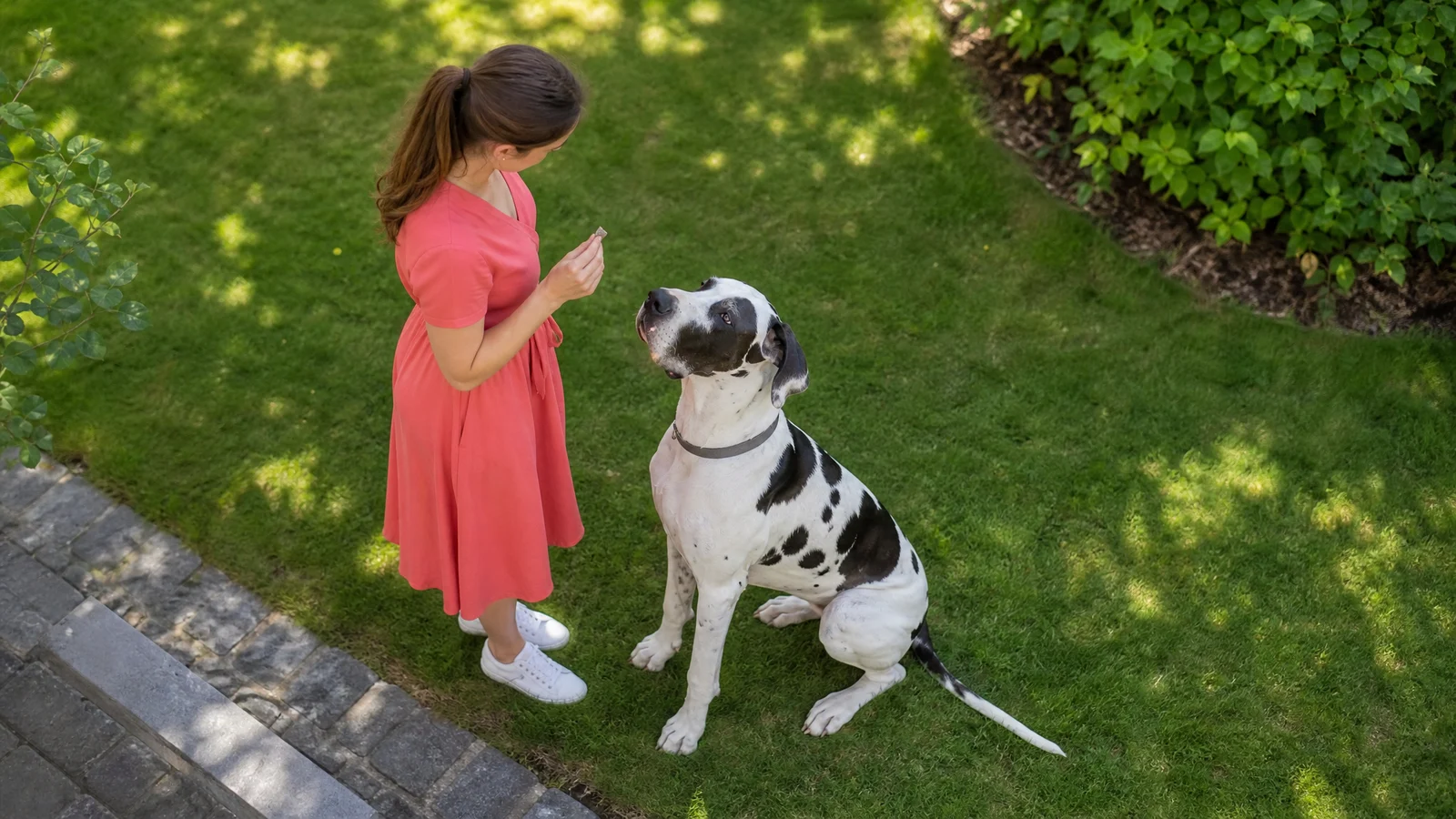 Training basicsThe Complete Reward-Based Great Dane Training Guide
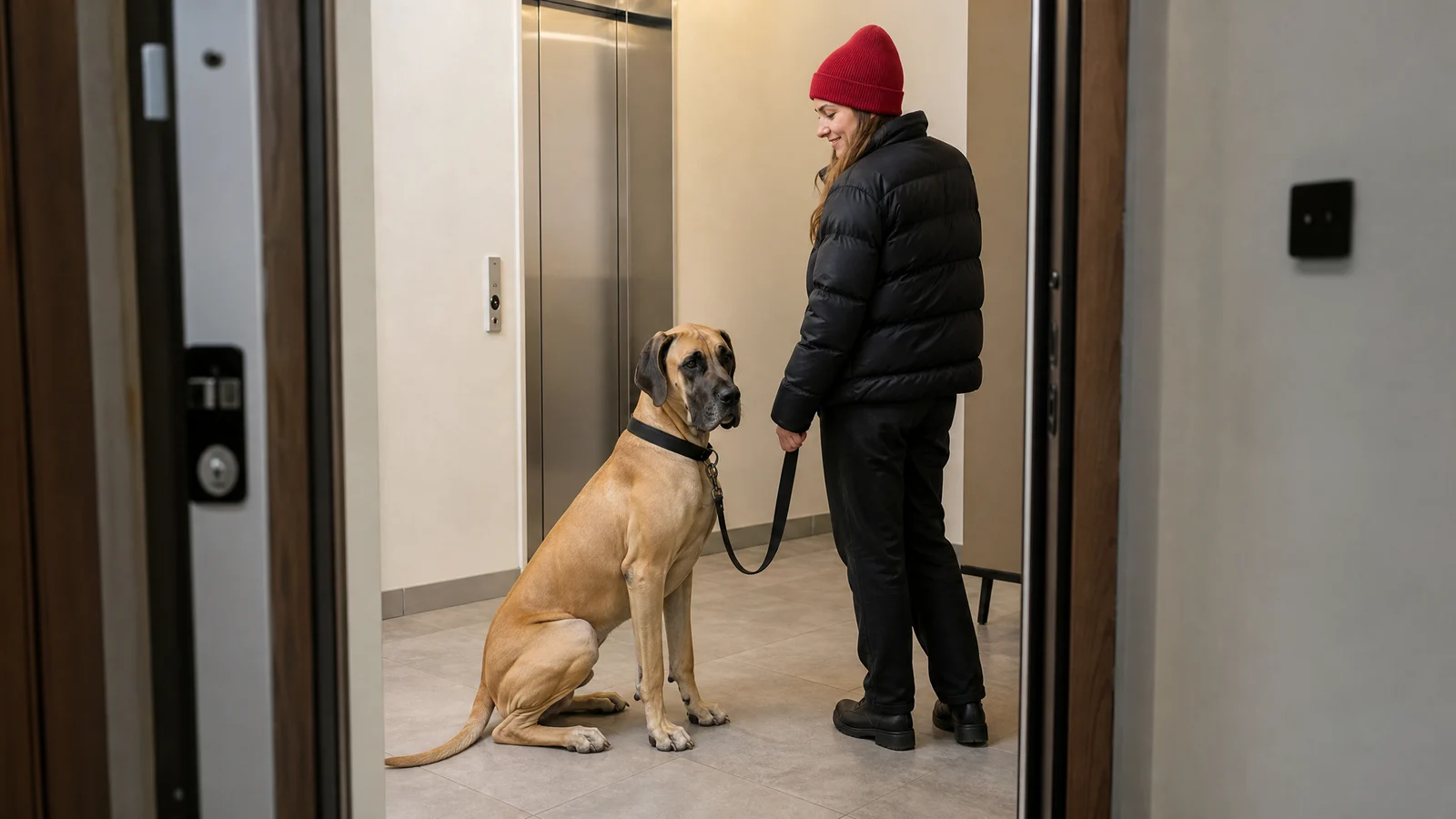 Training basicsHow to Teach a Great Dane Calm Apartment Manners