 Great Dane
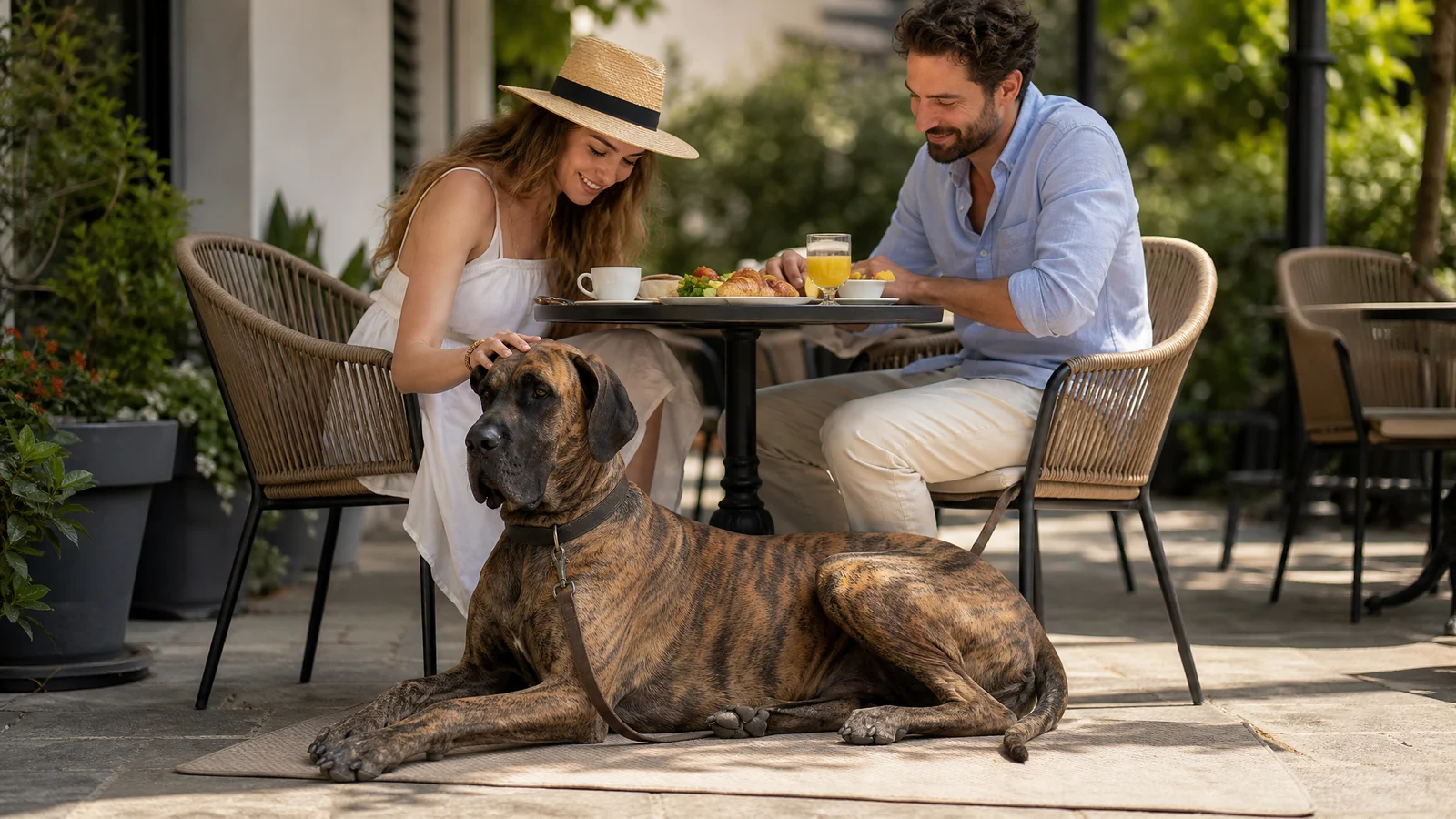
The most common patio mistake is treating a crowded brunch as the first full practice session. A Great Dane then has to enter a tight space, pass strangers and dogs, ignore food, fit beside furniture and rest while conversation continues. Even a friendly dog can find that stack of tasks difficult.
Build the outing in separate, rewarded scenes instead. In this guide, we cover a portable settle, an easy arrival, controlled greetings, table boundaries and a planned departure. The playbook moves through the patio in the order your Dane will experience it, so brunch becomes a final rehearsal rather than a surprise exam with several unfamiliar parts arriving at once.
A Patio Manners Exercise Before Brunch
Choose a mat that is easy to carry and large enough for your Dane to lie on without spilling into a walkway. The mat is not a device that holds the dog in place. It is a clear, familiar location where calm behavior earns food, praise or a quiet chew.
Build Value on the Mat at Home
Unroll the mat in a low-distraction room. Mark a voluntary glance, then a paw on the fabric, then four paws and finally a down. Let the dog leave between repetitions. Choice keeps the exercise light and tells you whether the reward is worth returning for.
Once your Dane lies down readily, deliver several small rewards between their paws. Space them farther apart only while the body stays loose. Release the dog before they get up on their own, reset, and repeat. You are teaching that waiting calmly makes the next reward arrive.
Add the Sounds of a Real Meal
Move the mat near your table and eat a simple snack while the dog settles. Start with little movement, then add chairs sliding, plates arriving and one person standing up. If the Dane leaves the mat, guide them back with an easy target or tossed treat. Do not scold or push them into position.
Practice with the leash attached before taking the setup outside. Keep enough slack for a comfortable down, but arrange the line so nobody can trip. Reward the dog for staying within the mat's footprint when you shift your chair or reach toward the table.
The Great Dane Patio Arrival Exercise
A calm meal can unravel in the first minute if arrival means pulling through a doorway and greeting everyone at once. Rehearse the route without ordering food. A quiet location and an off-hour visit let the dog learn the geography while there is room to think.
Pause at the Edge
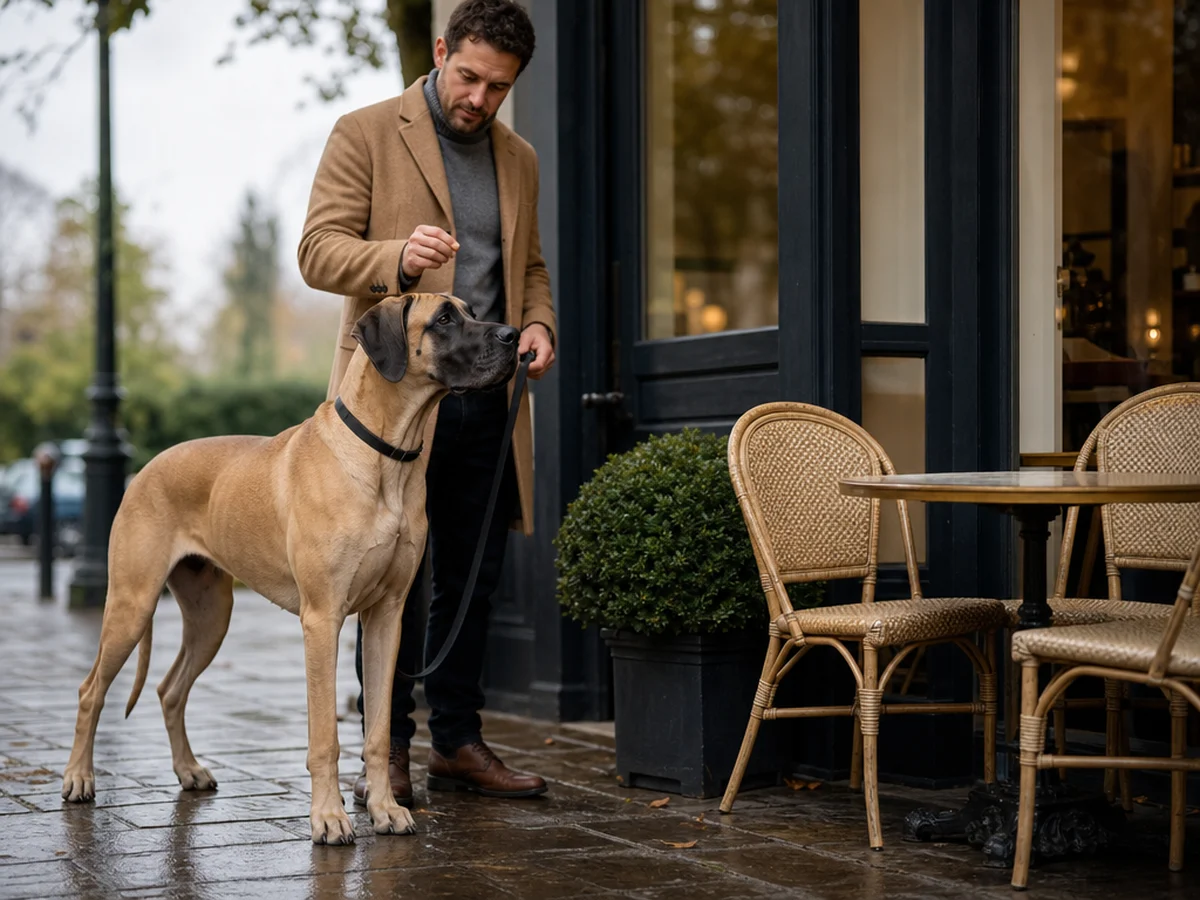
Stop far enough from the patio that your Dane can notice the space and still respond to a familiar cue. Mark a look back at you, reward, then take a few steps closer. If the dog becomes fixed on another dog or stops taking food, add distance rather than insisting on progress.
AVSAB guidance supports working where a dog has noticed a trigger but still feels safe, then pairing that view with excellent treats. The same principle makes a sensible arrival plan. Calm observation comes before moving closer.
Walk the Furniture Line
Guide your Dane around the outside of chairs rather than squeezing between occupied tables. Reward shoulder-to-knee position and pauses while people pass. Their body takes up real space, so the polite route is the one that gives other guests a predictable path.
Ask for the mat behavior as soon as you reach the table. Pay quickly at first because the new setting raises the difficulty. When the dog settles, arrange your chair and leash without trapping paws or tail, then let the rewards slow to a comfortable rhythm.
A Great Dane Settle Exercise Under the Table
The goal is not a rigid stay through an entire meal. A useful patio settle allows the dog to shift hips, rest their head and look around without entering the aisle. Reward the boundary and the relaxed choices inside it, not a frozen posture.
Shape a Compact Position
At home, place the mat partly beneath a sturdy table and reward the Dane for entering from the open side. Deliver treats low and toward the center, which makes folding into the space easier. Never pull the dog under furniture or crowd them with chair legs.
If your Dane prefers lying beside the table, choose an end position away from foot traffic. A mat next to your chair may be more realistic than forcing a full under-table tuck. Patio manners are measured by safety and calm, not by copying a smaller dog's pose.
Pay for Recovery After Distractions
A dropped fork, server or nearby dog may lift your Dane out of rest. Mark the moment they turn back to you, then reward on the mat. That return is the important skill. It lets normal patio events happen without turning each one into a greeting or investigation.
If the dog repeatedly stands, shorten the visit or move to a quieter table. More cues will not make an overwhelmed dog calmer. A brief reset away from the patio protects the training and gives you a fair answer about whether to continue.
Great Dane Patio Greeting Exercises Without a Crowd
The UKC breed page describes Great Danes as easygoing with family and self-confident with strangers. That background does not guarantee polished greetings. A large, social dog still needs a rule for when contact begins and ends.
Let Calm Open the Greeting
Ask the person to wait while your Dane keeps four paws down and offers a loose body. Mark and reward that pause, then release the dog for a brief greeting if both parties want one. Call the dog back after a moment and reward returning to the mat.
Not every admirer needs access. A cheerful “they are training right now” protects the dog's rest and keeps the aisle clear. When several people gather, end the greeting and create distance. The lesson should be that attention is optional and calm behavior controls access to it.
Handle Dogs at a Useful Distance
Do not use a restaurant patio to test close dog greetings. Choose a table with room, watch entrances and reward your Dane for calmly observing another dog. Best Friends guidance recommends stopping at a workable distance, retreating before a reaction and reinforcing the calm response.
That approach makes leaving a success rather than a retreat. If another dog is seated too close, ask for a different table or end the visit. Your Dane does not need to greet every dog to demonstrate good manners.
Great Dane Manners Around Brunch Food
Food on a low table and plates carried past nose level create a demanding exercise. Prevent access instead of waiting for a mistake. Seat the Dane on the side farthest from service traffic, keep dishes away from the edge and reward the mat before the dog starts searching.
Separate the Dog's Rewards From Your Plate
Bring the dog's rewards in a pouch and deliver them to the mat. Never feed directly from your brunch plate during training. A clear source and location make the rule easier to understand: your food stays on the table, while calm behavior on the mat earns the dog's food.
If the dog stretches toward a plate, move the plate and reset the mat behavior. Reward the return on the mat, then adjust the seating so the next repetition is easier. Clear placement teaches where the dog should be without creating conflict at the table.
Use Enrichment Without Losing the Settle
A quiet food toy can help during the middle of the meal if your Dane already uses it calmly at home. Offer it on the mat, monitor it, and remove it before leaving. Skip anything that rolls into an aisle, encourages noisy play or creates tension when people pass.
Alternate easy rewards with longer periods of rest rather than feeding continuously. The aim is a dog who can relax between payments. If the Dane remains busy only while food is flowing, the session is still at an early stage and the next outing should be shorter.
Leaving While the Patio Exercise Is Working
Readiness is about a group of behaviors, not the ability to hold one cue at home. Before a full meal, look for these signs across several quiet rehearsals.
- Your Dane approaches the mat willingly and settles without being placed there.
- They can watch a person pass, then turn back to you for a reward.
- They recover after a chair moves, a dish arrives or a distant dog appears.
- They leave food on your table alone when their own rewards come to the mat.
- They can stand, walk out and settle again without rushing the patio.
Before the first meal, rehearse a visit that ends after the dog reaches the mat, accepts a few rewards and leaves calmly. On another day, sit long enough for a drink, then depart. These short versions expose the exact transition that needs work without making the dog repeat every other patio skill while tired.
For the first meal, choose the quietest suitable time and order something simple. Tell your server that you may leave early, and keep payment easy to handle. A prepared exit stops you from stretching the session because the food has not arrived or the conversation is unfinished.
End while your Dane is still succeeding. Mark the release, walk the same roomy route out and reward at a calm spot away from the tables. If brunch exposed an exercise gap, revisit Great Dane exercise. If the dog enjoyed learning in public, Great Dane sports can provide another structured outlet.
The Next Great Dane Patio Exercise
A good patio dog is not the one who endured the longest meal. They are the dog who understood the mat, had room to recover from ordinary distractions and left with their training intact. Make that smooth departure part of every rehearsal, and the next brunch begins from a stronger place.
Keep routine veterinary visits on the calendar as you practice public outings. A veterinarian can address changes in comfort or behavior that make an ordinarily easy settle suddenly difficult, while your training plan remains focused on clear, rewarded choices. Continue the easiest mat rehearsals during any pause, and rebuild the outing only when the dog is comfortable.
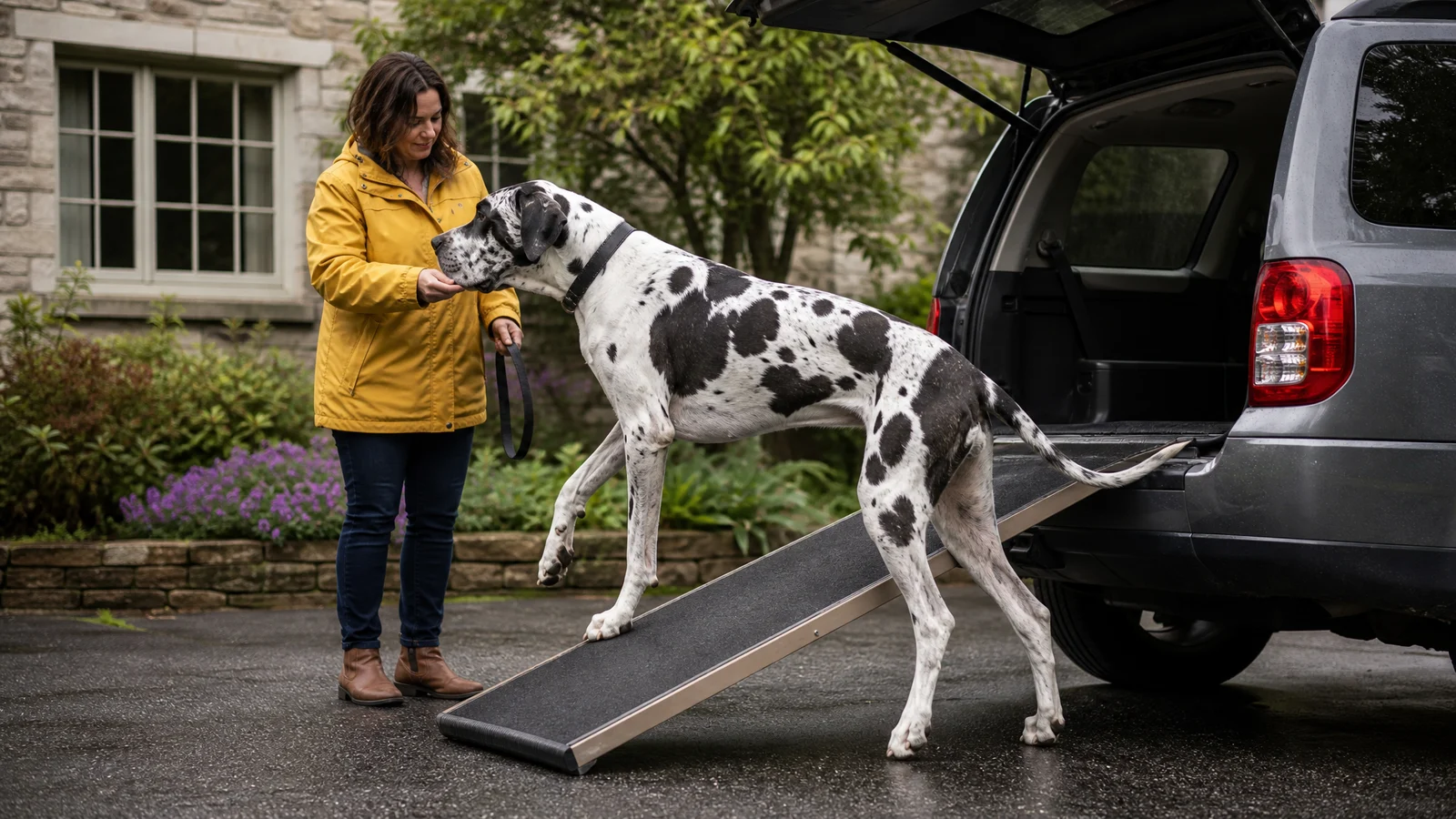 Training basicsTeach a Great Dane to Load and Ride Calmly
 Training basicsHow Do You Train a Great Dane for Mobility Service Dog Work?
 BehaviorGreat Dane on the Couch: Teaching Off, Settle and Space