 Great Dane
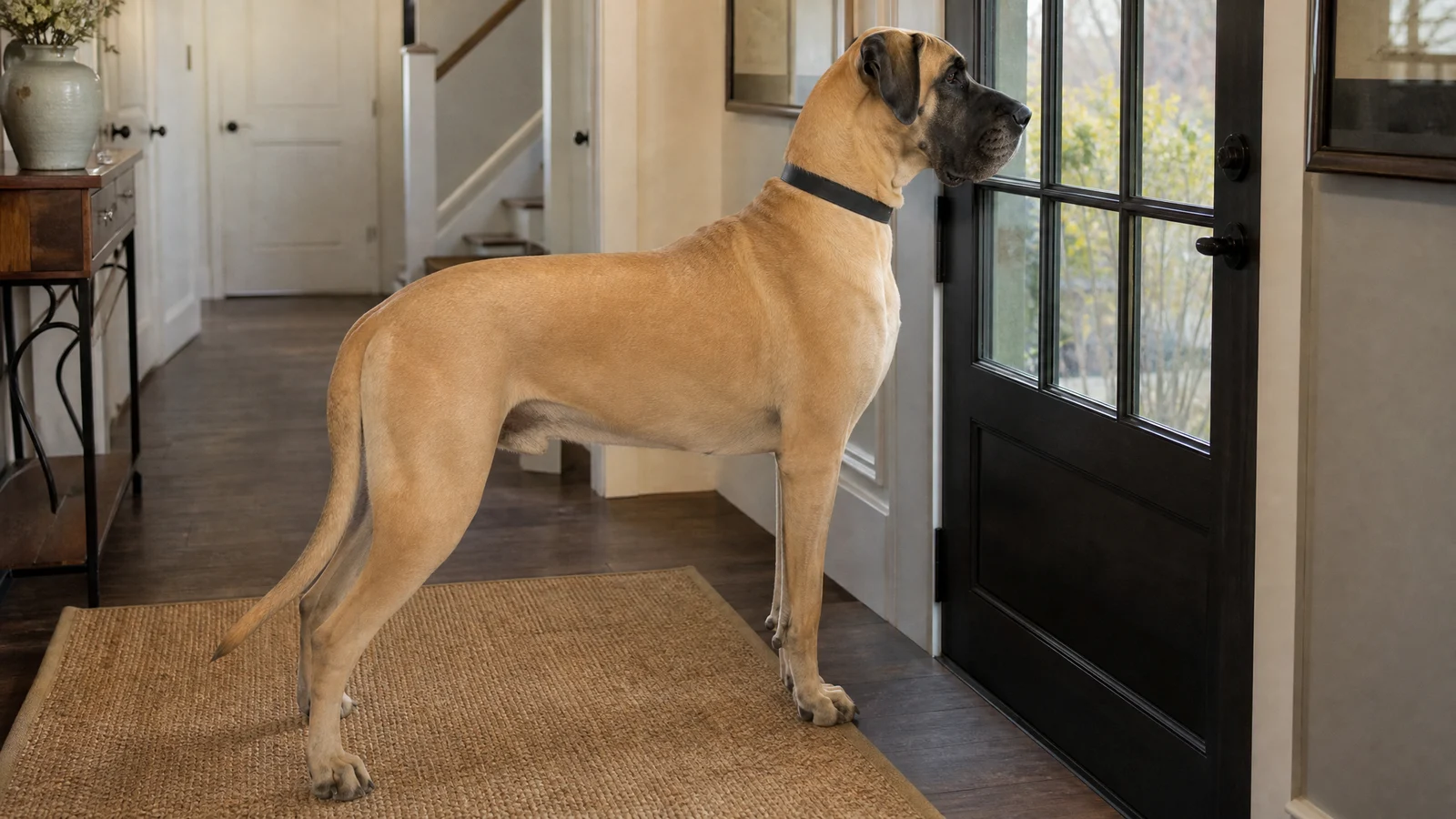
Some Great Dane owners live with a dog who booms at every knock and then shadows each visitor like a bouncer. Others share a house with a Dane who glances up at the very same knock, sighs, and goes back to sleep. So what separates them?
Mostly it comes down to training, not temperament. Danes rate 5 of 5 for watchdog and protective nature, yet the breed standard calls for a dog who is always friendly and never aggressive. Owners with impolite Danes usually trace the trouble to gaps in socialization or inconsistent training, which is good news, because both can be fixed.
Below, you'll find the loud and stiff things a Dane does at home and outside it, including door barking, blocking guests, fence-line lunging and couch guarding, each with its cause and a reward-based fix.
Booming Great Dane Guard Barks at Doors and Windows
The doorbell rings, your Dane beats you to the hall, barks until the delivery driver has left, then trots back to the couch looking quietly pleased with themselves. From their side of the door, that went perfectly. A stranger approached, they spoke up, and the stranger went away. Nobody has to intend any of this for the habit to grow, because every repeat pays the dog.
Window barking runs on the same engine with a bigger audience. Every walker, dog and mail truck eventually passes, so a tall Dane with a clear view of the street collects many wins a day. Barking is rated only 3 of 5, occasional, while mental stimulation needs rate 4 of 5. The dog on permanent window shift is usually bored and well practiced, not a born yeller. A gate or window film ends the shift when you can't supervise.
Pay for the Quiet, Not the Noise
Let the dog sound off for a couple of barks, since noticing is the factory setting, then pay for what comes next. Pick one crisp marker word and say it the instant the dog goes quiet, even for a breath between barks. Recruit a helper to ring the bell and run it like this:
- Let the first barks happen, then thank the dog cheerfully and walk toward them.
- Send them to a mat or hand target well away from the door.
- Mark the first moment of quiet and deliver a treat right there.
- Keep paying for staying put, then release with a cue.
- If barking restarts, take a short break in another room and try an easier version.
Barking at Small Dogs Passing By
Small dogs walking past the window or fence are a special case. Some owners find their Danes are keen to meet them, trying to sniff, heading for the small-dog area or hanging at the fence and complaining about the separation, so that bark is often frustrated greeting, not alarm.
Some Danes may be uneasy around tiny dogs. Read the body language instead of assuming, then use distance and treats: enough space that the dog can still eat, payment for calm looks, and an early exit if things go sideways.
A big change of scenery can also set barking off. Some owners report wild barking at certain dogs after a move from the country to town, which makes sense with new sounds and closer neighbors. Treat the move as a fresh start and rebuild the routine from the first day.
Guarding by Blocking the Path to Your Visitors
A friend walks in, and your Dane slides between the two of you and parks their whole body there, leaning slightly, studying the guest like a nightclub bouncer checking an ID. The guest laughs nervously and edges around, and you say it's fine, good dog, which the dog hears as praise. This posture often looks more like supervision than threat, but it still makes for an awkward evening.
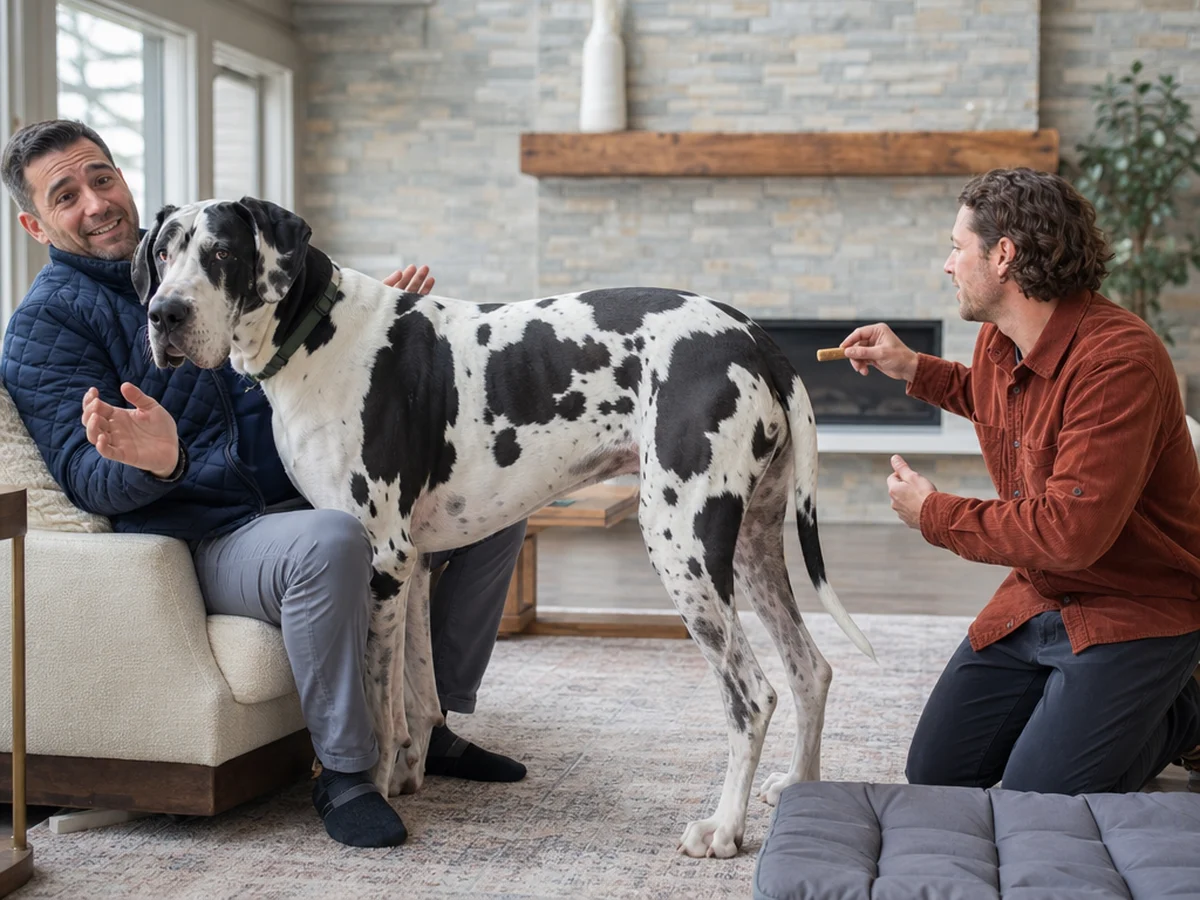
The cause is usually attachment mixed with uncertainty. Danes rate 5 of 5 for affection with family and only 3 of 5 for openness to strangers, which the scale calls ambivalent. So the dog stands where the important person and the unknown person meet, and waits for you to say how to feel. If you tense up, they read it. If you chatter reassurance, you pay for the blocking.
The fix is a spot away from the door that pays better than the bouncer post. Teach a mat across the room first, with no guests, and reward lying on it. Then add visitors in stages:
- Clip on the leash or close the gate before the door opens, so the first seconds are not a free-for-all.
- Ask guests to ignore the dog and keep their hands still, since quick movements and high-pitched squealing wind a Dane up.
- Drop a treat on the mat every few moments while people come in and sit.
- Release the dog to say hello only when they are settled, and keep the greeting short.
Some people say a dog this size is their own deterrent and needs no manners work. That advice backfires. Many owners report people crossing the street or leaving a park bench when a perfectly gentle Dane shows up, so size already does the talking. A giant who looks bored is the goal.
Why Does My Great Dane Stiffen at Strangers?
You are walking, a stranger turns the corner, and your Dane stops dead with head high, weight forward, mouth closed and eyes locked. Then one of two things happens. Either the shoulders drop and the tail swings, or the stiffness hangs on and your arm starts to ache. The first dog was assessing and finished. The second is still working the problem.
What they are assessing is simple: who this is, how they move, and whether you look relaxed. The standard calls for a spirited, courageous dog who is always friendly and dependable, so a short pause to read a stranger fits the breed. Rigidity that sticks does not.
When it sticks, gaps in socialization are the usual explanation. The national breed club says to start socialization the day the puppy comes home and strongly recommends kindergarten classes for puppies three to six months old, followed by a basic obedience class.
Telling Alertness From Trouble
These signs help you sort a normal pause from something that needs more work:
- A normal pause ends within moments, and the dog takes a treat or glances at you when you cheerfully mark the look.
- A worrying freeze stays rigid, refuses food, or builds into a hard stare, a growl or a lunge.
- Sudden hostility toward nearly everyone, in a dog who was easygoing before, can have a medical cause, so call your veterinarian before blaming training.
- Regular vet visits matter here, because pain or illness is easier to catch early than to untangle later.
Giving the Freeze Somewhere to Go
Give the dog distance, then mark the first look toward you and pay. Owners also report that managing early meetings by standing between the pup and the newcomer builds the pup's trust in them. Handle feet, ears, tail and mouth early with treats and calm praise, so a stranger's touch is less of a surprise. Our guide to socializing a Dane puppy lays out the wider plan.
Expect an audience. Owners report being stopped constantly, sometimes several times on one walk, so teach the dog to stay settled while people talk and keep a few kind, short answers ready for the usual questions. When children ask to ride, a simple explanation of why the dog can't be ridden beats a lecture.
Guarding Signals on Walks and Along the Fence
At the fence, your Dane runs the line barking at every passing dog, the passerby moves on, and the dog concludes that barking works again. On the sidewalk, they scan ahead like a lookout, then lunge at a dog across the street. Both scenes look dramatic and both are common. Neither means your dog is dangerous, but both are rehearsing a habit.
The cause is territory and distance. At the fence, the intruder always leaves, so the dog wins every time. On the leash, they can't make the other dog leave, and frustration spills into lunging. With energy at 4 of 5, a dog short on exercise brings extra steam to the fence. Owners also report leash trouble that improved with focused, consistent reward-based training, from a course as short as two weeks to months of steady work.
Distance and Attention Games on Leash
Start by finding the distance where your Dane notices another dog but can still eat a treat. That distance is your classroom. Then work through these steps.
Begin by marking the calm look at the other dog, then pay for it. Pay extra when your Dane turns their head toward you on their own, since that is the choice you most want to see more often. While the other dog passes, scatter a few treats on the ground and let your Dane sniff for them.
Close the gap very slowly over many sessions, and retreat early if the stiffness returns.
Some Danes simply dislike particular dogs or dog types, so don't treat every sidewalk as a test. Choose easier outings while the skill builds.
Fence-Line Habits
Limit unsupervised fence time until the barking habit fades. Call the dog away before the barking starts and pay for coming, then give a chew or puzzle on the way back to the house. Take walks and play seriously as outlets, because a tired Dane has less to prove at the fence.
Why Does My Great Dane Guard the Couch or Bowl?
You walk toward the couch, and your Dane goes still, eyes sliding sideways, maybe a lip lifting or a low rumble starting. The same freeze can show up over a bowl, a toy or a favorite person. It looks like bad manners, but it is a separate symptom from barking and has its own causes.
Bed sharing often starts by drift, through puppy eyes or priority seating, and undoing it later is hard. Set permission rules early so that guarding of the couch or bed never has a chance to settle in. Owners who allow bed access only on permission, and who teach no jumping or begging, keep the closeness and the boundaries. Our piece on teaching off and settle covers the details.
The psychology varies, but resource guarding is typically based in anxiety. The dog is worried about losing something, not plotting a takeover. That is why cornering the dog makes things worse and why trades work.
Read the Growl and Give Space
A growl is a warning, and it is information you want to keep getting. If you calmly move away, the dog learns they don't need to escalate. Keep children away from a dog who is eating or resting, and never leave young children unattended with any dog.
Trade Games Without a Standoff
The goal is to make your approach predict something good. Practice when nothing is at stake, with low-value items first:
- Walk past the dog's bowl or bed at a distance and toss a treat nearby, then keep walking.
- Move a little closer each session, and add a treat as you pass.
- Trade an item for something better, then return the item when it is safe.
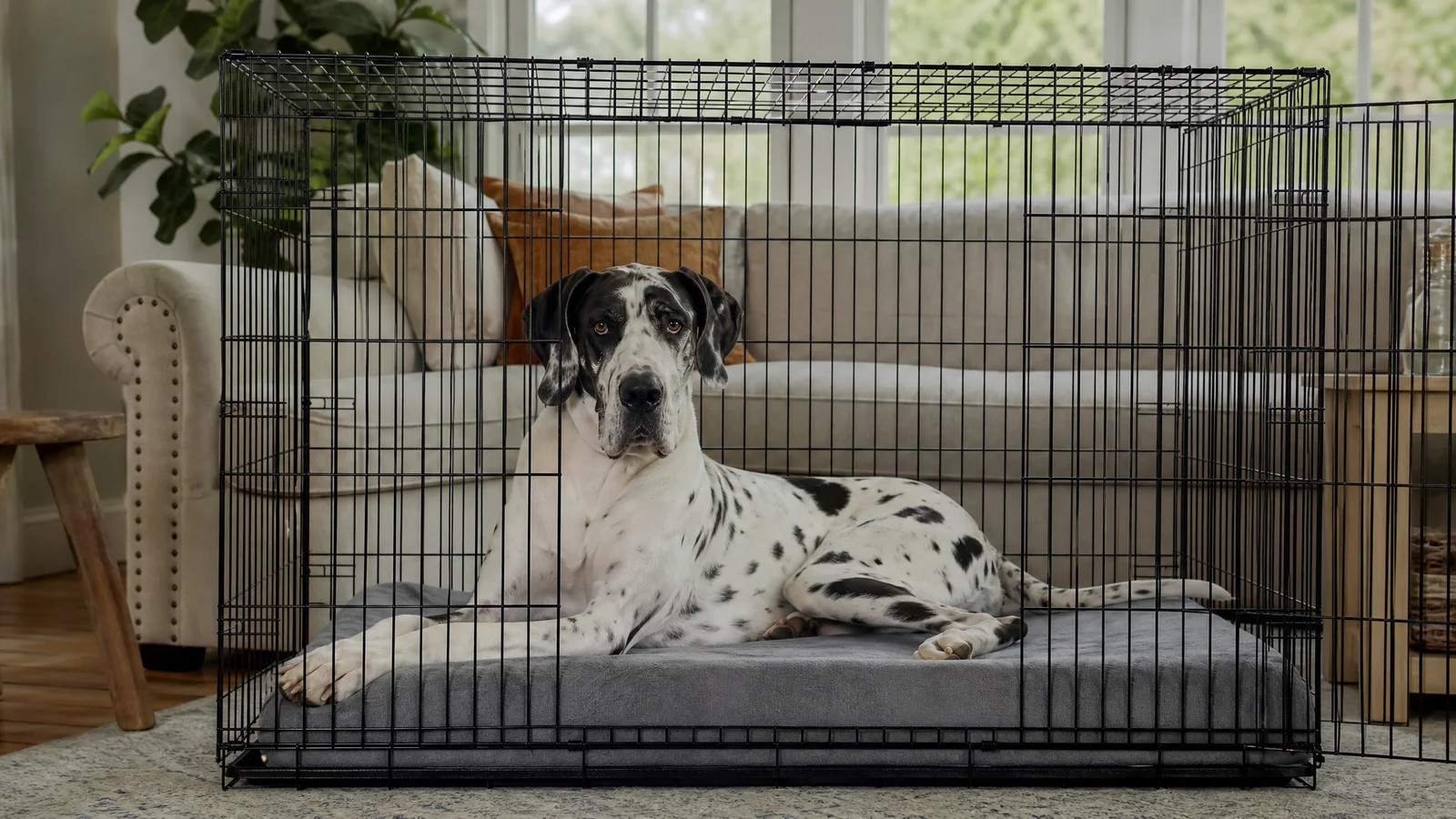
- Offer a chew in a quiet resting place such as a crate, which is a safe haven and never a place for punishment.
One habit worth building into the household: keep food off the counter and pay for settling on a mat instead. A Dane who is never rewarded for a counter raid has little reason to try again, and a dog who collects treats on the mat learns where good things happen.
Rewards That Keep Great Dane Guarding Polite
In a typical house, one person pays treats for quiet, another laughs when the dog booms at the mail carrier, and a third slips scraps at dinner. The Dane learns all three games and plays whichever one is available. We specialize in this breed's behavior, and household consistency is the first thing we look at, because Danes respond well to steady routines and badly to rules that change with who is home.
Timing and Marker Words
Mark within a second of the calm moment you want. A treat that arrives late pays for the next bark. Use one marker word, keep it cheerful, and follow it every time with a treat, praise or a game. The marker tells the dog exactly which moment earned the reward.
Treat Value by Situation
Match the reward to the difficulty, using this quick guide:
| Situation | Reward | What you pay for |
|---|---|---|
| Doorbell at home | Best treats | The first quiet moment, then the trip to the mat |
| Familiar window traffic | Everyday treats | Looking away from the glass or settling |
| Strangers or dogs on walks | Best treats | A calm look at you before reacting |
| Guests inside | Long-lasting chew | Staying settled while people talk |
One Set of Rules for the Household
Everyone greets the dog the same way. Owners report that overwhelmed excitement, such as after a stay at the vet, can send a Dane up with enough force to leave bruises and scratches, so teach a calm greeting for your own returns too. Also watch what you accidentally teach. Owners find that behaviors they encouraged, like licking condensation off cups or a paw that flies up when excited, turn into habits they have to manage.
Today's Rewarded Pause for Polite Great Dane Guarding
The instinct is not going anywhere. Danes became famous as protectors of their home and loved ones, and the noticing comes with the breed. Your job is to train what follows it: notice, speak once, settle. A Dane who learns that routine can grow into therapy or service work, and our guide to mobility service dog training shows where that can lead.
So here is today's single task. The next time your dog notices a sound or a person, wait for the first calm look toward you, mark it, and pay with a treat. A knock, a truck or a noise from the television will hand you the chance. Keep a few treats in your pocket or a jar near the door, and do it again tomorrow.
 Training basicsWhich XXL Crate Fits a Great Dane, and How to Teach Them
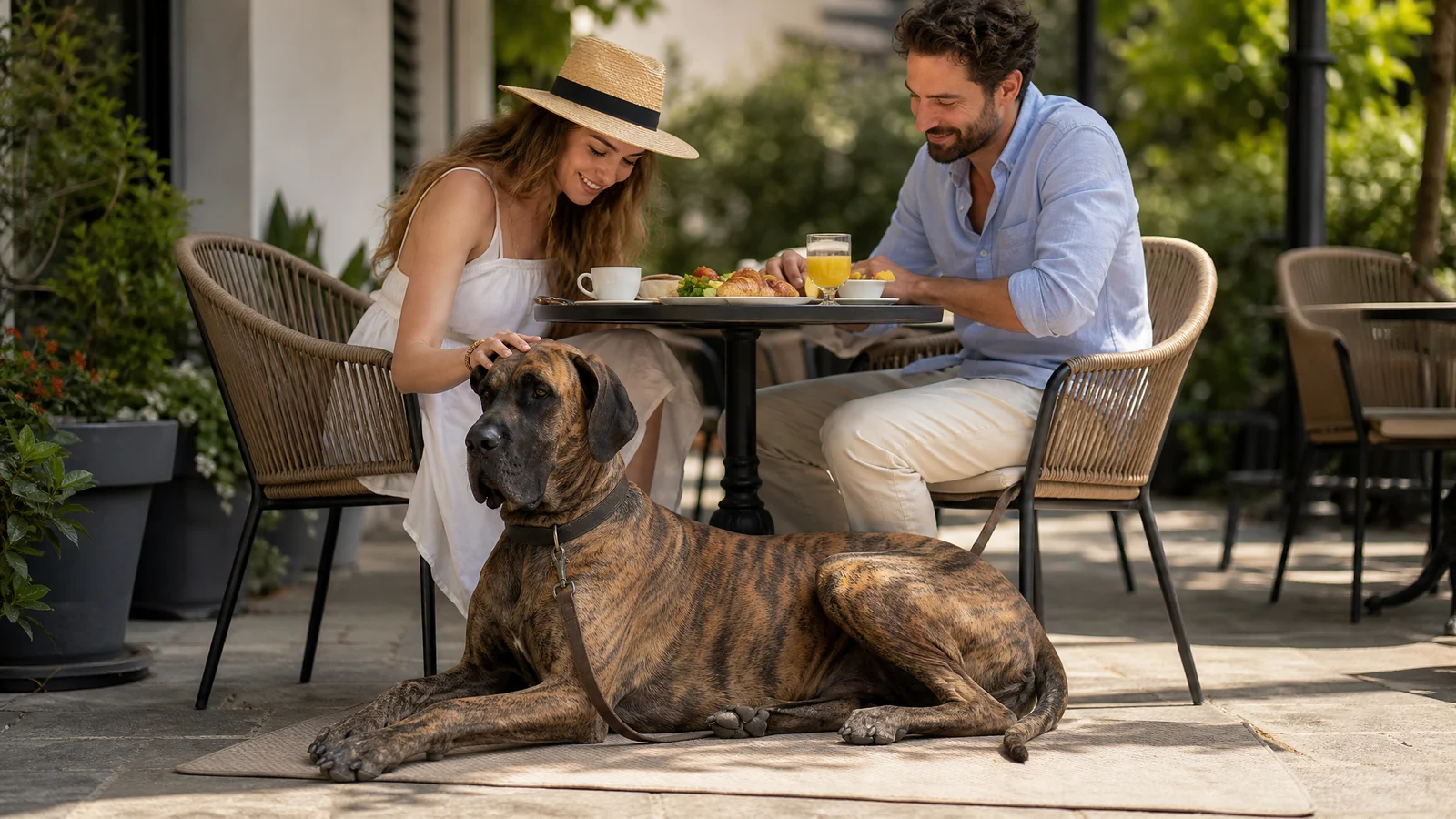 Exercise and jobsGreat Dane Brunch and Patio Manners
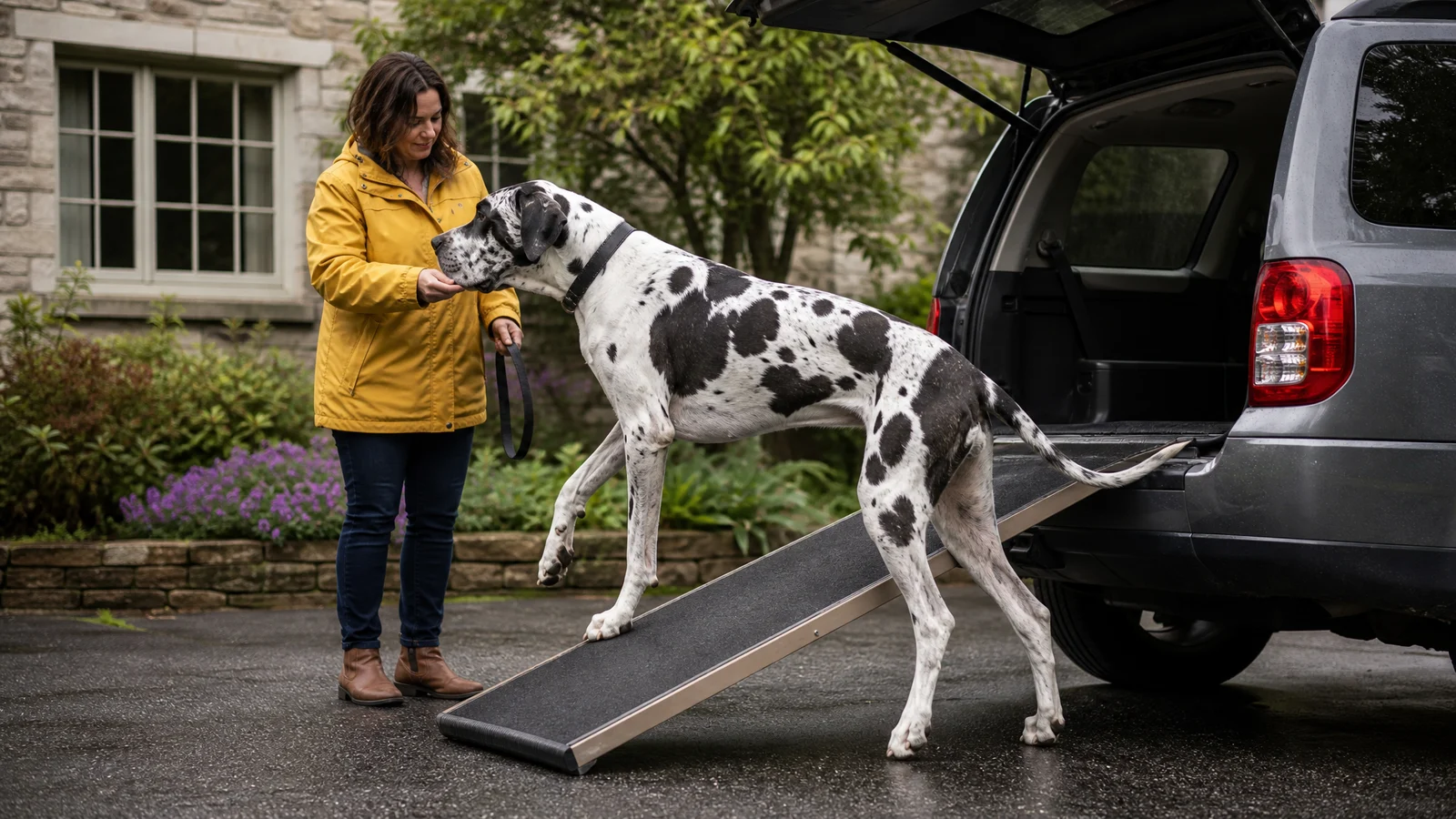 Training basicsTeach a Great Dane to Load and Ride Calmly