 Great Dane
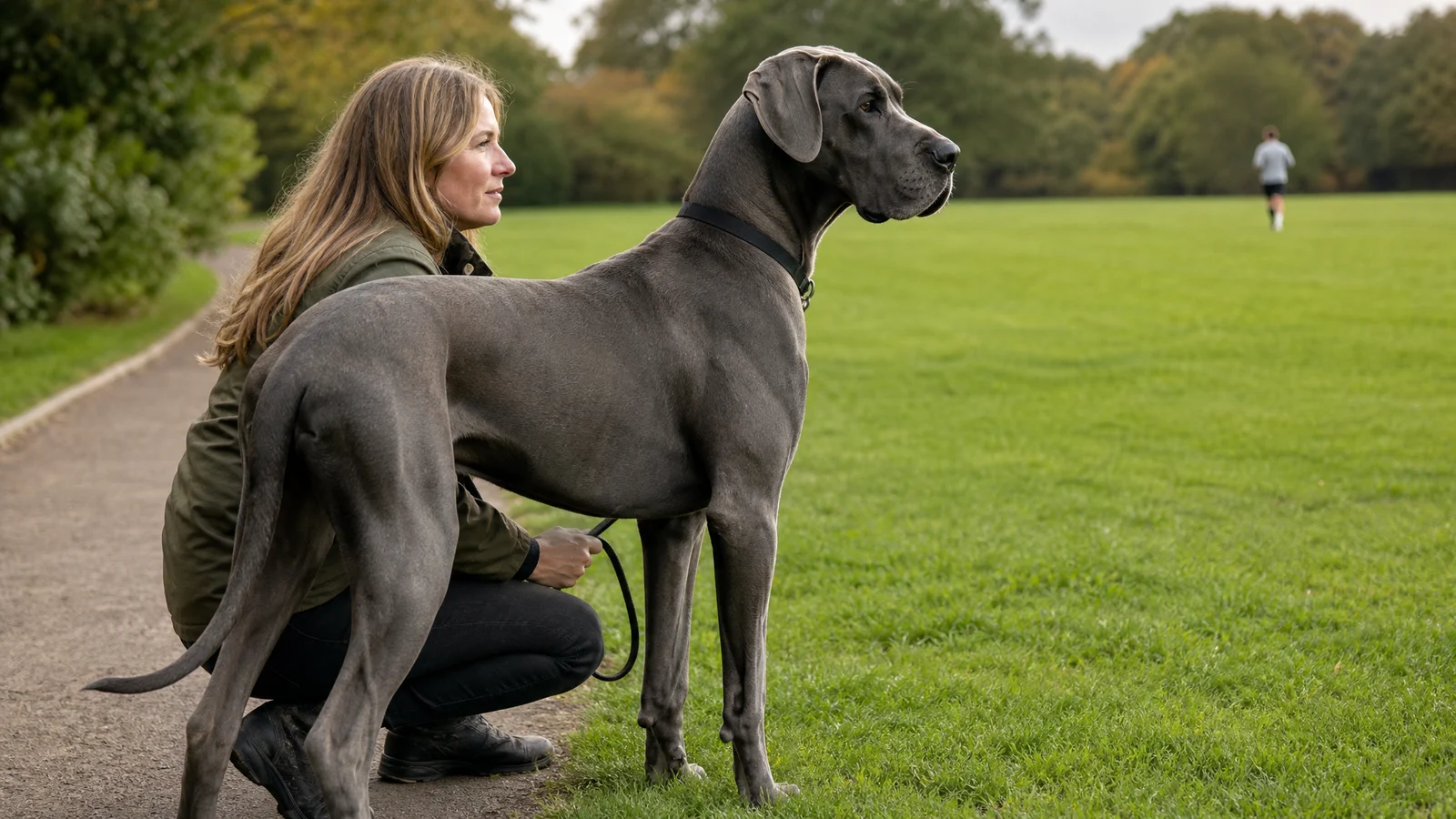
When a Great Dane is scared, size can hide the early request for distance. A person may notice only when the dog freezes, pulls away or lunges, even though smaller changes appeared first. Confidence work begins before approach. The first question is how far away the dog can notice a trigger, remain physically safe and still make choices.
Confidence work is a sequence of choices, not a march toward the scary thing. Below, we start with health and an available exit, locate a distance where the Great Dane can observe, choose a lane for the actual trigger and let recovery set the next step. The last section explains when the map belongs with a veterinarian or qualified behavior professional.
Safety Before Great Dane Confidence Training
New fear can have a physical contributor, especially when touch, movement or a familiar place suddenly becomes difficult. Schedule a veterinary assessment and describe the exact change. Bring videos when safe, but do not recreate a frightening event for the camera.
Keep regular veterinary visits and seek prompt help for sudden behavior change, pain, disorientation, collapse or aggression that creates immediate risk. A veterinarian can assess health and refer to a qualified behavior professional when needed.
Create distance and prevent escape. Use secure equipment, closed doors, covered sight lines or a parked car as appropriate. Do not corner the dog, force contact or invite strangers to offer food from an outstretched hand. A scared giant dog needs room more than a social test.
AVSAB's humane training statement supports reinforcement and management rather than painful or intimidating methods. Fear is not stubbornness. Increasing pressure can suppress early warnings while leaving the underlying emotion unchanged.
Tell household members what management looks like today. A closed curtain, quiet walking time or dog-free visitor room may be part of treatment preparation. Consistent protection prevents one surprise exposure from overwhelming several careful sessions.
Prepare an emergency exit before practice. Know which gate, car or room is available and keep the path clear. A safety plan should work without asking the frightened Dane for precision cues.
Read the Request Before It Becomes an Eruption
Read the whole body and the change from that dog's normal posture. The first sign may be a slower step, closed mouth, head turn, weight shift, refusal of food or sudden scanning. Waiting for barking or lunging means the workable distance has already been lost.
Dogs Trust stress guidance includes changes in movement, attention and the ability to respond. Record what happened immediately before the change and how quickly the dog recovered after moving away.
| Signal Range | Examples | Handler Response |
|---|---|---|
| Early | Head turn, slower eating, weight back | Pause and increase distance |
| Escalating | Freezing, hard staring, frantic pulling | Leave without asking for cues |
| Emergency | Escape attempt, lunge, snap or collapse | Secure safety and seek professional help |
Do not grade confidence by whether the dog stays still near the trigger. Stillness can be a freeze. Useful evidence includes loose movement, voluntary orientation away, normal food taking and recovery that continues after the trigger is gone.
Film ordinary body language at home when the dog is relaxed. That reference can help the household recognize smaller changes outdoors. Do not hold a phone during a risky encounter or let recording delay the decision to leave.
Notice displacement behaviors in context. Sniffing, scratching or sudden drinking may be ordinary, or may appear exactly when a trigger arrives. The pattern across repeated observations matters more than one isolated gesture.
Great Dane Confidence at the Observation Threshold
Choose an open place with an exit route and begin farther away than seems necessary. Let the dog notice the trigger once. If the body remains loose and food can be taken normally, mark and place the reward so the dog turns away to collect it. Then leave or pause before another observation.
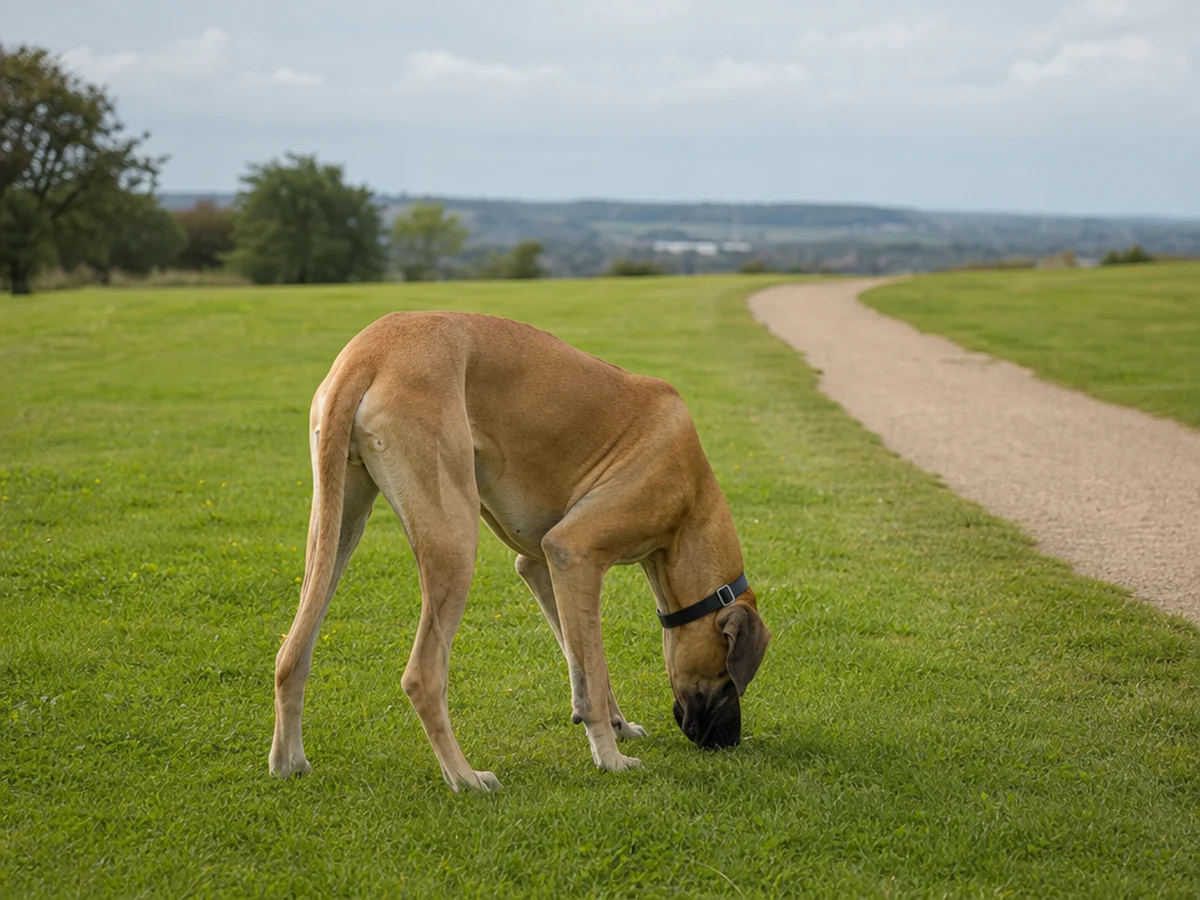
If the dog cannot eat, do not move food closer to the nose or repeat cues. Increase distance until ordinary behavior returns. The working point is not the closest place the handler can physically hold the dog. It is the distance where the Great Dane can observe and recover.
Mark that point on a simple map using landmarks rather than exact feet. Note the quiet side of a parking area, the driveway behind a car or the room beyond a baby gate. Distance changes with trigger intensity, weather, sound, fatigue and surprise, so the map records a starting estimate rather than a promise.
The site's Great Dane apartment guide offers management for shared halls and narrow passages. Use planned timing and exits there. A confined hallway is rarely the place to reduce fear distance.
Keep the Exit Available
Use distance in more than one direction. Moving sideways behind a parked car or hedge may be calmer than backing straight away while facing the trigger. Practice these exits when nothing frightening is present.
Keep sessions separate from required outings when possible. Toilet walks and veterinary travel have practical goals. Confidence practice should happen when the handler can end immediately without sacrificing a necessary need.
Agree on a shared exit cue and use it before moving. The cue should predict leaving with the dog, not pulling toward the trigger. Reward once the safe landmark is reached and allow recovery time before another decision.
Rewards for Great Dane Confidence Observation
At the working distance, let the sight or sound predict something valuable. The dog sees the trigger, the handler marks and food appears away from it. When the trigger leaves, food stops. This pairing does not require a sit, eye contact or approach. The emotional lesson comes from safe observation followed by relief and reward.
ASPCA guidance for fearful dogs recommends gradual exposure rather than forcing contact. Keep exposures short enough that the dog can recover. Several seconds may be enough for the first session.
Use food the dog can eat comfortably, or another quiet reward if food is unsuitable. A toy that drives frantic movement may raise arousal. If the dog refuses a favorite reward, treat that as information about distance rather than a reason to find richer food.
End by moving away while the dog is still successful. A session does not need a closer repetition. Returning home with ordinary behavior intact is part of confidence building.
Repeat the same distance across several sessions before considering a change. The trigger may look easier simply because it moved less or the day was quieter. Stable success reveals more than one unusually good approach.
When decreasing distance, move only a small landmark closer and keep duration short. If recovery slows, return to the previous point. Progress can also mean the trigger becomes louder or more mobile while distance stays generous.
Great Dane Confidence Across Trigger Lanes
Approach is optional and comes after repeated comfortable observation. Arrange the trigger so it remains still or moves predictably. Keep the leash loose, stand sideways and let the dog move forward, sideways or back. Reward checking in and retreats as well as investigation.
People
The person ignores the dog, avoids reaching and leaves a clear path away. Food comes from the handler or is tossed behind the dog, not held under the stranger's hand. Contact occurs only if the dog repeatedly approaches with a loose body and can leave immediately.
Objects and Places
Let the dog investigate from the side and at their own pace. Do not drag the Dane across a floor, into a doorway or toward a noisy object. Reward looking, sniffing and turning away. Break the task into smaller locations if the whole approach remains difficult.
Choice is not the same as unlimited exposure. End before repeated approaches become tense. A dog may investigate once and then need distance. Honor that change rather than assuming curiosity has permanently erased fear.
Build a consent check before touch. The person pauses after one second and removes the hand. Another loose approach can reopen contact. A head turn, retreat or still body ends it without anyone pursuing.
For objects, reward investigation without moving the object toward the dog. A vacuum, wheeled bin or umbrella can become more frightening when a person tries to prove it is harmless. Let stillness and distance do the early work.
Recovery and Setbacks in Great Dane Confidence Training
Young dogs can show temporary sensitivity, and any dog can regress after a startling event or a run of difficult days. Return to the last comfortable distance and reduce the number of exposures. Keep daily routines predictable and protect sleep and recovery.
Do not flood the dog with repeated versions of the trigger in hopes of faster progress. The Great Dane puppy recovery plan helps keep activity and rest in balance during growth. Fatigue can shrink the distance at which a puppy can cope.
- Change one variable, such as distance, movement or sound.
- Skip practice after a difficult veterinary visit, travel day or major household disruption.
- Use management when an unavoidable event exceeds the current map.
- Record recovery time, not just how close the dog went.
A setback is a reason to update the map. It is not proof that rewards failed or that the dog needs stronger pressure.
Return to ordinary enjoyable activities that do not contain the trigger. Sniffing, rest and familiar training can restore predictability. Confidence work should not take over every outing or make the dog scan constantly for the next challenge.
Household changes may require a temporary management reset. Moving furniture, construction noise or a new caregiver can alter safe routes. Update the map before resuming distance reductions.
Professional Help for Great Dane Confidence Training
Seek qualified help when fear is worsening, triggers are broadening, the dog cannot recover, or anyone faces bite or fall risk. Start with the veterinarian, then ask about a credentialed reward-based behavior professional. Remote planning may help with management, but high-risk work needs appropriate direct assessment.
Bring the trigger description, early signals, working distances, rewards accepted and recovery times. That record lets a professional see more than the worst incident. Great Dane confidence grows when the dog can notice, choose and recover. The map succeeds by protecting those abilities, not by proving how close a giant dog can be held to something frightening.
Update the map after professional advice and note which steps require direct supervision. Everyone else should follow the management plan without experimenting between appointments.
 BehaviorGreat Dane Barking at the Door: Teaching a Calm Welcome
 BehaviorEasy Nail, Brush and Exam Practice for a Great Dane
 Puppy trainingTeaching a Great Dane Puppy a Soft Mouth Before the Jaws Get Big