 Great Dane
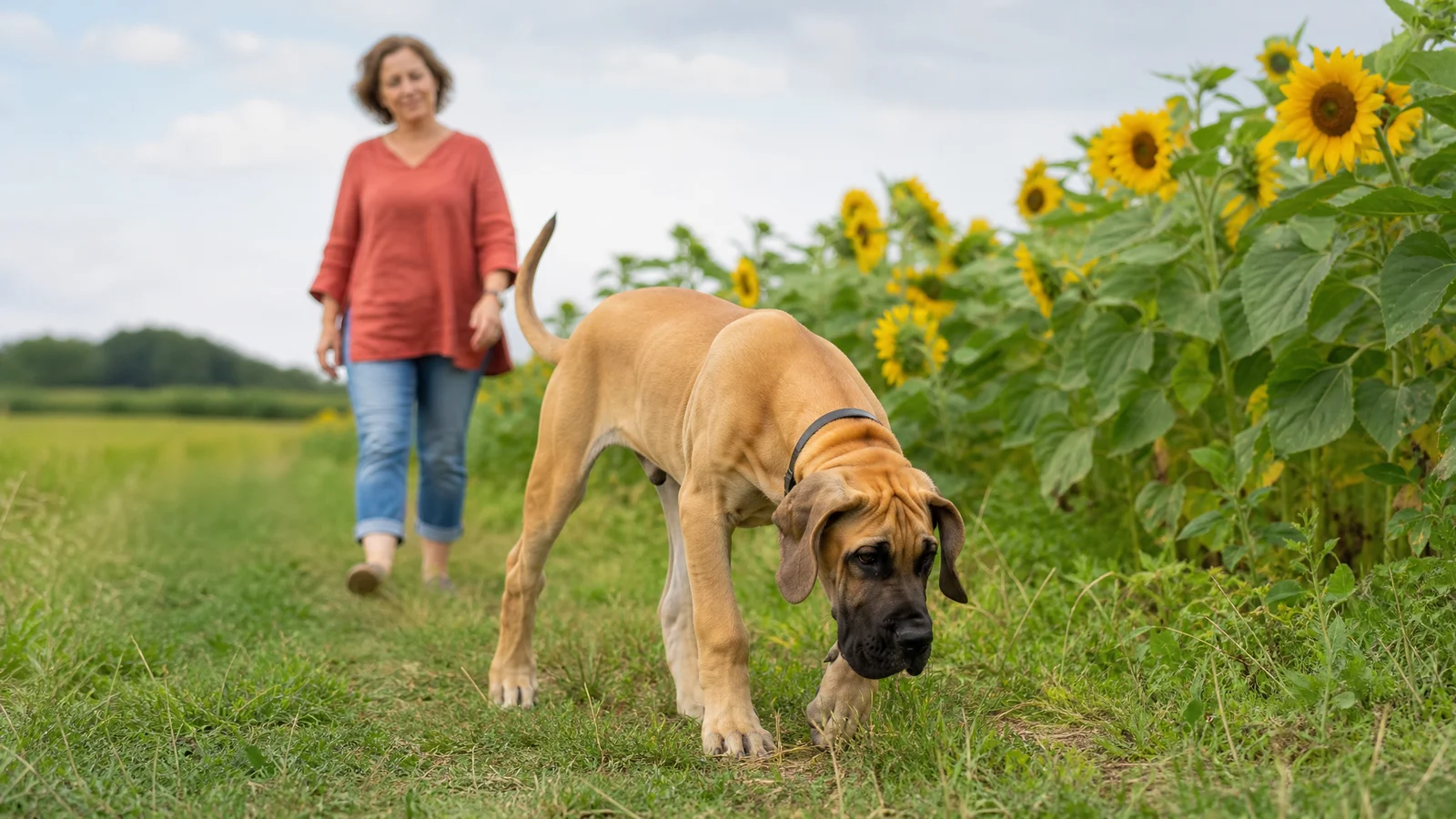
A tired Great Dane puppy is not automatically a well-exercised puppy. Fast growth makes recovery part of the activity plan, and a puppy who becomes wild, reluctant or sore after movement may need less intensity rather than another walk. A fixed mileage formula cannot account for age, condition, footing, health and the way one individual recovers.
Plan the day around decisions rather than a mileage target. Below, we set veterinary guardrails, compare low-impact Great Dane puppy exercise, read recovery before adding more and change social play as the puppy grows. We finish with a seven-day record that turns household observations into specific and genuinely useful questions for the veterinary team.
Veterinary Guardrails for Great Dane Puppy Exercise
Ask the puppy's veterinarian about current growth, body condition, gait, nutrition and any health concern before increasing activity. The breed club puppy guide emphasizes large-breed growth management and lean condition. Exercise advice should fit that larger health plan.
Bring specific questions rather than asking whether exercise is “enough.” Describe surfaces, duration, pace, play partners and recovery. Mention slipping, limping, reluctance, unusual sitting, difficulty rising or a sudden change in enthusiasm. Videos can help the clinic understand a movement that does not appear during the appointment.
Keep regular veterinary visits throughout growth. Seek prompt veterinary advice for pain, lameness, collapse, breathing trouble, marked fatigue or an abrupt change in movement. This article cannot set medical exercise limits for an individual puppy.
Do not increase forced running, jumping or repetitive impact to build endurance without veterinary guidance. A puppy can be eager to follow a person beyond a sensible stopping point. Adult appearance does not mean the growing body is ready for adult workloads.
Write the clinic's current limits in household language. Name routes, surfaces and games that are suitable, plus activities to avoid. Everyone who walks the Dane should see the same plan instead of interpreting “take it easy” differently.
Review the plan after a growth change, injury, illness or long break. Returning to the previous workload without a gradual restart can hide how much condition and coordination changed.
A Low-Impact Great Dane Puppy Exercise Menu
Build the day from varied, self-paced movement. Short sniffing walks, exploring a safe yard, gentle toy play and a few reward-based cues all count. The goal is not to exhaust the puppy. It is to provide movement and learning that end while coordination and interest remain comfortable.
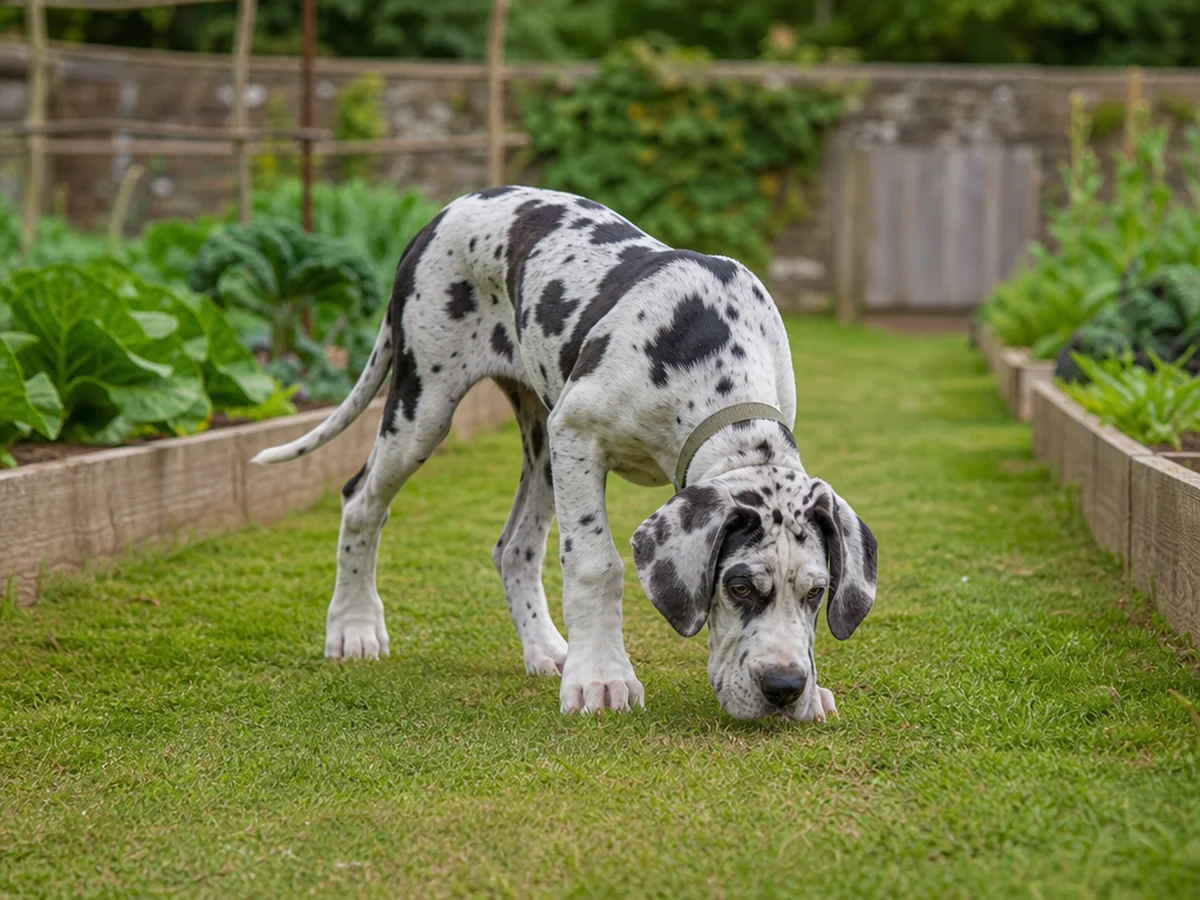
Relaxed Walks
Choose level, nonslip routes with easy exits. Let the puppy sniff and change pace. Avoid long forced marches, running beside a bicycle and repeated stairs. Turn home before gait becomes sloppy or the puppy lags, lies down or stops taking ordinary rewards.
Gentle Play
Use toys at ground level and allow frequent pauses. Avoid repeated high jumps, sharp turns on slick floors and body collisions. A brief game can end with a food search or chew so arousal falls before rest.
Learning as Activity
Two or three minutes of leash practice, handling or mat work can tire a young mind without adding impact. The site's Great Dane training guide helps keep those sessions short and clear.
PDSA puppy exercise guidance combines gentle movement, play and rest. Rotate forms of activity instead of adding minutes to one repetitive task.
Use scent work to slow the pace. Scatter a few pieces of the puppy's planned food across clean grass or hide them in an open room. Searching lets the puppy choose steps and pauses, while the handler avoids repetitive throwing or sharp turns.
Keep toileting separate from exercise goals. A puppy who needs to eliminate may rush, pull or become distracted. Meet that need first, then decide whether a short movement loop still makes sense.
The Great Dane Puppy Exercise Recovery Decision
The useful evidence appears during and after activity. Watch the puppy immediately, an hour later and the next morning. Comfortable recovery may include drinking, eating normally and settling into ordinary sleep. Concern rises when movement changes, rest is impossible or fatigue persists beyond the usual pattern.
| Observation Point | Comfortable Pattern | Reason to Reduce and Ask |
|---|---|---|
| During activity | Loose movement and voluntary engagement | Lagging, repeated stopping or altered gait |
| One hour later | Water, calm rest and normal behavior | Persistent panting, agitation or soreness |
| Next morning | Usual rising and interest | Stiffness, limping or reluctance |
Change only one part of the next loop. Shorten the route, choose softer footing or replace rough play with a search game. If a concerning sign appears, stop the activity and ask the veterinarian rather than using the log to experiment through pain.
AKC puppy exercise guidance cautions against a rigid universal formula. Recovery gives the household individual evidence, while the veterinarian interprets that evidence in the context of growth and health.
Compare similar activities rather than treating all minutes alike. Ten minutes on a quiet sniffing route is different from ten minutes of collisions in rough play. Record the form, surface and intensity so recovery has useful context.
Heat, humidity and travel can change recovery. Choose cooler conditions, carry water and shorten the loop before the puppy struggles. Ask the veterinarian for individual guidance when temperature or breathing raises concern.
Make Rest Part of the Same Loop
Rest should be easy to enter, not the moment a puppy is finally too exhausted to continue. Create a quiet, comfortable area away from household traffic. After activity, offer water, a toilet opportunity and a calming transition such as sniffing for a few pieces of food.
Teach a mat or bed cue during calm periods. Reward the puppy for stepping onto it, lying down and softening the body. Release before frustration. Later, use the same area after a short walk, keeping the first recovery interval brief enough to succeed.
Wild mouthing, racing and inability to settle can mean overstimulation or tiredness, but they can also have other causes. Reduce activity and simplify the environment. Do not assume every burst of energy needs harder exercise.
Protect sleep from repeated interruption by children, visitors and other pets. A giant puppy still needs age-appropriate rest and safe choice around contact. The daily loop fails when every quiet period becomes another social event.
Dim activity around the recovery area. Put exciting toys away, lower household movement and give the puppy enough space to change position. A crate or pen can support rest only when it is already comfortable and correctly sized.
Notice how long settling takes. If every loop ends in prolonged pacing and mouthing, shorten or simplify the preceding activity. The recovery lesson begins before the puppy is too aroused to use it.
Play Partners in Great Dane Puppy Exercise
Choose dogs whose size, play style and ability to pause suit the puppy. A friendly adult can still overwhelm a growing dog through repeated collisions. Begin in a secure area with room to move away and two attentive adults who can call the dogs apart.
Look for turns, pauses and both dogs returning voluntarily. End play when one dog repeatedly pursues, pins or ignores attempts to leave. Use practiced call-aways and reward both dogs separately. Do not reach between wrestling bodies or rely on the puppy to defend a break.
- Keep sessions brief and stop before coordination declines.
- Avoid slick floors, cramped rooms and hard obstacles.
- Skip play when either dog guards resources or cannot disengage.
- Record recovery after social play separately from recovery after a walk.
Parallel sniffing or walking can provide social time with less impact. A puppy does not need rough contact to benefit from another calm dog nearby.
Ask the other owner to pause before either dog becomes tired. Call away in opposite directions, reward separately and leave space before deciding on another turn. Ending by choice is easier than separating two exhausted large puppies.
Skip unknown dog groups as an exercise shortcut. Size alone does not predict a compatible partner, and a crowded area limits exits. Planned one-to-one contact gives adults more control over footing, duration and recovery.
Great Dane Puppy Exercise During Growth Spurts
Growth is not linear. A route that looked easy may become awkward during a rapid change in height or coordination. Recheck harness fit, nail length, footing and the puppy's ability to enter vehicles or navigate necessary steps. Reduce demands when movement looks less organized.
Do not use an older puppy's appearance as permission for adult sport foundations involving impact, weight or endurance. Ask the veterinarian and a qualified instructor what skills can be taught without the finished physical task. Calm starts, waiting, targeting and travel manners often provide useful preparation.
Compare the puppy plan with the site's adult Great Dane exercise guide, but keep the recovery threshold age-specific. The adult article uses an activity dial. The puppy plan puts veterinary limits and growth observations first.
During awkward growth phases, return to easier coordination tasks. Walking over ordinary flat surfaces, stepping onto a broad mat and following a hand target can preserve confidence without creating an obstacle course.
Vehicle entry deserves its own plan. Use a stable ramp or low-entry option recommended for the dog, introduce it on secure footing and never force a frightened puppy upward. Ask the veterinarian about lifting, jumping and travel arrangements as the Dane becomes too large to carry safely.
Recheck the home after every obvious size change. Slippery turns, narrow crate entrances and furniture gaps can alter movement even when the exercise route stays the same. Reduce avoidable strain before adding a new activity.
Seven Days of Great Dane Puppy Exercise Evidence
Record the activity type, surface, approximate duration, the puppy's behavior during it and recovery at one hour and the next morning. Add only details that help a decision. A long diary that nobody reviews is less useful than one line showing that rough play predicts stiffness or a short sniff walk predicts calm rest.
Review the record weekly and bring patterns or concerns to regular veterinary visits. A good Great Dane puppy exercise loop ends with comfortable movement, ordinary needs met and rest that arrives without collapse. The next day's plan comes from recovery, not from a rule that every growing puppy should cover the same distance.
Share the record with every caregiver. Mark the last comfortable route and the current rest routine so a walker does not unknowingly repeat activity or add rough play on the same day.
 BehaviorHelping a Scared Great Dane Gain Confidence With Rewards
 BehaviorGreat Dane Barking at the Door: Teaching a Calm Welcome
 BehaviorEasy Nail, Brush and Exam Practice for a Great Dane