 Great Dane
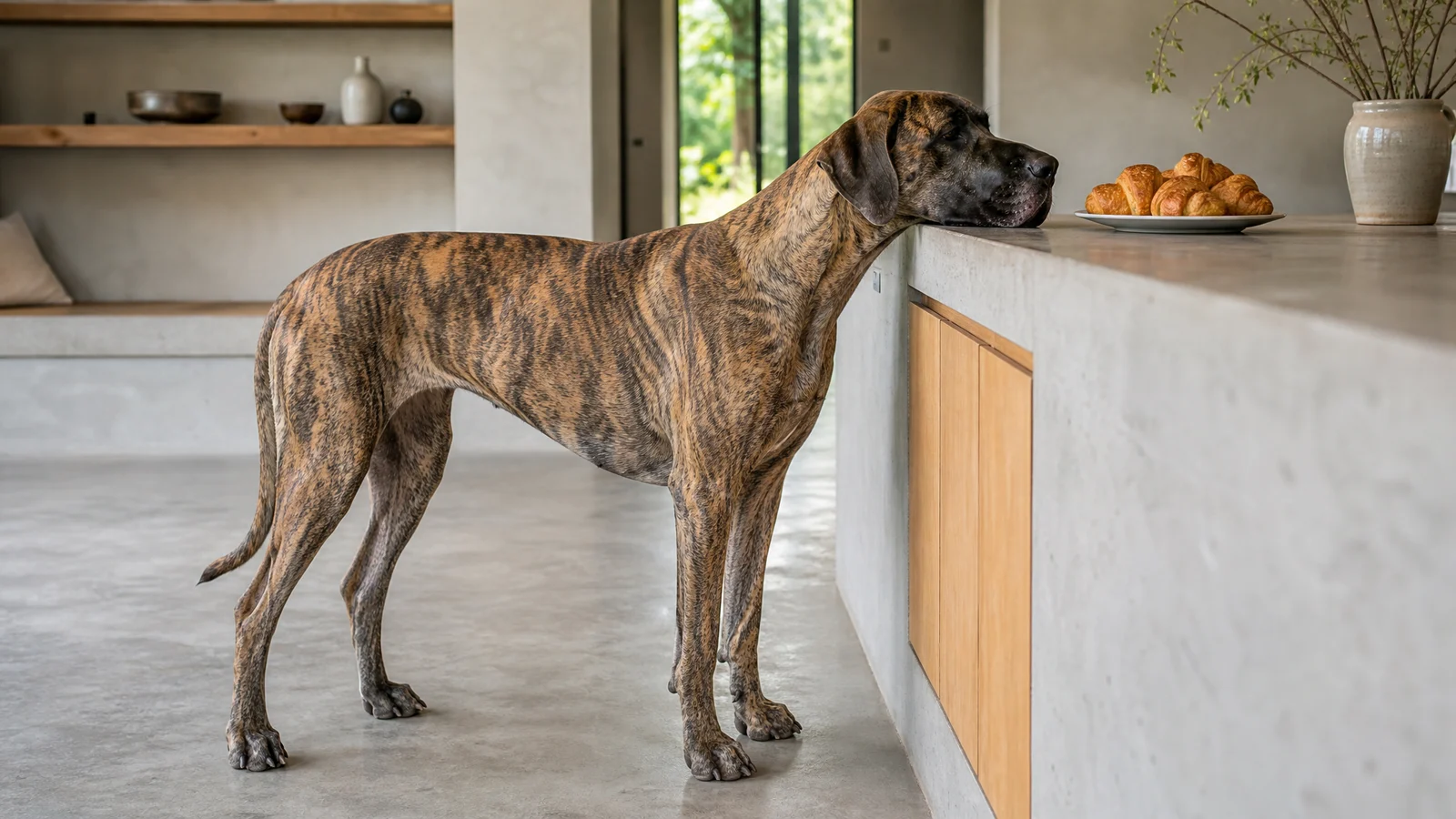
Standing normally, a Great Dane may put a nose over a counter, rest a chin on a table or push a shoulder through a half-open gate. Height turns ordinary household surfaces into reachable space. The training problem is therefore larger than food theft: the dog needs clear lines around counters, doorways and barriers, plus a floor-side place that pays better than crossing them.
A useful boundary plan has four jobs: reveal the risky lines, make the safe side easy to find, carry that answer from counters to openings and learn from every break. Below, we use the map to place barriers, build a Great Dane floor-side boundary station, transfer it to gates and review the household after every break.
Draw the Great Dane Boundary Map
Walk through the home at the dog's head height and mark every surface or opening that matters. Include counters, dining tables, the open dishwasher, trash, exterior doors, baby gates and the path between food preparation and serving. A Great Dane may cross a line without jumping, so define the floor position rather than waiting for paws to land on something.
Separate safety boundaries from convenience boundaries. An exterior door, hot stove and stairs under repair need physical protection even after training improves. A line beside an empty counter can become a practice site. Never remove a safety barrier merely to find out whether the cue works.
| Home Line | Current Risk | Floor-Side Station |
|---|---|---|
| Kitchen counter | Food, heat and utensils | Mat beyond the work aisle |
| Exterior door | Escape and visitor crowding | Marked spot inside a second barrier |
| Interior gate | Leaning, pushing or climbing | Bed several feet from the opening |
Give each line one name and one station. Avoid calling every response “back” while pointing in different directions. A visible mat or bed helps the dog locate the answer, and a written map helps family members reward the same side.
Photograph the map from the dog's approach, then compare it with the human view. A line that looks obvious beside a cabinet may disappear when stools, bags or open doors fill the space. Move the station until it remains visible during ordinary use.
Mark traffic conflicts as well. The best station is not where people carrying hot dishes must step over a giant body. Choose a location that preserves a clear human route and gives the dog room to lie without being bumped.
Choose Barriers for Strength and Reach
A barrier should prevent access without inviting a strength contest. Choose a gate rated and installed for the opening, tall enough for the individual dog and secure against forward pressure. Check wall attachments, latches and gaps. Freestanding panels may shift when a giant dog leans against them.
Position the station far enough away that lying down does not block the gate or place the dog's face beside passing food. Use nonslip footing. If the only available mat slides when the Dane steps onto it, secure it or choose another surface before asking for duration.
AVSAB's humane training statement supports management and reinforcement of alternatives. A gate is not the lesson by itself. It stops unsafe rehearsal while the floor-side station becomes useful. Reinforce the position you want and keep the physical setup calm.
- Inspect barriers weekly and after any hard impact.
- Keep chairs, boxes and tables away from the approach side.
- Use a second closed door for exterior access during deliveries.
- Move the dog elsewhere when guests or workers cannot follow the household map.
Humane World training guidance combines prevention with teaching a grounded alternative. Apply that principle to each mapped line. The barrier prevents access, while rewards arrive where the dog's feet and body should remain.
Practice gate sounds before movement if the latch itself triggers rushing. Touch the latch, reward at the station and walk away. Later, make the click, then open an inch. Small mechanical steps help the dog respond before the opening becomes the only thing that matters.
A Great Dane Floor-Side Boundary Station
Teach the station away from food. Put the mat down, mark a glance or step toward it and deliver the reward between the dog's front paws. Build to four paws, then a comfortable sit or down. Release after a few seconds and invite the dog off before repeating.
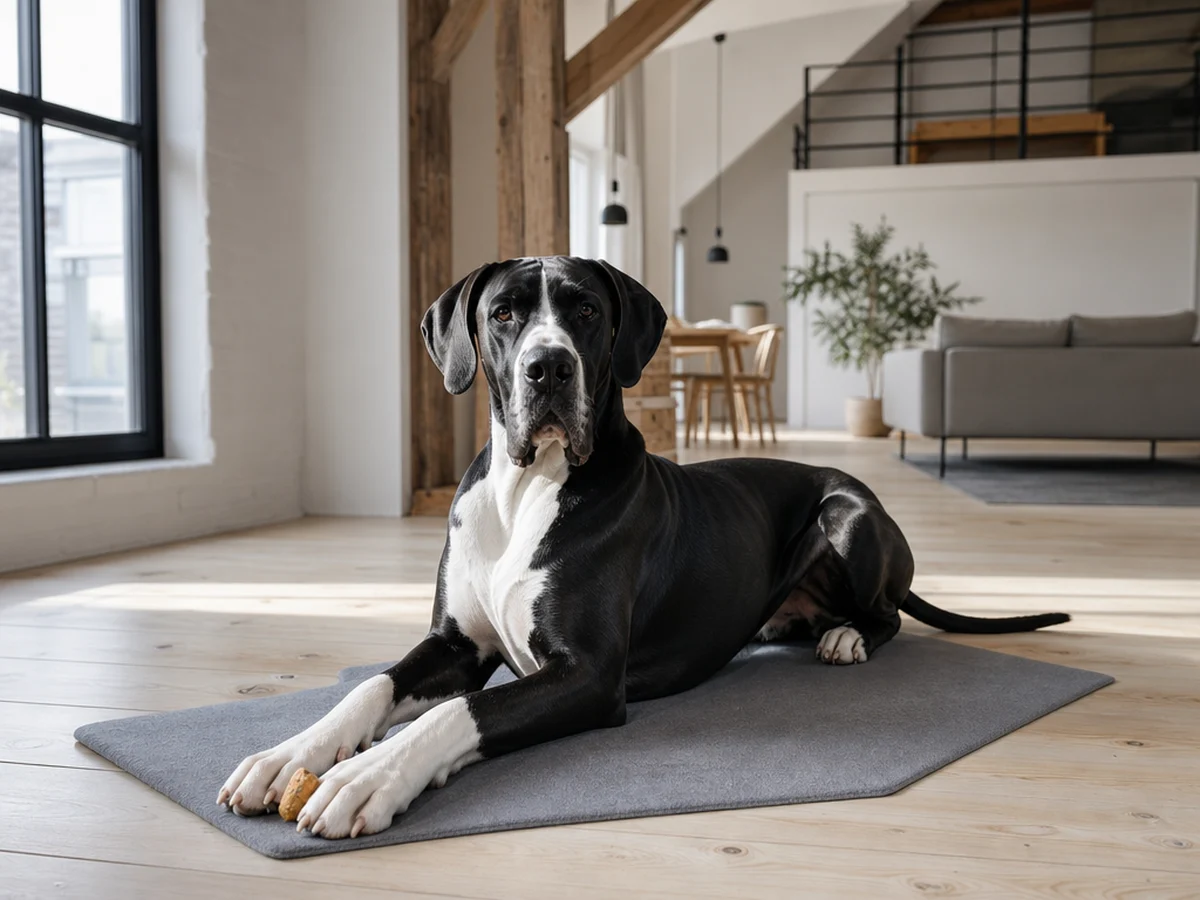
Dogs Trust settle guidance builds calm behavior gradually around distractions. Reward softer posture, a shifted hip and a head lowering rather than repeating a stay cue. The station should become a place to remain, not a launch pad held under tension.
Carry the mat to the mapped line only after the dog can find it in two quiet rooms. Stand between the station and the protected space at first. Reward at the mat, release away from the boundary and keep sessions brief. This prevents every repetition from ending beside the tempting surface.
The site's Great Dane settle plan develops related resting skills. Use the same marker and release language here, but keep boundary practice tied to one visible household line.
Vary reinforcement intervals rather than extending them in a straight climb. Reward after two seconds, then five, then one. Release after an easy success. A dog who knows when every reward is late may leave at the same predictable point.
Add Real Counter Activity in Layers
Add ordinary activity in layers while the surface remains clear. Stand at the counter, open one cabinet, lift an empty plate and walk through the work aisle. Reward the Dane at the station after each small action. If the dog crosses, reset behind the line and make the next action easier.
Food Stays Physically Protected
When empty-counter movement is easy, place food in a sealed container well back from the edge. Let odor enter the lesson without creating access. Later, handle one ingredient for a few seconds while a gate or another adult guarantees that crossing cannot pay.
Cleanup Is a Separate Layer
Plates moving down, a dishwasher opening and trash smells may be harder than cooking. Practice them separately. Use a barrier during real cleanup until the dog can remain at the station for short planned actions. Do not assume the boundary lesson ends when dinner reaches the table.
Dogs Trust guidance notes that food found on a worktop can reinforce repeated checking. Clear every reachable surface before practice. One stolen item can keep the line valuable long after several rewarded mat repetitions.
Add a second person only after one person can move through the routine. The newcomer begins by standing still, then carries an empty plate and finally performs one food-free task. Several people moving at once should remain behind physical management until each component is familiar.
End the session with a release away from the counter. Walk to another room, offer water or begin a calm activity. Leaving the mat and immediately checking the worktop should never become the final step.
Carry the Great Dane Boundary to Gates and Doors
Generalize the floor-side pattern, not the exact mat position. At an interior gate, reward the dog for moving to a bed while a person operates the latch. At the front door, use two barriers and a station well inside the home. Exterior safety never depends on a single trained response.
Teach gate movement in pieces: a hand reaches for the latch, the latch clicks, the gate moves an inch and a person passes through. Reward the station after each part. If the dog rises, close the gate before continuing. The line controls access, while remaining on the floor side keeps the sequence moving.
Do not ask the dog to remain beside a gate while another dog crowds the opposite side. Increase distance and manage both animals. A Great Dane who pushes from fear or social frustration needs a plan for that emotion, not more repetitions against the same barrier.
Link door work with Great Dane household manners when halls or shared entries are involved. The boundary map should name where the dog waits before a narrow passage becomes active.
Practice both directions through an interior gate. The dog waits while a person exits, and later waits on the opposite side while the person returns. This shows that the floor line follows the active opening rather than one permanent side of the room.
Use a Break as Map Evidence
Protect safety first. Close exterior access, turn off heat and remove food or sharp objects. Call the dog away once and reward on the safe side. Avoid grabbing at the mouth or chasing through the room. If a harmful item was swallowed, identify it and contact a veterinarian or poison service promptly.
- Record which line was crossed and what was available beyond it.
- Find the missing barrier, supervision step or station reward.
- Restore physical management before the next home activity begins.
- Practice one easier piece later, after people and dog are settled.
Keep regular veterinary visits. A sudden increase in scavenging, appetite, restlessness or boundary pushing deserves a veterinary conversation, especially when it appears with pain, thirst, digestion or other behavior changes.
A break is information about the map, not a reason to make the next session harder. The station may be too close, the activity too long or the barrier poorly placed. Change the environment that allowed success beyond the line.
Review video only when it was captured passively and safely. Look for the first step toward the line, not merely the final reach. Earlier signs let the handler reward sooner and show whether the station stopped being clear before the break.
The Weekly Great Dane Boundary Audit
Once a week, walk the map and check whether surfaces, furniture or household routines changed. A new counter appliance may move food closer to the edge. A growing dog may reach over a gate that once worked. Visitors may use a door the family rarely opens.
Measure progress by safe lines kept during realistic activity, not by removing barriers. A useful Great Dane boundary system combines secure management, a clear floor-side station and people who know where each line begins. The home becomes easier to navigate because the map stays visible even when the dog is tall enough to ignore the furniture.
Choose one line for the next week's practice and leave every other safety barrier in place. Focused repetition creates clearer evidence than changing the whole home at once.
 Exercise and jobsGreat Dane Puppy Exercise: Balancing Play, Walks and Rest
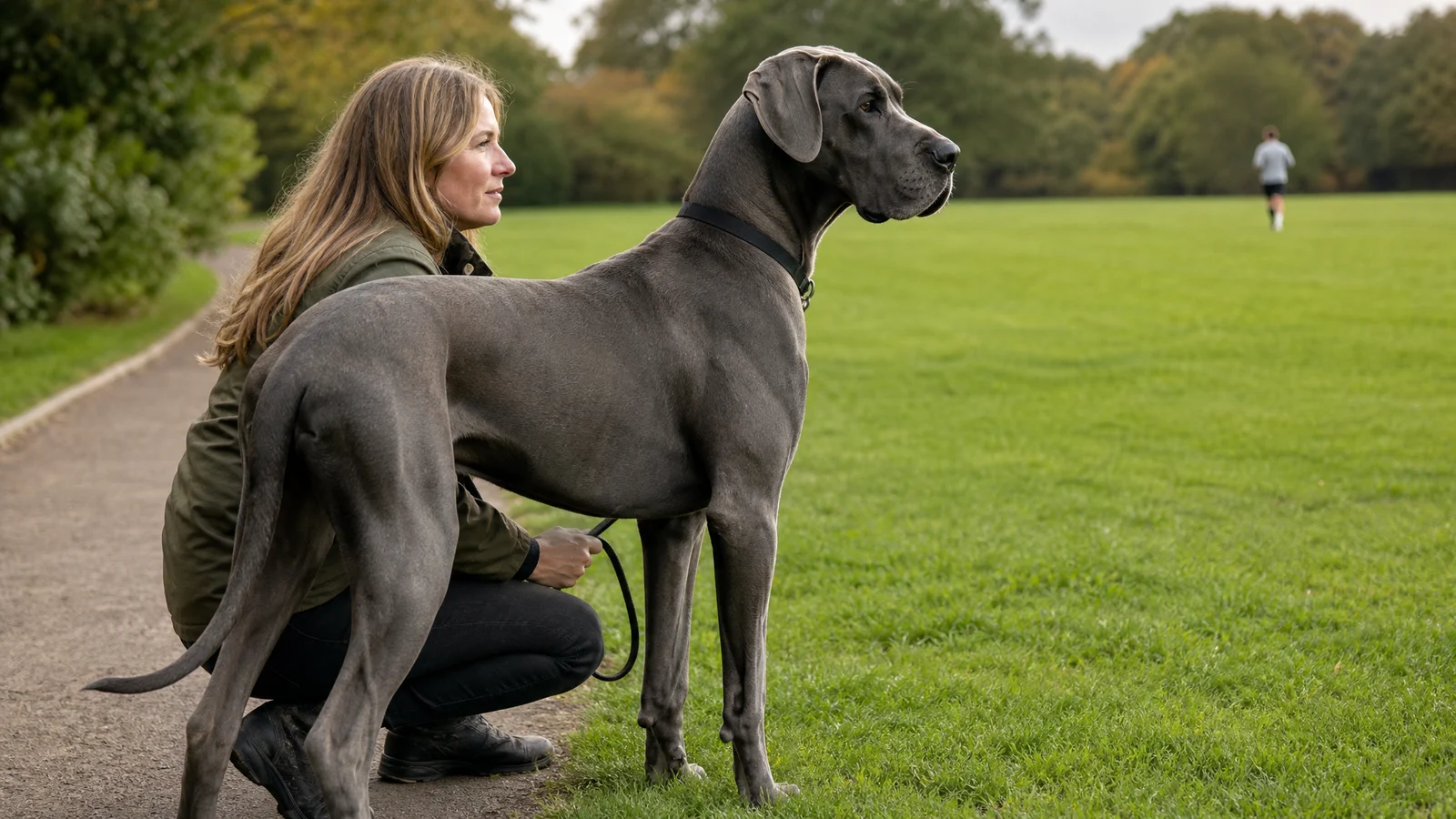 BehaviorHelping a Scared Great Dane Gain Confidence With Rewards
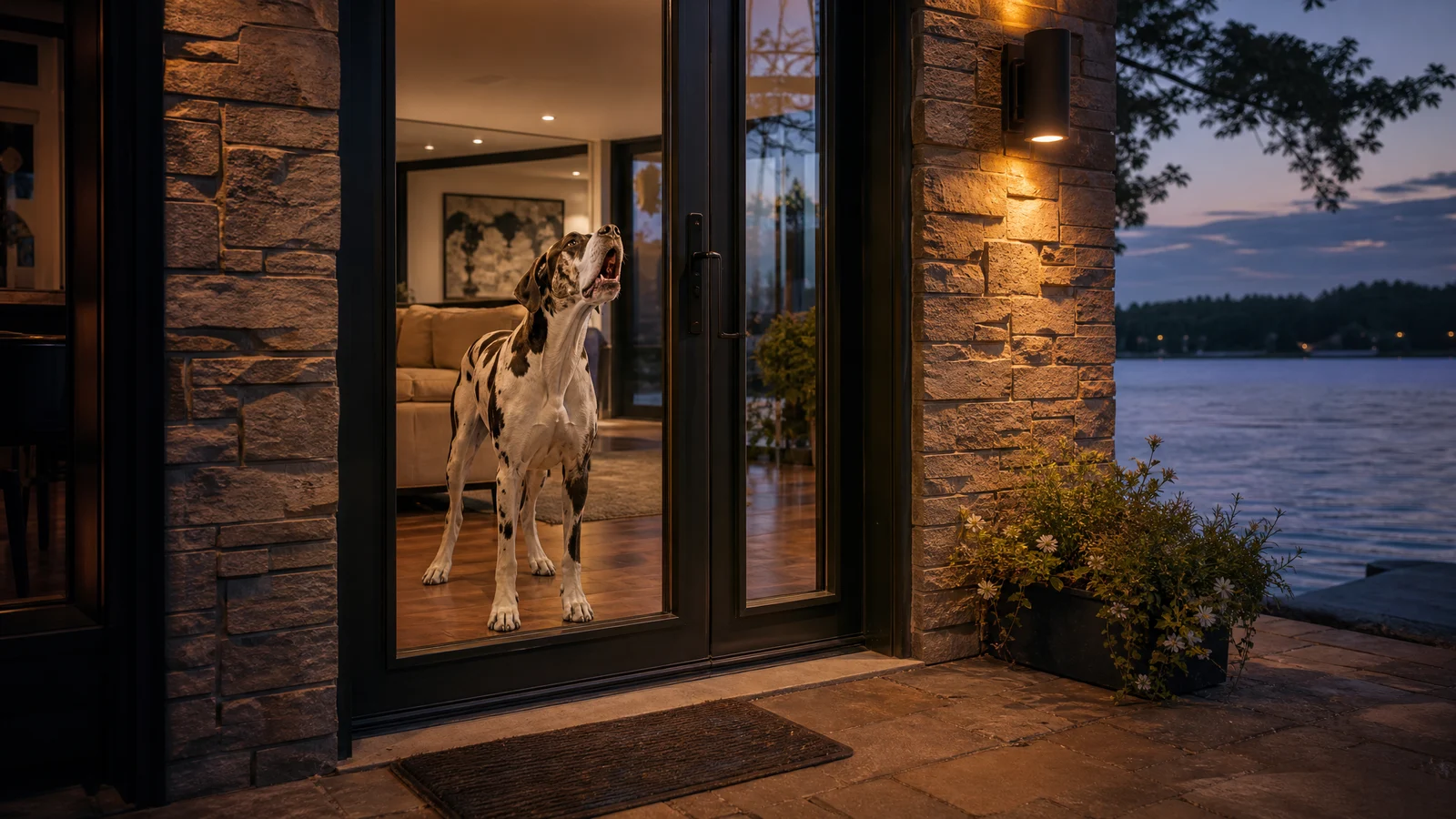 BehaviorGreat Dane Barking at the Door: Teaching a Calm Welcome